Why Kakadu Belongs on Your Australia Bucket List
Kakadu National Park is Australia's largest national park—nearly 20,000 square kilometres of floodplains, monsoon forests, sandstone escarpments, and wetlands that teem with wildlife. It's dual World Heritage listed for both its natural significance and its cultural value—Aboriginal people have lived here continuously for over 65,000 years, making it one of the oldest living cultures on Earth.
Kakadu is just a 3-hour drive from Darwin, making it the perfect campervan destination. Pick up your campervan in Darwin and head east on the Arnhem Highway into one of the world's great wilderness areas.
What to See: The Essentials
Aboriginal Rock Art
Kakadu contains some of the world's finest and oldest rock art galleries:
- Ubirr — Multiple gallery sites showing X-ray style art of fish, turtles, and spirits. The main gallery depicts a thylacine (Tasmanian tiger)—evidence of the animal's former mainland range. Climb to the lookout at sunset for views across the Nadab floodplain that will stop you in your tracks.
- Nourlangie (Burrungkuy) — Sheltered rock galleries with paintings spanning thousands of years. The Lightning Man painting is iconic—a creation ancestor who still brings storms to the Top End each wet season.
Waterfalls
- Jim Jim Falls — A sheer 200-metre drop off the Arnhem Land escarpment. Accessible by 4WD only (60 km unsealed track), seasonal flow Jan-June.
- Twin Falls — Reached by boat shuttle and short walk from the Jim Jim track. Thundering twin cascades into a deep plunge pool.
- Gunlom Falls — The "infinity pool of the bush." Climb to the top for a natural rock pool overlooking the southern valleys. 2WD accessible via sealed road.
- Maguk (Barramundi Gorge) — A 1 km walk through monsoon forest to a plunge pool beneath a waterfall. Croc-free and swim-safe. 4WD access.
Yellow Water Billabong
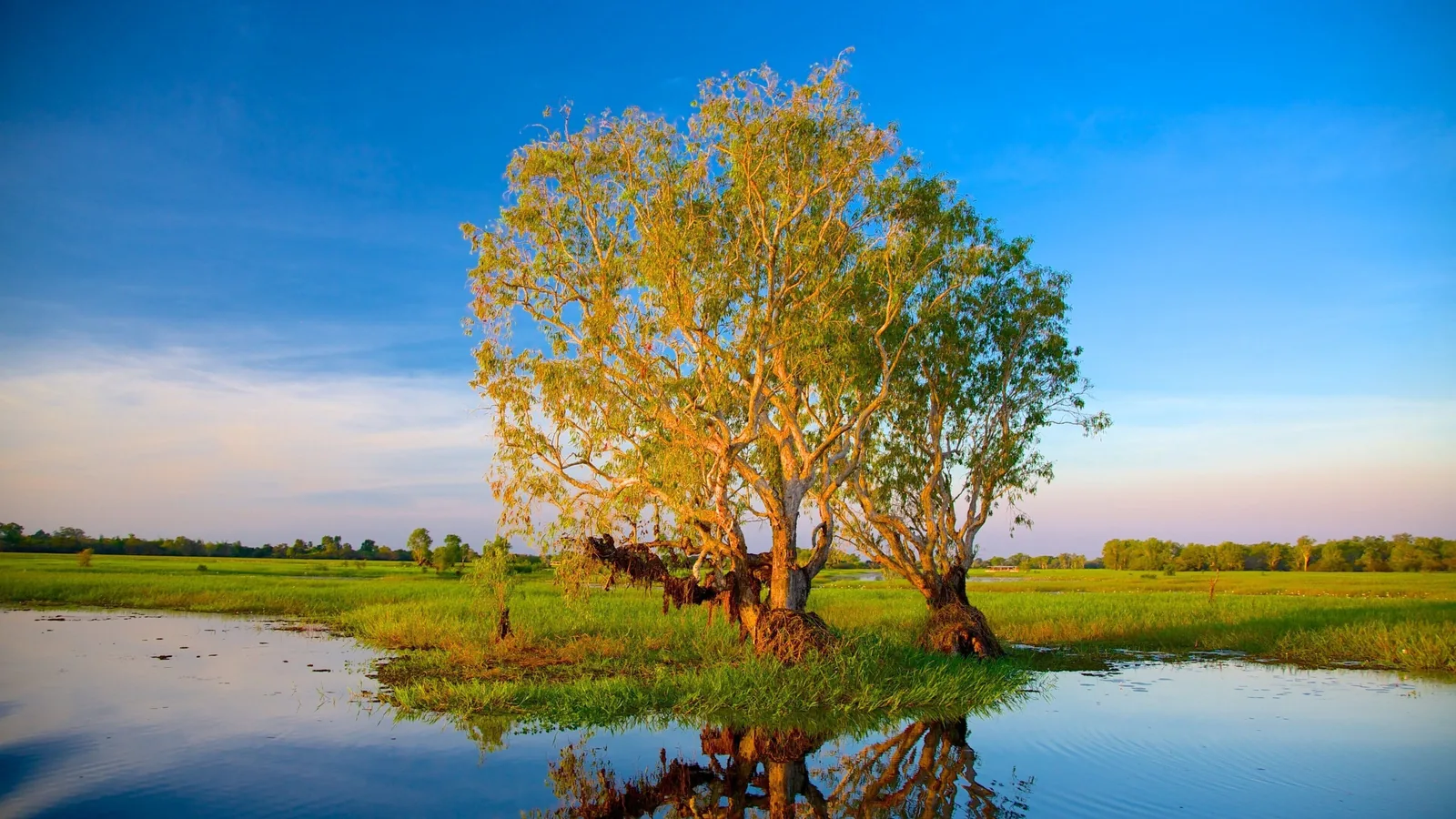
The Yellow Water Cruise is Kakadu's signature experience. Glide through paperbark-lined waterways past saltwater crocodiles basking on banks, jabirus stalking fish, and sea eagles circling overhead. Lotus lilies carpet the surface from March to May. Book the sunrise cruise ($99, 2 hours) for the best light and most active wildlife.
Campgrounds
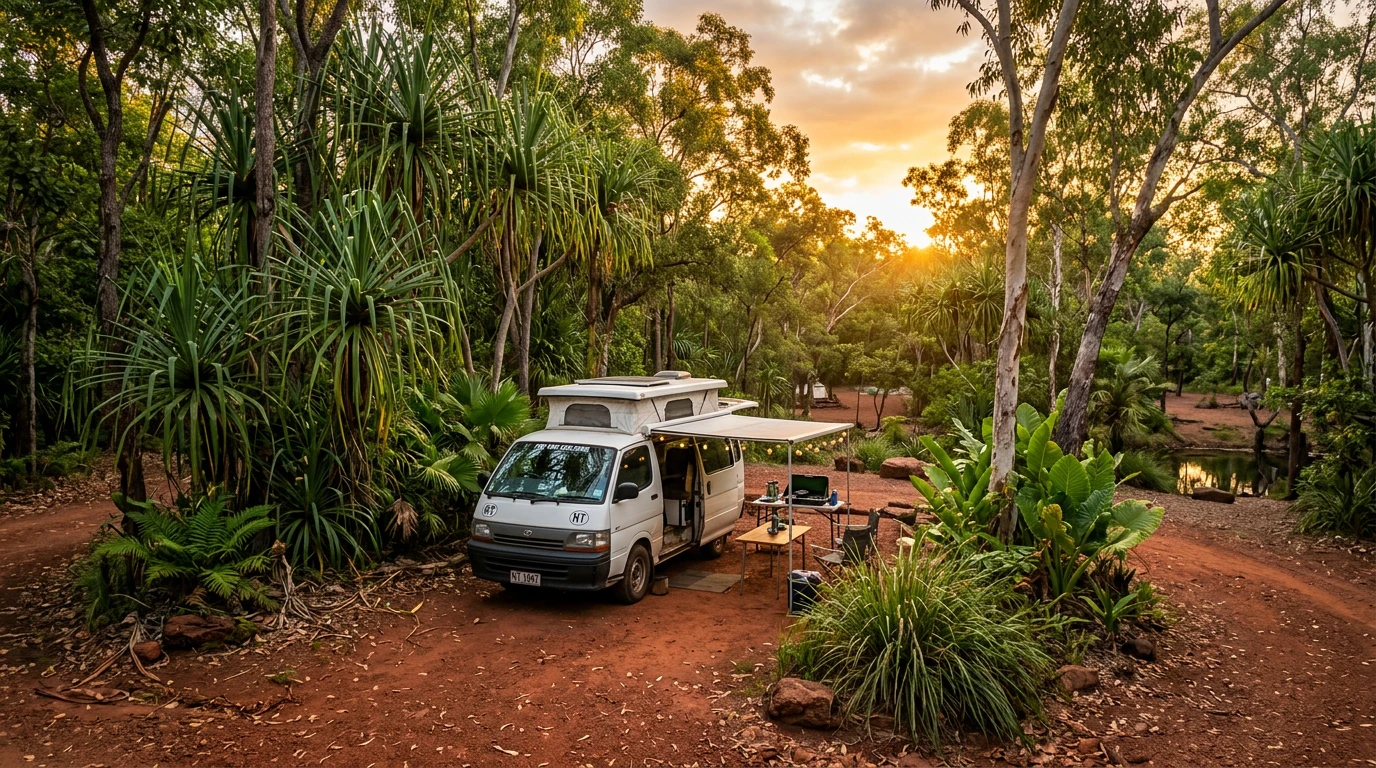
- Merl (near Ubirr) — Unpowered sites, $15/adult. Walk to Ubirr for sunset. Seasonal (May-November). No generators—beautifully quiet.
- Mardugal (near Yellow Water) — Unpowered sites near the Cooinda hub. Walking distance to Yellow Water cruise departure.
- Gunlom Campground — Powered and unpowered sites near the Gunlom plunge pool. One of the most scenic campgrounds in Australia.
- Aurora Kakadu (South Alligator) — Full-facility caravan park with powered sites, pool, restaurant. From $45/night.
Crocodile Safety — Essential Reading
Kakadu is home to thousands of saltwater crocodiles—the world's largest living reptile. These are ambush predators that can grow over 5 metres long and are responsible for fatalities every year across northern Australia.
- Never swim in any waterway unless it is officially signed as safe.
- Stay at least 5 metres from the water's edge at all times near rivers and billabongs.
- Never clean fish or prepare food at the water's edge.
- Crocodiles are most active at dusk and dawn but can attack at any time.
Planning Tips
- Park pass: $40/adult for 7 days. Purchase at the park entrance or online.
- Season: Dry season (May-September) offers the best access. Many roads and campgrounds close during the wet (November-April).
- Fuel: Available at Jabiru (the park's only town), Cooinda, and Aurora Kakadu.
- Supplies: Stock up in Darwin. Jabiru has a small supermarket but prices are high and selection limited.
- Indigenous culture: Respect all cultural sites. Stay on marked paths. Some areas are sacred and off-limits—signage is clear.
Planning your trip?
Compare campervan & motorhome hire prices across Australia: