Where Rainforest Meets Reef
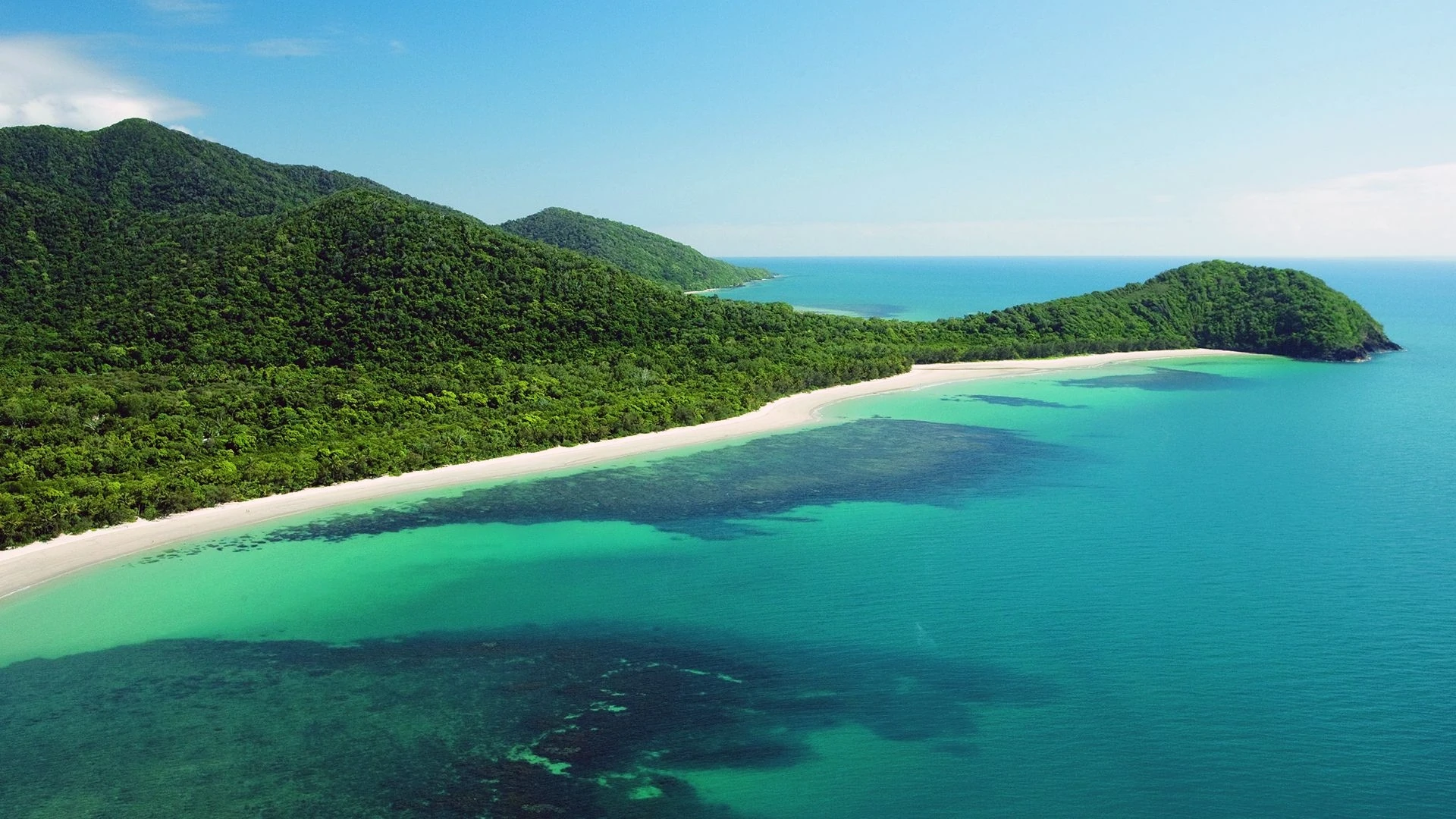
The Cairns to Cape Tribulation road trip takes you into one of the most extraordinary natural landscapes on Earth. The Daintree Rainforest is the oldest continuously surviving tropical rainforest in the world — over 180 million years old — and at Cape Tribulation, it spills directly onto the beaches where the Great Barrier Reef lies just offshore.
This is the only place on the planet where two UNESCO World Heritage sites exist side by side. At just 140 km, it's a short drive, but the density of natural wonders packed into this stretch makes it one of Australia's essential road trips. Whether you have two days or a full week, this guide covers every stop, campsite, wildlife encounter, and practical tip you need to make the most of your Daintree adventure.
🗺️ Need help planning your North Queensland itinerary? Our partner Dundee Adventure offers free itinerary planning for adventures in Tropical North Queensland — from the Daintree to the Reef and beyond. They know the region inside out and can tailor a trip to your timeframe and budget. Plus, CamperCompare customers get a 10% loyalty discount on all Dundee Adventure tours — your discount code is included in your booking confirmation.
What to Expect on This Drive
The Cairns to Cape Tribulation route is compact but incredibly diverse. You'll pass through three distinct environments in under two hours: the tropical coastline between Cairns and Port Douglas, the lowland mangroves around the Daintree River, and the dense tropical rainforest canopy that envelops the road all the way to Cape Tribulation.
Unlike many Australian road trips where the distances are vast and the scenery repetitive, this drive rewards slow exploration. Every few kilometres there's a boardwalk, a lookout, a swimming hole, or a wildlife encounter waiting. Most travellers regret not allowing enough time — we recommend a minimum of three days to properly soak it in.
The entire route is sealed and suitable for 2WD campervans, with one exception: the Daintree River crossing requires a cable ferry (more on that below). North of Cape Tribulation, the road turns into the infamous Bloomfield Track — 4WD only. Standard campervans must turn around at Cape Trib.
Cairns to Port Douglas
Distance: 67 km | Drive Time: 1 hour
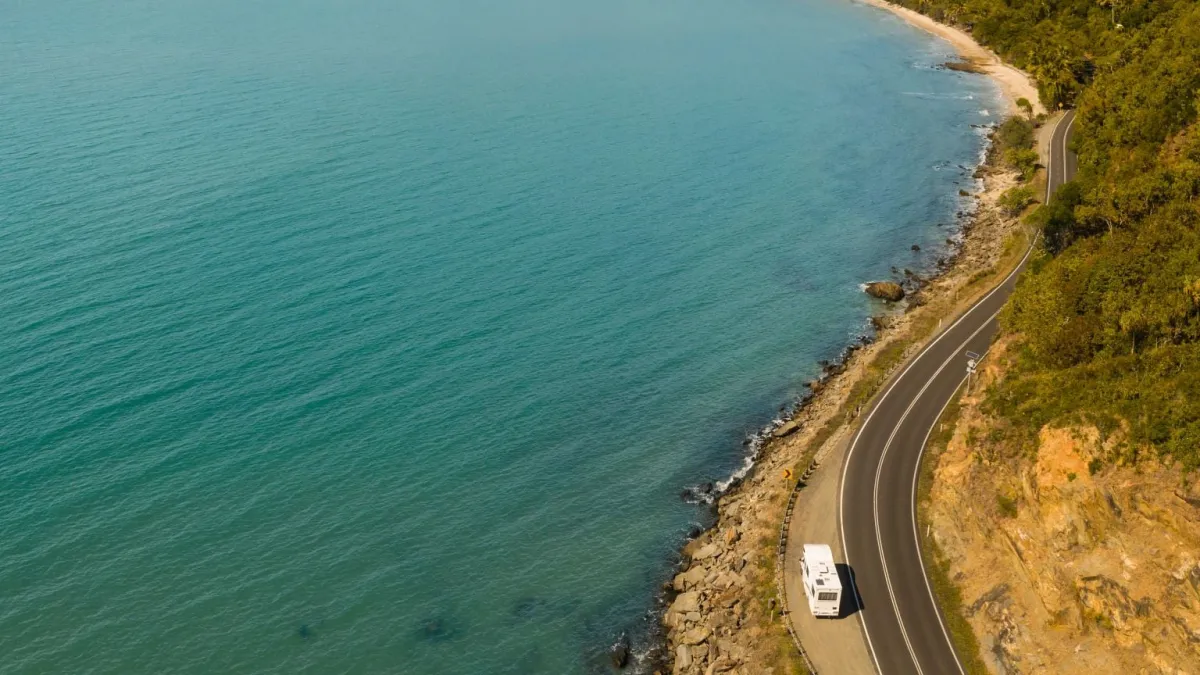
Head north from Cairns on the Captain Cook Highway — consistently rated one of Australia's most scenic coastal drives. The road hugs the coast with the Coral Sea sparkling on your right and rainforest-clad mountains rising steeply to your left. On a clear day, you can see Green Island offshore and the reef shimmer in the distance.
Key Stops Along the Way
Palm Cove is a gorgeous detour just 25 minutes north of Cairns. This beachside village has a tree-lined esplanade, excellent cafés, and a relaxed atmosphere that's noticeably calmer than Cairns city. It's a great first stop to ease into the trip — grab a coffee and walk the beach before continuing north.
Rex Lookout, about 45 minutes from Cairns, offers sweeping panoramic views over Wangetti Beach, Trinity Bay, and the coastline stretching back towards Cairns. There's a large parking area suitable for campervans. On clear mornings, the view is genuinely breathtaking.
Hartley's Crocodile Adventures is located right on the highway between Palm Cove and Port Douglas. If you want a safe, educational crocodile encounter before heading into the wild Daintree, this is the place. The boat cruises on Hartley's Lagoon bring you face-to-face with massive saltwater crocs, and the koala and cassowary encounters are excellent for families.
Port Douglas
Port Douglas is a sophisticated tropical town that punches well above its size. The main strip, Macrossan Street, is lined with restaurants, boutique shops, and bars. Four Mile Beach is a long crescent of white sand — stinger nets are in place during the wet season.
The famous Port Douglas Sunday Markets at Anzac Park run from 8am to 1pm and are one of the best markets in Queensland, with local produce, handmade crafts, tropical fruit, and live music. Time your trip to catch them if you can.
Port Douglas is also a major departure point for Great Barrier Reef tours — the Outer Reef is closer from here than from Cairns, which means less travel time and more time on the reef. If you only have one reef day, doing it from Port Douglas is the smarter choice.
Where to camp: BIG4 Port Douglas Glengarry Holiday Park is centrally located with resort-style facilities including a pool and camp kitchen. Tropic Breeze Caravan Park is a more affordable option just a short walk from Four Mile Beach. Both have powered sites suitable for campervans.
Mossman Gorge
Distance: 20 km from Port Douglas | Drive Time: 25 minutes
Before heading to the Daintree ferry, take a detour to Mossman Gorge — the southern gateway to the Daintree Rainforest and one of the most accessible rainforest experiences in Tropical North Queensland.
The gorge features crystal-clear water rushing over smooth granite boulders, surrounded by towering tropical trees. A 2.4 km circuit boardwalk winds through the rainforest, crossing suspension bridges and passing ancient fan palms. The walk is flat and well-maintained — suitable for all fitness levels.
Swimming is possible in the gorge's pools, but be aware the water is cold and the current can be strong after rain. Always check conditions at the Mossman Gorge Centre before swimming. There are no crocodiles this far upstream.
The Mossman Gorge Centre is the starting point — you must take a shuttle bus (about $13 return) from here to the gorge itself. The centre has a café, gift shop, and is the meeting point for the excellent Ngadiku Dreamtime Walk — a 1.5-hour guided walk led by local Kuku Yalanji Indigenous guides who share traditional knowledge about bush medicines, food gathering, and their deep spiritual connection to this ancient landscape. It's one of the most authentic cultural experiences in North Queensland.
Tip: Arrive early (before 9am) to avoid crowds. The gorge can get very busy mid-morning, especially during school holidays.
Daintree River Crossing
Continue north from Mossman to the Daintree River Ferry — a cable ferry that carries vehicles across the crocodile-inhabited Daintree River. The crossing takes about 5 minutes and runs from 6am to midnight daily. Expect to pay around $36 return for a standard vehicle (cash or card accepted).
During peak season (June–September), queues can be 20–30 minutes long at busy times. The worst waits are mid-morning (9–11am) when day-trippers from Cairns arrive. If you're camping north of the river, cross early morning or late afternoon to avoid the rush.
Before You Cross: Don't Miss These
The stretch on the south side of the Daintree River has two excellent stops worth your time:
Daintree River crocodile cruises are a must-do. Several operators run 1-hour cruises from the ferry landing area where you're almost guaranteed to see saltwater crocodiles basking on the riverbanks. Early morning cruises have the highest sighting rates. Solar Whisper and Crocodile Express are both excellent — Solar Whisper uses a silent electric boat that gets remarkably close to the crocs without disturbing them.
The Daintree Village, a few kilometres upstream, is a sleepy little town with a general store, ice cream shop, and a lovely riverside walk. It's a good place to stock up on supplies before crossing into the Daintree proper — options are very limited (and expensive) on the other side.
Daintree Discovery Centre & Canopy Tower
Located 10 km north of the ferry
Once across the river, your first major stop should be the Daintree Discovery Centre — arguably the best eco-tourism attraction in the entire Daintree. Allow at least 2 hours here.
The centrepiece is the 23-metre canopy tower — five viewing platforms take you from the forest floor up through the mid-canopy and into the emergent layer above the treetops. The perspective shift is remarkable. At ground level, the forest feels dense and enclosed. At the top, you're looking out over an ocean of green canopy stretching to the horizon, with mountains behind and the Coral Sea glinting in the distance.
The aerial walkway is a 125-metre elevated path through the mid-canopy, putting you at eye level with tree-dwelling wildlife. Look for Boyd's forest dragons sitting motionless on tree trunks — these prehistoric-looking lizards are masters of camouflage and one of the Daintree's most iconic creatures.
The interpretive displays explain the extraordinary age of this rainforest (180+ million years — it was ancient when the dinosaurs were young) and the bewildering biodiversity it supports. The Daintree contains the highest concentration of primitive flowering plant families anywhere on Earth, and many species found here exist nowhere else.
Entry: Around $38 adult, $20 child. Audio guides available. The self-guided trails are well marked with informative signage throughout.
Alexandra Range Lookout
A few kilometres past the Discovery Centre, pull over at the Alexandra Range Lookout. This is one of the most photographed viewpoints in the Daintree — a sweeping vista looking north over the Daintree River mouth, with the rainforest rolling down to meet mangroves and the Coral Sea beyond.
On clear days, you can see the reef just offshore — a thin turquoise line where the shallow reef shelf meets the deep blue of the open ocean. There's a small car park and information board. It's a quick stop but a stunning one.
Cow Bay & Cooper Creek
The road descends from the range into Cow Bay, the first settlement north of the river. Cow Bay Beach is a beautiful stretch of sand backed by coconut palms and rainforest — but always check for crocodile warning signs before swimming. Beaches this far north can have saltwater crocs, especially near creek mouths.
The Jindalba Boardwalk at Cow Bay is a 700-metre circuit through lowland rainforest and mangroves. It's an easy walk and you'll often spot butterflies, lizards, and forest birds. The interpretive signs explain the different rainforest layers and plant species.
Cooper Creek, a few kilometres further north, is known for its Cooper Creek Wilderness — a boardwalk through pristine rainforest that leads to a freshwater creek. Guided kayak tours on Cooper Creek offer an incredibly peaceful way to experience the rainforest from water level, gliding beneath overhanging palms and spotting wildlife along the banks.
Cape Tribulation
Distance: 35 km from ferry | Drive Time: 45 minutes
The road through the Daintree from Cow Bay to Cape Trib is one of the most atmospheric drives in Australia. Dense rainforest canopy arches over the road, creating green tunnels punctuated by shafts of sunlight. Cassowaries cross the highway (drive slowly!), and the air is thick with tropical humidity and birdsong.
The Beach Where Reef Meets Rainforest
Cape Tribulation itself is a small settlement where the rainforest literally meets the beach. Captain James Cook named it in 1770 after his ship struck a reef nearby — "because here began all our troubles." Today it's one of the most spectacular places on the Australian coast.
Myall Beach is the main beach and it's absolutely stunning — a long arc of sand with the Great Barrier Reef visible just offshore and the Daintree forming an emerald wall behind you. Walk the Dubuji Boardwalk (1.2 km) from the car park through mangroves and fan palms to reach the beach. The boardwalk is wheelchair accessible and one of the most photogenic short walks in the Daintree.
Cape Tribulation Beach (also called Myall Beach North) is slightly more secluded and equally beautiful. The headland between the two beaches offers a short walk with views over both stretches of sand.
Activities at Cape Tribulation
- Guided night walks — The Daintree comes alive after dark. Guided spotlight walks give you the best chance of spotting tree kangaroos, possums, geckos, giant orb-weaver spiders, and an astonishing array of insects. Most accommodation providers can book these for you.
- Sea kayaking — Paddle along the coast where the reef meets the rainforest. Morning tours are usually calmest and offer the clearest water for spotting sea turtles.
- Jungle surfing (zipline) — Fly through the rainforest canopy on a series of ziplines. The platforms are 15–20 metres above the forest floor, giving a bird's-eye view of the ancient trees.
- Snorkelling — The fringing reef is accessible from the beach at low tide in some spots. Guided reef walks and snorkel tours operate in calm conditions during the dry season.
- Horse riding on the beach — Cape Trib Horse Rides offers guided rides along the beach and through the rainforest. Morning rides at sunrise are magical.
Where to Camp
PK's Jungle Village has powered campervan sites right in the rainforest, plus a restaurant, bar, and pool. It's the social hub of Cape Trib and popular with backpackers. Sites from around $40/night.
Daintree Cape Tribulation Camping has more secluded bush sites for those wanting peace and quiet. Sites are well-spaced with good shade.
Noah Beach Camping Area (QPWS) is right on the beach and one of the most beautiful campgrounds in Australia — falling asleep to the sound of waves with the rainforest at your back is unforgettable. It's basic (no showers, composting toilets) but magical. Book early during peak season via the Queensland Parks booking system.
Tip: Stock up on food and water before crossing the Daintree River. Supplies north of the river are limited and expensive. The general store at Cape Trib has basics but selection is minimal.
Beyond Cape Tribulation: The Bloomfield Track
The sealed road ends at Cape Tribulation. Beyond here, the Bloomfield Track continues 46 km to the remote Bloomfield River and eventually to Cooktown. This is one of Australia's most notorious 4WD tracks — steep, rough, and requiring multiple creek crossings.
Do NOT attempt the Bloomfield Track in a standard campervan. This road is suitable only for high-clearance 4WD vehicles, and even then it's impassable during the wet season. If you want to continue to Cooktown, you'll need a 4WD camper like an Apollo Adventure Camper or Britz Outback.
For most travellers in standard campervans, Cape Tribulation is the turnaround point. But don't see this as a limitation — there's easily 3–4 days of exploring to do between Cairns and Cape Trib alone.
Wildlife Guide: What to Watch For
The Daintree Rainforest supports an extraordinary concentration of wildlife found nowhere else on Earth. Here are the key species to look for:
- Southern cassowary — An endangered 1.8-metre-tall flightless bird with a distinctive blue head and red wattle. They're surprisingly common on the road to Cape Tribulation — drive slowly, especially at dawn and dusk. If you see one, stay in your vehicle and observe from a distance. Never feed cassowaries.
- Saltwater crocodiles — Present in all rivers, estuaries, and coastal waterways. The Daintree River has a healthy population. Never swim in rivers, creeks, or unpatrolled beaches. Take a river cruise for safe, guaranteed sightings.
- Bennett's tree kangaroo — A rare marsupial that lives in the rainforest canopy. They're nocturnal and extremely shy — guided night walks offer the best chance of spotting them. The Daintree and Atherton Tablelands are their primary habitat.
- Boyd's forest dragon — A spectacular rainforest lizard found sitting motionless on tree trunks along boardwalks. They rely on camouflage and will freeze rather than flee. Look carefully on the vertical trunks — they're remarkably well hidden.
- Ulysses butterfly — The Daintree's most iconic insect. The electric-blue Ulysses butterfly is easily spotted fluttering through the canopy, especially in sunny clearings. It's the symbol of Tropical North Queensland tourism.
- Musky rat-kangaroo — The world's smallest kangaroo, about the size of a guinea pig. Found on the forest floor, usually in the early morning, foraging through leaf litter. The Daintree Discovery Centre is a good place to spot them.
- Spotted-tail quoll — Rare and elusive. Occasionally seen at dusk around campgrounds. If you spot one, consider yourself very lucky.
- Green tree frogs and white-lipped tree frogs — Check around shower blocks and bathroom facilities at campgrounds after dark. They're often sitting on walls and pipes.
Tip: Bring binoculars and a head torch with a red-light mode for night walks. Red light doesn't disturb nocturnal animals and lets you observe natural behaviour.
Best Time to Visit: Wet Season vs Dry Season
The Daintree has two distinct seasons, and your experience will be dramatically different depending on when you visit.
Dry Season (May – October) ✅ Recommended
- Warm days (25–28°C), cooler nights, low humidity
- Minimal rainfall — roads are in good condition
- No marine stingers on beaches
- Best wildlife spotting — animals concentrate around remaining water sources
- Peak tourist season — book campgrounds and tours in advance
- Crocodile cruises have the highest sighting rates when water levels are low
Wet Season (November – April) ⚠️ Challenging
- Hot (30–35°C), extremely humid, and very wet — rainfall can exceed 4,000mm
- Some roads may flood temporarily; the Daintree ferry sometimes closes
- Marine stingers (box jellyfish, Irukandji) present on beaches — stinger suits required for swimming
- The rainforest is at its most lush and dramatic, with waterfalls at full flow
- Fewer tourists — campgrounds and tours are less crowded
- Mosquitoes are significantly worse during the wet
Our recommendation: Visit between May and September for the best overall experience. June–August is peak dry season and the most comfortable time to explore.
Campervan Tips for the Daintree
Standard 2WD campervans can drive the sealed road to Cape Tribulation without any problems. Here's what you need to know:
Road Conditions
- The road is sealed but narrow in sections — pull over for oncoming traffic at designated passing points
- Speed limit is 60 km/h on most sections, dropping to 40 km/h in wildlife zones. Respect the speed limits — cassowaries are frequently hit by speeding vehicles
- Several steep sections with tight corners between Cow Bay and Cape Trib. Larger motorhomes should take these slowly
- Do NOT drive beyond Cape Tribulation in a standard campervan — the Bloomfield Track is 4WD only
Practical Tips
- Stock up before the ferry: Woolworths in Port Douglas or Mossman is your last proper supermarket. Prices north of the Daintree River are inflated
- Fuel: Fill up in Mossman or Port Douglas. There's a service station at Cow Bay but prices are higher
- Mosquitoes and sandflies are fierce — bring strong repellent (containing DEET or picaridin) and long sleeves for evenings
- Phone reception is patchy to non-existent north of the Daintree River. Download offline maps before you go
- Grey water: Many campgrounds in the Daintree are eco-sensitive. Be mindful of where your campervan drains grey water and use biodegradable products
- Generator use: Restricted at most Daintree campgrounds. Rely on battery power or solar if your camper has it
Suggested 3-Day Itinerary
Day 1: Cairns to Port Douglas
Depart Cairns mid-morning. Stop at Palm Cove for coffee and a beach walk. Continue to Rex Lookout for photos. Optional stop at Hartley's Crocodile Adventures (allow 2–3 hours). Arrive in Port Douglas by afternoon — explore Macrossan Street, swim at Four Mile Beach. Camp at BIG4 Glengarry or Tropic Breeze.
Day 2: Port Douglas to Cape Tribulation
Early start. Detour to Mossman Gorge for the boardwalk and Ngadiku Dreamtime Walk (book ahead). Continue to the Daintree River — take a crocodile cruise before the ferry. Cross the river and stop at the Daintree Discovery Centre (allow 2 hours). Photos at Alexandra Range Lookout. Explore Cow Bay and Cooper Creek. Continue to Cape Tribulation. Walk the Dubuji Boardwalk to Myall Beach for sunset. Camp at PK's Jungle Village or Noah Beach.
Day 3: Cape Tribulation & Return
Morning guided night walk recap or sunrise beach walk. Optional: jungle surfing, sea kayaking, or horse riding on the beach. Allow time for a final walk through the rainforest before heading south. Stop at any spots you missed on the way up. Return to Cairns by late afternoon or continue exploring Port Douglas for another night.
Want more days? Add a Great Barrier Reef day trip from Port Douglas, spend a day exploring the Atherton Tablelands waterfalls (see our Cairns waterfalls guide), or continue your road trip north to Cooktown with a 4WD camper.
Budget Guide
Here's what to expect in terms of costs for this trip:
- Campervan hire from Cairns: From $50–$120/day depending on vehicle type and season. Dry season (peak) is more expensive — book early for best rates.
- Daintree River Ferry: $36 return for a standard vehicle
- Daintree Discovery Centre: $38 adult / $20 child
- Mossman Gorge shuttle: ~$13 return
- Ngadiku Dreamtime Walk: ~$75 adult
- Crocodile cruise: $30–$45 per person
- Camping: $25–$50 per night for powered sites
- Jungle surfing (zipline): ~$110 adult
- Fuel: ~$40–$60 for the return trip from Cairns
Budget tip: A 3-day Cairns to Cape Tribulation trip in a budget campervan (2-berth) can be done for around $400–$600 per person including fuel, camping, ferry, and a couple of activities.
Book Your Cairns Campervan
Cairns is one of Australia's most popular campervan pickup locations, with depots for Apollo, Britz, Maui, Jucy, Travellers Autobarn, Spaceships, and more — all just minutes from the airport or CBD.
📍 Need brand advice? Our Cairns campervan hire guide compares all brands, dry season pricing, vehicle types, and depot locations.
Compare campervan hire from Cairns →
Planning your trip?
Compare campervan & motorhome hire prices across Australia: