What Is Freedom Camping?
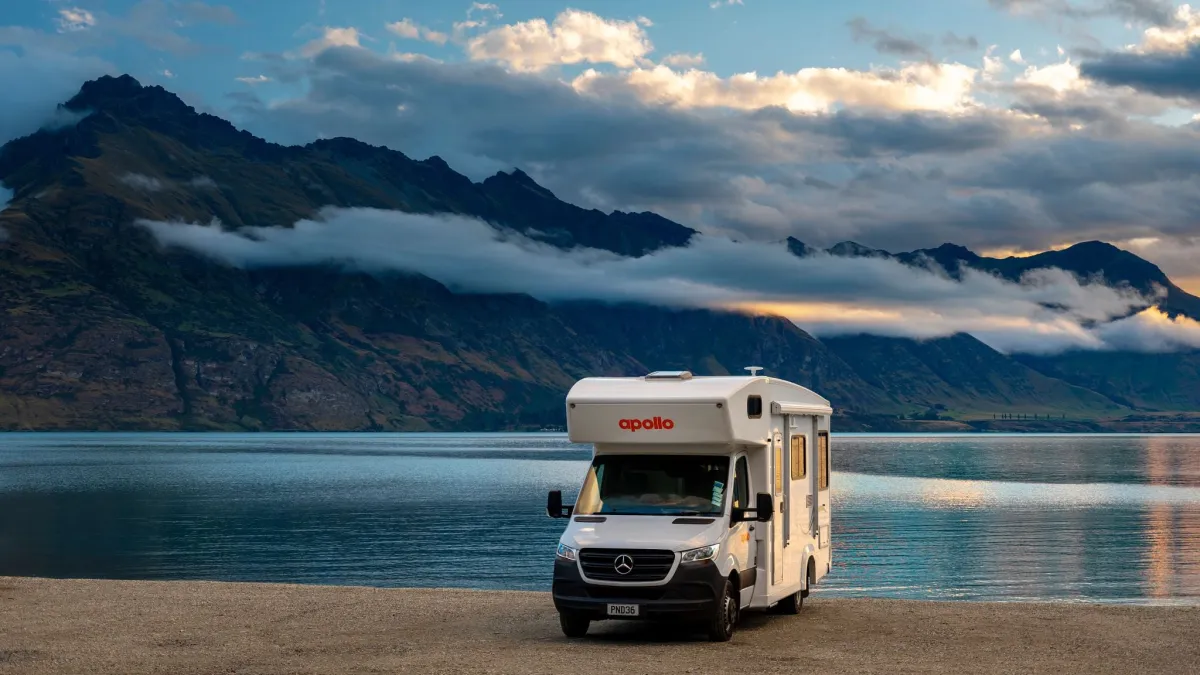
Freedom camping is the practice of camping on public land — council reserves, roadside rest areas, lakeshores, and beaches — outside of designated campgrounds. New Zealand has a strong freedom camping tradition, and when done responsibly, it's one of the best things about exploring the country by campervan.
Imagine waking up to a mountain lake at sunrise, or falling asleep to the sound of waves on a deserted beach — all for free. That's the magic of freedom camping in NZ. It transforms a campervan trip from a holiday into a genuine adventure, connecting you with the landscape in a way that holiday parks simply can't match.
However, freedom camping in New Zealand has become increasingly regulated due to environmental damage caused by irresponsible campers in the past. Understanding and following the rules is essential — both to avoid fines and to protect the privilege for future travellers.
The Rules: What You Need to Know in 2026
The Green Warrant (The Key Rule)
Since the Self-Contained Motor Vehicles Legislation Act 2023, the rules have tightened significantly. To freedom camp on most public land in New Zealand, your campervan must hold a Green Self-Containment Warrant — officially known as the Certified Self-Contained (CSC) Green Warrant. This replaced the old blue warrant system, which is no longer valid for freedom camping.
Under the new law, rental companies must ensure the vehicle displays a green warrant card on the front windscreen and a matching green sticker on the rear window. To qualify, the campervan must have:
- A fixed toilet permanently plumbed to a holding tank (portable bucket toilets and cassette toilets that aren't permanently fixed are no longer accepted)
- A fresh water tank with minimum capacity of 4 litres per person per day for 3 days
- Grey water collection for all sink and shower waste, plumbed to a holding tank
- Black water containment for toilet waste in a permanently fixed holding tank
- A current NZS 5465:2001 Green Self-Containment certification inspected and issued by an approved testing officer
Critical change from the old system: Under the old blue warrant, portable cassette toilets were sufficient. The green warrant requires a permanently plumbed toilet — this means many older and smaller campervans that had blue warrants no longer qualify. If your campervan still displays an old blue warrant card, it is not valid for freedom camping. Always check for the green warrant before you travel.
Most rental campervans from major NZ companies (Britz, Maui, Apollo, JUCY, Mighty, Wilderness) now carry the green certification as standard on their mid-range and larger vehicles. Budget hitop campervans from some companies may not be self-contained — check before booking if freedom camping is important to your trip.
When booking your campervan hire, confirm Green Warrant self-containment status if you plan to freedom camp. Our comparison tool shows self-contained vehicles from trusted NZ rental brands.
What Happens If You Break the Rules?
Local councils and the Department of Conservation enforce freedom camping rules, and fines are significant:
- $200 instant fine: Camping in a restricted area without a self-contained vehicle (the most common offence)
- $200 instant fine: Camping where freedom camping is prohibited
- Up to $10,000: Depositing waste (grey water, black water, or rubbish) in the natural environment
- $200 instant fine: Lighting a fire in a restricted fire area
Enforcement has increased significantly since the 2023 legislation. Council compliance officers regularly patrol popular camping areas, particularly in peak summer. They check for valid green warrants and can issue fines on the spot. Don't risk it — the system works on trust, and abuse threatens the freedom camping privilege for everyone.
Where You Can and Can't Freedom Camp
Understanding the classification system is essential:
- DOC (Department of Conservation) land: Generally permitted for self-contained vehicles unless specifically signed otherwise. DOC manages approximately one-third of New Zealand's land area, including national parks, conservation reserves, and scenic reserves. Many DOC areas have designated freedom camping zones with specific rules.
- Council reserves and rest areas: Rules vary enormously by council. Some councils (particularly in the South Island) are generous with freedom camping provisions. Others (notably in popular tourist areas like Queenstown Lakes District and Thames-Coromandel) have significantly restricted freedom camping. Always check council bylaws or use the CamperMate app.
- Road margins and layby areas: Some roadside areas allow overnight stays for self-contained vehicles. These are typically unsigned — if there's no prohibition sign, self-contained vehicles may stay one night.
- Private land: Never camp on private land without explicit permission from the landowner.
- Prohibited areas: Yellow diamond "No Camping" signs are legally enforceable. Red "No Freedom Camping" signs prohibit all overnight stays outside designated campgrounds.
Essential Apps and Resources for Freedom Camping
Technology has made freedom camping dramatically easier. These apps are essential:
- CamperMate — The gold standard NZ camping app. Shows free and paid campsites, dump stations, water fill points, public toilets, supermarkets, and fuel stations with reviews from other campers. Updated regularly with council bylaw changes. Free to download; premium version ($15/year) adds offline maps and extra features.
- Rankers Camping NZ — Comprehensive database of freedom camping spots with detailed council bylaw information and user reviews. The community is active and reviews are generally reliable and current.
- WikiCamps NZ — User-contributed campsite database with offline maps (essential in areas with no mobile reception). One-time purchase NZ$5. The map overlay showing free vs. paid camping is useful for route planning.
- DOC website (doc.govt.nz) — Official information on conservation campgrounds ($8–22/night) and freedom camping areas on DOC-managed land. Book popular DOC campgrounds online — they fill up in summer.
- Campable — A newer platform connecting travellers with private landowners who offer camping on their property (farms, vineyards, orchards). Sites range from free to $20/night and often come with unique experiences (farm tours, wine tasting). Think of it as Airbnb for camping.
Top Freedom Camping Spots — South Island
The South Island offers New Zealand's best freedom camping, with more spots, fewer restrictions, and more spectacular locations than the North Island.
Canterbury & Mackenzie Country
- Lake Pukaki Freedom Camp — Turquoise glacier-fed lake with Mount Cook (Aoraki) towering above. The colour of the water is almost unbelievable — an intense milky turquoise from glacial flour. Self-contained vehicles only. Multiple designated spots along the lakeshore, but arrive before 3pm in summer as they fill up.
- Lake Tekapo Lakeside Freedom Camp — Similar glacial lake beauty with views of the Church of the Good Shepherd. Dark Sky Reserve area — the stargazing here is extraordinary on clear nights.
West Coast
- Lake Mapourika, near Franz Josef — Mirror-still lake surrounded by rainforest, reflecting the Southern Alps at sunrise. One of the most photographed freedom camping spots in NZ. Self-contained only, one-night maximum.
- Gillespies Beach — Wild West Coast beach south of Fox Glacier. The seal colony at the southern end and the mountain views make this a special overnight stop. Basic DOC facilities (toilet).
Otago & Southland
- Goose Bay, Kaikōura — Oceanfront freedom camping area south of Kaikōura township. Watch seals from your campervan window at sunrise. Self-contained vehicles only. No facilities, but the location is unbeatable.
- Boundary Creek, Lake Wānaka — Lakeside camping with mountain views across Lake Wānaka. Very popular in summer — arrive before 2pm for a spot. Self-contained only.
- Twelve Mile Delta, Queenstown — Lake Wakatipu shoreline, 12 km from Queenstown. Scenic, peaceful, and the closest camping to Queenstown. $8/night DOC fee — technically a basic campground rather than freedom camping, but it has the same feel.
- Mavora Lakes — Remote alpine lakes south of Queenstown, reached by a gravel road. Lord of the Rings filming location (Nen Hithoel). Beautiful DOC campground ($8/night) in a pristine mountain setting. No mobile reception — bring everything you need.
Top Freedom Camping Spots — North Island
Freedom camping on the North Island is more restricted than the south, but excellent spots exist, particularly outside the peak tourist corridors.
Northland
- Spirits Bay, Far North — Remote beach camping near Cape Reinga, the spiritual northernmost point of New Zealand. The sunsets here are extraordinary, and you're likely to be the only camper on the beach. $8/night DOC fee.
- Uretiti Beach, Bream Bay — Long sandy beach between Whangārei and Mangawhai. DOC campsite ($8/night) right on the beach. Excellent swimming and surfing.
Coromandel & Waikato
- Hahei Beach Reserve, Coromandel — Near Cathedral Cove. Self-contained vehicles only in peak season. The walk to Cathedral Cove is 45 minutes from the reserve.
- Reid's Farm, Taupō — Free camping area beside the Waikato River with natural hot springs in the riverbank. Dig into the gravel at the river's edge to create your own hot pool where geothermal water seeps through. Popular with locals and tourists alike — arrive early for riverside spots.
East Coast & Bay of Plenty
- Ōhope Beach, Bay of Plenty — Beachfront freedom camping on one of NZ's most beautiful beaches. Self-contained vehicles only. The beach stretches for 11 km with excellent surf and golden sand.
- East Cape — The remote East Cape road (Pacific Coast Highway) between Ōpōtiki and Gisborne has numerous freedom camping spots along deserted beaches. This is one of the least-touristed routes in New Zealand and offers genuine frontier adventure.
Freedom Camping Etiquette and Best Practices
Freedom camping in NZ has come under significant pressure due to irresponsible behaviour by a minority. The 2023 legislation was a direct response to environmental damage. Help protect the privilege for future travellers:
The Essential Rules
- Leave no trace: Pack out all rubbish — including food scraps, cigarette butts, and grey water. If you packed it in, pack it out. Leave the site cleaner than you found it.
- Use dump stations: Empty grey water and black water at designated dump stations only. Never dump waste in rivers, drains, culverts, or on the ground. The CamperMate app shows all dump station locations.
- Respect locals: Don't camp in residential areas or block access to private property, boat ramps, or walking tracks. Be quiet after 10pm. Remember that freedom camping areas are often in communities — respect the people who live there year-round.
- One or two nights only: Most freedom camping sites have a maximum stay period (usually one or two nights). Don't overstay — move on and give others the opportunity to enjoy the spot.
- No fires: Open fires are restricted in many areas, particularly during the fire season (October–March). Use your campervan's cooking facilities instead. If you must have a fire, check the current fire danger level at checkitsalright.nz and only use designated fire pits.
- No toilet waste in nature: This is the issue that caused the most damage to freedom camping's reputation. Always use your onboard toilet. If using a non-self-contained vehicle at a campground, use the facilities provided.
Practical Tips
- Arrive before dark: Finding a freedom camping spot in the dark is stressful and can lead to camping in prohibited areas. Plan to arrive at your chosen spot by 4–5pm.
- Have a backup plan: Popular freedom camping spots fill up, especially in summer. Always identify a nearby paid campground or alternative freedom camping spot as a backup.
- Manage your tanks: Monitor your fresh water, grey water, and black water levels daily. Running out of fresh water or overflowing waste tanks is the fastest way to ruin a freedom camping experience. Empty waste tanks every 2–3 days.
- Be social (or not): Freedom camping areas range from social (multiple vans, people chatting) to completely isolated. If you want solitude, look for spots further from main highways and popular areas.
- Download offline maps: Many of the best freedom camping spots are in areas without mobile reception. Download offline maps for your route before leaving town.
DOC Campgrounds: The Middle Ground
If freedom camping feels too basic or you want more reliable facilities, the Department of Conservation operates over 200 campgrounds throughout New Zealand. These are set in stunning locations — national parks, lakeshores, beachfronts, riverbanks — and represent incredible value compared to holiday parks.
DOC campgrounds are classified into four categories:
- Basic/Informal ($0–8/night): Pit toilet only. No water, no cooking facilities. Found in remote locations. Some are free.
- Standard ($10–15/night): Flush toilets, tap water, sometimes a cold shower. The most common type.
- Scenic ($15–20/night): Hot showers, kitchen shelter, picnic tables. Typically in popular national park locations.
- Serviced ($20–25/night): Full facilities including hot showers, kitchen, laundry, and sometimes powered sites. The closest to holiday parks in facilities.
Book at doc.govt.nz — popular campgrounds (particularly in Abel Tasman, Tongariro, and Fiordland) fill up months ahead in summer. Many basic campgrounds are first-come, first-served.
Holiday Parks: When You Need Full Facilities
Even dedicated freedom campers will want a holiday park every few days — for hot showers, laundry, a proper kitchen, charging devices, and dumping waste. New Zealand's holiday park network is excellent:
- Top 10 Holiday Parks: A nationwide chain of quality-assured holiday parks. Powered sites NZ$45–65/night. Clean facilities, camp kitchens, playgrounds, and often extras like hot tubs and swimming pools. Book at top10.co.nz.
- Kiwi Holiday Parks: Another good chain with consistent standards. Generally slightly cheaper than Top 10.
- Independent holiday parks: Quality varies but some independents are excellent. Check reviews on CamperMate or Google Maps.
A typical freedom camping trip pattern is 2–3 nights freedom camping, followed by 1 night at a holiday park to recharge (literally and figuratively). This keeps costs down while ensuring you maintain hygiene and vehicle maintenance.
Freedom Camping by Region: Council Rules Summary
One of the most confusing aspects of freedom camping is that rules vary by council. Here's a summary of the major regions for 2026:
South Island Councils
- Christchurch City: Limited freedom camping areas. Most reserves prohibit overnight camping. Check specific locations on CamperMate.
- Mackenzie District (Lake Tekapo/Pukaki area): Generous freedom camping provisions for self-contained vehicles at designated sites around the lakes. Some of NZ's best freedom camping.
- Westland District (glaciers/West Coast): Several excellent freedom camping areas. Lake Mapourika and Gillespies Beach are popular. Self-contained vehicles only.
- Queenstown Lakes District: Heavily restricted. Very few legal freedom camping areas near Queenstown or Wānaka due to past problems. The council has designated a limited number of areas — check the QLDC website for current locations.
- Clutha District (Catlins): Relatively generous. Several beach and river reserve areas permit self-contained camping.
- Kaikōura District: Good freedom camping options along the coast (Goose Bay, Mangamaunu) for self-contained vehicles.
North Island Councils
- Auckland: Very limited freedom camping in the Auckland region. Holiday parks or paid campgrounds are the realistic option.
- Thames-Coromandel: Restricted in peak season (December–February). Some reserves open to self-contained vehicles in shoulder season.
- Rotorua Lakes District: Several excellent spots around the lakes for self-contained vehicles. Check the council's freedom camping map online.
- Taupō District: Good options including Reid's Farm (free, with hot springs) and several lakeside reserves.
- Far North District (Bay of Islands/Northland): Limited but some beautiful spots exist. Spirits Bay DOC campsite is outstanding.
- Napier/Hastings: Limited freedom camping. The region focuses on vineyard accommodation and holiday parks.
Freedom Camping with Children
Freedom camping with kids requires extra planning but is an incredible family experience:
- Choose spots with flat ground — children need space to play, and cooking dinner is easier on level terrain.
- Prioritise locations near water — rivers, lakes, and beaches provide hours of free entertainment for children.
- Arrive early — getting set up before dark reduces stress for everyone.
- Mix freedom camping with holiday parks — kids benefit from playgrounds and meeting other children at holiday parks. A ratio of 2 nights freedom camping to 1 night at a holiday park works well for families.
- Safety awareness — teach children about campfire safety, water safety, and staying within sight. Some freedom camping spots are near roads or unfenced water.
- Entertainment — bring books, card games, and binoculars for wildlife spotting. No screens needed — the New Zealand outdoors is the entertainment.
Self-Containment Tips for Campervan Renters
If you're renting a campervan and plan to freedom camp, here are practical tips for managing your self-contained vehicle:
- Confirm the Green Warrant at pickup. Check for the green card on the windscreen and green sticker on the rear window. If either is missing, ask the rental company to provide them before you leave the depot.
- Learn your tank capacities — know how many litres your fresh water, grey water, and black water tanks hold. This determines how many days you can freedom camp between dump station visits.
- Conserve water — when freedom camping, water conservation extends your range. Quick showers, washing dishes in a basin (not under running water), and using the toilet sparingly all help.
- Find dump stations — download the CamperMate app before your trip. Dump stations are located at holiday parks (usually free even for non-guests), DOC campgrounds, service stations, and some dedicated roadside facilities.
- Grey water discipline — never pour grey water (dishwashing water, shower water) on the ground. It must go down the sink or shower drain into your grey water tank. This is the law, not optional.
- Keep a maintenance log — check tank levels daily. The worst freedom camping experience is discovering your black water tank is full at 10pm with no dump station nearby.
Compare campervan hire in New Zealand →
Frequently Asked Questions About Freedom Camping
Can I freedom camp in a car or tent?
No. Since the 2023 legislation, freedom camping on public conservation land and most council land requires a certified self-contained vehicle with a Green Warrant. Tents, cars, station wagons, and non-self-contained campervans are restricted to designated campgrounds only. Some private land (via Campable) may allow tents with landowner permission.
Is freedom camping legal everywhere in New Zealand?
No. Freedom camping is permitted in many places but prohibited in others. Each council and DOC region has different rules. Always check signage at the location and use CamperMate or the local council website to confirm a site is legal before staying overnight.
What's the difference between freedom camping and DOC camping?
Freedom camping is free and usually has no facilities (you rely entirely on your self-contained vehicle). DOC campgrounds charge $8–25/night and provide varying levels of facilities (toilets, water, sometimes showers). Both offer stunning natural locations — the main difference is the fee and facility level.
Can I freedom camp in winter?
Yes, but be prepared for cold temperatures, shorter daylight hours, and potentially snow at altitude. Many South Island freedom camping spots are accessible year-round. Ensure your campervan has adequate heating and carry extra bedding. Some spots may be inaccessible due to snow or road closures (particularly Milford Road and mountain passes).
Planning your trip?
Compare campervan & motorhome hire prices across New Zealand: