North Island: A Different Kind of New Zealand
While the South Island gets the postcard glory, the North Island has its own magic — bubbling geothermal fields, volcanoes you can walk across, surf beaches, ancient kauri forests, and New Zealand's best food scene. The climate is warmer (especially in the subtropical far north), the Māori cultural presence is stronger and more visible, and the cities are more vibrant.
The North Island is where most New Zealanders actually live — 77% of the population — and it shows in the diversity of experiences available. From Auckland's cosmopolitan dining scene to the raw volcanic power of Tongariro, from the golden beaches of the Coromandel to the wine country of Hawke's Bay, this island delivers a road trip that's culturally richer and more varied than most travellers expect.
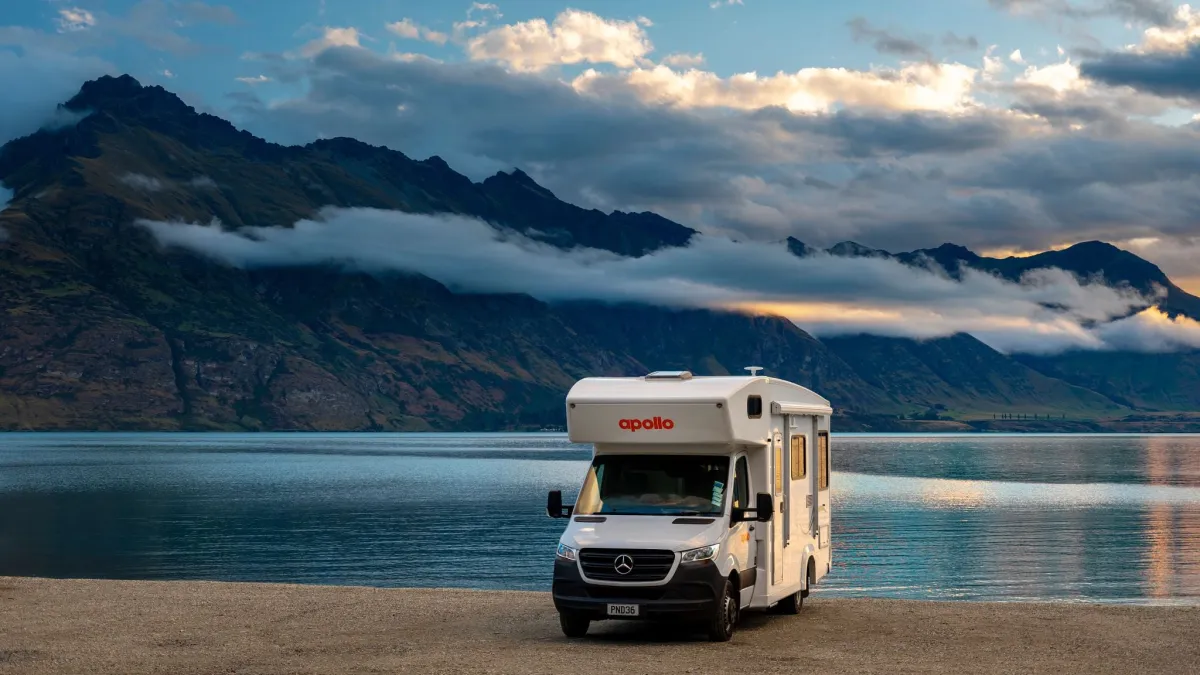
Pick up your campervan in Auckland and head out on a 10–14 day loop that covers the North Island's highlights. Auckland is New Zealand's main hub for campervan hire, with the widest selection of vehicles and competitive rental prices. See our Auckland campervan hire guide for brand comparisons.
Planning Your North Island Road Trip
When to Go
The North Island is warmer than the South Island and can be visited year-round, though October to April is the prime campervan season:
- October–November: Spring brings wildflowers, moderate temperatures (15–22°C), and low tourist numbers. Pohutukawa trees begin blooming red in late November.
- December–February: Summer peak. Temperatures reach 25–30°C in most areas, beaches are perfect, and long daylight hours (sunset after 9pm) give maximum exploring time.
- March–April: Our recommended sweet spot — warm temperatures, thinning crowds, autumn colours in wine country, and 20–30% cheaper campervan rates.
- Winter (June–August): Skiing on Mt Ruapehu, hot springs are even more appealing, and Rotorua's geothermal areas are atmospheric in cooler weather. Expect 10–15°C and rain.
Budget Overview for 12 Days (Two People)
- Campervan hire: NZ$1,200–$3,600 (depending on vehicle size and season)
- Fuel: NZ$350–$500 (approximately 2,100 km)
- Camping: NZ$0–$600 (freedom camping, DOC, and holiday park mix)
- Food: NZ$450–$800 (self-catering plus wine tastings and restaurant meals)
- Activities: NZ$200–$800 (Tongariro shuttle $45, Te Puia $70, Whale Island boat trip $90, hot springs $30–70)
- Total: NZ$2,200–$6,300
Day 1–2: Auckland to the Coromandel Peninsula (175 km)
Drive Time: 2.5 hours
Escape Auckland's sprawl and head east to the Coromandel Peninsula, a laid-back region of native bush, golden beaches, and tiny arty towns. The drive over the Coromandel Range offers stunning views of the Hauraki Gulf and its scattered islands.
The Coromandel was the site of New Zealand's first gold rush in 1852, and the remnants of that era linger in the character of towns like Coromandel Town and Thames. Today, the peninsula attracts artists, potters, and people seeking a slower pace of life. The result is a charming collection of studio galleries, organic cafés, and craft workshops scattered through the hills.
Cathedral Cove is the peninsula's icon — a natural rock arch on a white sand beach accessible only by foot (45 minutes each way) or boat. The walk descends through native bush with views over Mercury Bay before emerging at a stunning beach. Go early (before 9am) to beat the crowds and the midday heat. Nearby Stingray Bay is often deserted and equally beautiful.
Hot Water Beach is one of New Zealand's most unique experiences. At low tide, geothermal water seeps up through the sand, and you can dig your own hot pool with a shovel (hire from the nearby surf shop for $5). The contrast of hot mineral water below and cool ocean waves washing over is surreal. Check tide times carefully — the hot springs are only accessible for 2 hours either side of low tide.
Where to camp: Hot Water Beach Top 10 Holiday Park puts you within walking distance of both Hot Water Beach and Cathedral Cove track. Hahei Beach Reserve offers freedom camping for self-contained vehicles in the off-season (not available during peak summer).
Day 3–4: Coromandel to Rotorua (210 km)
Drive Time: 3 hours
Drive south to Rotorua, New Zealand's geothermal heartland and the centre of Māori culture on the North Island. The town famously smells of sulphur (hydrogen sulphide from the geothermal vents — you genuinely stop noticing after a day), and the surrounding landscape is otherworldly — boiling mud pools, erupting geysers, steaming lakes, and hot springs that bubble up in backyards.
Rotorua sits within the Taupō Volcanic Zone, one of the most active volcanic areas on Earth. The geothermal activity is not a distant geological curiosity — it's literally everywhere. Steam rises from drains, parks have cordoned-off hot spots, and the ground itself is warm in places.
Rotorua Must-Dos
- Te Puia / Whakarewarewa — Māori cultural village with the Pōhutu Geyser erupting up to 30 metres high (the Southern Hemisphere's largest active geyser). The cultural performances include the haka, poi dancing, and traditional hangi cooking demonstrations. NZ$70/adult, and worth every cent — this is authentic Māori culture, not a tourist show.
- Wai-O-Tapu Thermal Wonderland — The most colourful geothermal area in New Zealand. The Champagne Pool is a steaming lake of bright orange and green mineral terraces, the Devil's Bath is vivid acid-green, and the Artist's Palette shifts colours throughout the day. The Lady Knox Geyser erupts daily at 10:15am. NZ$40/adult.
- Kerosene Creek — Free natural hot stream flowing through native bush, 30 minutes south of Rotorua. This is the quintessential New Zealand hot spring experience — no entrance fee, no facilities, just warm water flowing through a forest with sunlight filtering through the canopy. Arrive early for a more peaceful soak.
- Redwoods Treewalk — Walk among 100-year-old California redwoods on suspended bridges up to 12 metres above the forest floor. NZ$35/adult during the day; the nighttime illuminated walk ($39) features thousands of coloured lanterns and is genuinely magical.
- Tamaki Māori Village — A cultural evening experience including a traditional welcome, cultural performances, and a hangi feast cooked in an earth oven. More immersive than Te Puia for the cultural experience (NZ$140/adult including dinner).
- Mountain biking: Rotorua is New Zealand's mountain biking capital, with the Whakarewarewa Forest trails rated among the best in the world. Bike hire from NZ$60/day.
Where to camp: Rotorua Top 10 Holiday Park has a natural hot pool on site (free for guests). Blue Lake Top 10 is slightly further out but sits beside a beautiful lake. Freedom camping at the Okere Falls Reserve offers riverside sites.
Day 5–6: Rotorua to Tongariro & Lake Taupō (100 km)
Drive Time: 1.5 hours
Lake Taupō is New Zealand's largest lake, filling a volcanic caldera created by a catastrophic super-eruption 26,500 years ago — an event so massive it turned the sky red as far away as China and Rome. Today, the lake is a serene, stunningly beautiful body of water surrounded by mountains, with the volcanic cones of Tongariro, Ngauruhoe, and Ruapehu visible to the south.
The town of Taupō is a pleasant base with lakeside walks, the Huka Falls (NZ's most visited natural attraction — a torrent of 220,000 litres per second thundering through a narrow canyon), and the Taupō Hole in One Challenge (hit a golf ball onto a floating green in the lake — $10 per bucket of balls).
The Tongariro Alpine Crossing is the headline experience and widely considered one of the world's best day walks. The 19.4-kilometre one-way track takes 7–8 hours and traverses active volcanic terrain:
- South Crater: A vast flat volcanic plateau that feels like walking on the moon
- Red Crater: The active heart of the volcano, with steam vents and the smell of sulphur. The views from the rim are staggering.
- Emerald Lakes: Three vivid green mineral lakes in a volcanic depression — the most photographed sight on the crossing
- Blue Lake: Sacred to Māori (do not swim or touch the water)
- Mount Ngauruhoe: A near-perfect volcanic cone also known as Mount Doom from the Lord of the Rings films (the side trip to the summit adds 3 hours and is extremely steep)
In Māori culture, the mountains are sacred ancestors. Shuttle services run daily in season (NZ$45 return from Taupō or the National Park village). Book ahead in summer — the crossing is extremely popular and shuttle seats sell out. Start early (before 7am) for the best weather and to avoid crowds.
Where to camp: Reid's Farm (Taupō) is a popular free camping area beside the Waikato River — known for natural hot springs in the riverbank (dig into the gravel at the water's edge). Discovery Holiday Park in the National Park village is convenient for Tongariro Crossing shuttles.
Day 7–8: Tongariro to Wellington (350 km)
Drive Time: 4 hours
Drive south through the Whanganui region — the Forgotten World Highway (SH43) is a stunning alternative route through remote hill country, tunnels, and valleys if you have time. Otherwise, SH1 takes you efficiently to Wellington, New Zealand's compact, creative capital.
Wellington punches far above its weight for food, coffee, and culture. It's been called "the coolest little capital in the world," and the combination of world-class museums, craft coffee roasters, waterfront dining, and a quirky, artsy population makes it genuinely delightful.
- Te Papa Museum — New Zealand's national museum. Free entry. The earthquake simulator gives a visceral sense of Wellington's seismic reality. The colossal squid exhibit, the Treaty of Waitangi display, and the Gallipoli exhibition (by Weta Workshop) are all exceptional. Allow at least 3 hours.
- Cuba Street — Wellington's quirky main strip — vintage shops, record stores, craft coffee roasters (Flight Coffee, Customs), and excellent restaurants. Midnight Espresso is a Wellington institution.
- Mount Victoria Lookout — Drive or walk up for 360-degree panoramic views of the harbour, city, and surrounding hills. Another Lord of the Rings filming location (the hobbits hiding from the Ringwraith).
- Wellington Cable Car — Ride the bright red cable car from Lambton Quay to the Botanic Garden for harbour views and a pleasant garden walk back down to the city.
- Craft beer: Wellington has more craft breweries per capita than anywhere in New Zealand. Garage Project, ParrotDog, and Panhead are all excellent — the Golding's Free Dive bar on Leeds Street has 18 taps of local craft beer.
Where to camp: Camp Kaitoke Regional Park, 40 minutes north of Wellington, offers peaceful riverside camping in native bush (also a Lord of the Rings filming location — Rivendell). Wellington Top 10 Holiday Park in Hutt Valley has the closest powered sites to the city centre.
Day 9–10: Wellington to Napier & Hawke's Bay (330 km)
Drive Time: 4 hours
Cross the Rimutaka Range (recently renamed the Remutaka Range) to the Wairarapa wine region, home to some of NZ's finest Pinot Noir and a fraction of the tourist traffic of Marlborough. Martinborough is the hub — walkable wine tasting among over 20 vineyards. Ata Rangi and Palliser Estate are personal favourites.
Continue to Napier and Hawke's Bay — one of the North Island's most rewarding destinations. Napier was completely rebuilt in Art Deco style after a devastating earthquake in 1931 that killed 256 people and raised the seabed by 2 metres (creating the land on which much of the city now sits). The result is the world's most concentrated collection of Art Deco architecture outside Miami. Take the free guided walking tour (daily at 10am from the i-SITE) to understand the full story.
Hawke's Bay is NZ's premier wine and food region, with over 200 vineyards producing excellent Chardonnay, Syrah, and Bordeaux-style red blends. Cycle the Hawke's Bay Trails network between wineries — the trails are flat, well-maintained, and pass through orchards, vineyards, and coastal landscapes. Bike hire from NZ$35/day. Many wineries have cellar doors with food pairings and platters.
Don't miss: Cape Kidnappers — home to the world's largest mainland gannet colony (November–February). Access is via a guided tractor-trailer tour along the beach ($45/adult) or a 2-hour walk at low tide.
Where to camp: Kennedy Park Resort in Napier has excellent facilities and powered sites within walking distance of the Art Deco precinct. Several vineyards in the region offer camping (check Campable NZ app).
Day 11–14: Return to Auckland via Bay of Islands (900 km over 3–4 days)
Total Drive Time: 10 hours (spread over 3–4 days)
Head north to the Bay of Islands, a subtropical archipelago of 144 islands that's one of New Zealand's most beautiful and historically significant areas. The water is crystal clear, dolphins are abundant, and the deep-sea fishing is legendary.
Bay of Islands highlights:
- Dolphin swimming: Swim with wild bottlenose and common dolphins (NZ$175/adult). Encounters are in open water with wild animals — respectful, non-captive interactions. Fullers Bay of Islands and Explore NZ operate daily trips.
- Hole in the Rock: A scenic cruise through the islands to Motukōkako island, passing through a natural rock arch large enough for boats. NZ$110/adult.
- Waitangi Treaty Grounds: New Zealand's most significant historic site — where the Treaty of Waitangi was signed in 1840 between the British Crown and over 500 Māori chiefs. The cultural performances here (including a waka paddling experience) are powerful and educational. NZ$50/adult.
- Russell: NZ's first European capital — now a charming waterfront village accessible by ferry from Paihia. Excellent seafood restaurants and the oldest surviving church in New Zealand (Christ Church, with musket ball holes from the 1845 Northern War).
- Kayaking: Paddle around the islands, visiting deserted beaches and exploring sea caves. Half-day guided trips from NZ$95.
Return to Auckland via the Waipoua Forest, home to Tāne Mahuta — the largest living kauri tree in New Zealand (51 metres tall, 14 metres girth, over 2,000 years old). The Footprints Waipoua twilight guided walk (NZ$95/adult) is led by local Māori guides through ancient forest to Tāne Mahuta and other giant kauri — an unforgettable spiritual and natural experience.
📍 Read our complete NZ campervan hire guide for nationwide tips and brand comparisons.
Compare campervan hire from Auckland →
Essential North Island Driving Tips
Road Conditions
North Island roads are generally well-maintained and fully sealed on all main routes. However, some characteristics require attention from campervan drivers:
- Winding roads: The Coromandel Peninsula, Rimutaka Range, and Forgotten World Highway feature tight curves and steep gradients. Allow extra time in a larger campervan and use lower gears on descents.
- Single-lane bridges: Less common than the South Island but still present, particularly in rural Northland and the Coromandel. Give way signs indicate priority.
- Auckland traffic: Avoid driving through Auckland during peak hours (7:30–9:30am, 4–6:30pm). Traffic congestion can add over an hour to your journey. If arriving or departing on a weekday, plan accordingly.
- Toll roads: The Northern Gateway Toll Road north of Auckland charges $2.40 per trip. Payment can be made online within 5 days at nzta.govt.nz.
Freedom Camping on the North Island
Freedom camping opportunities on the North Island are more restricted than the South Island, particularly around popular coastal areas. Council rules vary significantly — the CamperMate app is essential for finding legal freedom camping spots. Key points:
- The Coromandel restricts freedom camping in peak summer (December–February) at most beach reserves.
- Bay of Islands has limited freedom camping; the few available spots fill early in summer.
- Rotorua/Taupō has several excellent free camping areas, including Reid's Farm (hot springs!) and Kerosene Creek vicinity.
- The Waikato region between Auckland and Rotorua has good freedom camping options at various reserves.
Read our complete freedom camping New Zealand guide for detailed rules, apps, and our favourite free camping spots on both islands.
Food and Coffee Culture
The North Island's food scene is genuinely world-class, and eating well is one of the great pleasures of a campervan trip here:
- Auckland: NZ's most diverse food city — incredible Asian food in the suburbs (Dominion Road, Ponsonby Road), waterfront dining at the Viaduct, and world-class fine dining (Pasture, Sidart).
- Rotorua: Try a traditional Māori hangi — food slow-cooked in an earth oven over geothermal steam. Several operators offer hangi experiences.
- Hawke's Bay: Vineyard restaurants with locally sourced produce — Craggy Range, Elephant Hill, and Black Barn Bistro are outstanding.
- Wellington: The coffee capital of New Zealand (arguably the world outside Melbourne). Flight Coffee, Customs Brew Bar, and Peoples Coffee are must-visits. Also home to NZ's best craft beer scene.
- Roadside stalls: Throughout the North Island, roadside fruit and veg stalls operate on an honesty system — leave your money in the box. Summer brings incredible stone fruit, avocados, and citrus.
Connecting to the South Island
If you want to explore both islands (highly recommended), the Interislander and Bluebridge ferries connect Wellington to Picton across the Cook Strait. The 3.5-hour crossing through the Marlborough Sounds is one of the most scenic ferry rides in the world. Book early in summer as vehicle spaces fill fast. Fares vary by vehicle length — a standard campervan costs approximately NZ$200–350 one-way including passengers.
Many campervan companies allow one-way hire between islands (pick up in Auckland, drop off in Christchurch) though one-way fees may apply. Check our Auckland to Christchurch one-way guide for tips on finding the best deals.
North Island Packing Essentials
The North Island is generally warmer than the South Island, but weather can change rapidly. Pack these essentials regardless of season:
- Rain jacket: Even in summer, rain can arrive without warning. A lightweight packable rain jacket is essential.
- Sturdy footwear: The Tongariro Alpine Crossing requires proper hiking boots with ankle support. Cathedral Cove and most bush walks are fine with trail shoes.
- Swimwear and towel: You'll be in and out of water constantly — hot springs, beaches, rivers, and waterfalls. Pack two sets so one can dry.
- Sun protection: NZ's UV levels are significantly higher than equivalent latitudes in the Northern Hemisphere due to the thin ozone layer. SPF 50+, hat, and sunglasses are non-negotiable.
- Insect repellent: Sandflies are persistent in coastal and bush areas. DEET-based repellent or the locally popular "Goodbye Sandfly" cream is recommended.
- Reusable water bottle: New Zealand tap water is safe to drink everywhere. Refill rather than buying bottled water.
Planning your trip?
Compare campervan & motorhome hire prices across New Zealand: