Australia's Most Famous Road
The Great Ocean Road is a 243 km stretch of coastal road in Victoria, built by returned soldiers between 1919 and 1932 as a memorial to their fallen mates from World War I. It is the world's largest war memorial — and also one of the world's most spectacular coastal driving routes. Today it attracts over 8 million visitors annually, and for campervan travellers, it represents the quintessential Australian road trip experience.
Starting from Torquay (just 90 minutes southwest of Melbourne), the road hugs the coast past legendary surf breaks, through ancient temperate rainforest, and past the iconic Twelve Apostles limestone stacks. While you can technically drive the whole thing in four hours, doing so would mean missing everything that makes it special. This guide breaks it down into a perfect 3–5 day campervan itinerary.
What makes the Great Ocean Road unique among the world's great coastal drives is its diversity. In the space of 243 km, you pass through three completely different landscapes: the dramatic surf coast with its famous breaks and beach towns, the lush Otway Ranges with their ancient temperate rainforest and waterfalls, and the wild Shipwreck Coast with its towering limestone formations. Each section has its own distinct character, and together they create a road trip that never gets repetitive.
Planning Your Great Ocean Road Trip
Best Time to Visit
The Great Ocean Road is spectacular year-round, but each season offers a different experience:
- Summer (December–February): Warm weather (20–28°C), busy beaches, long daylight hours. Peak tourist season — book campsites weeks in advance. The surf towns are buzzing with energy.
- Autumn (March–May): Arguably the best time. Warm enough for comfortable camping, dramatically fewer crowds, and stunning golden light for photography. Water temperature is still swimable in March.
- Winter (June–August): Cold and dramatic — massive swells crash against the cliffs, and the Twelve Apostles look otherworldly in stormy weather. Whale watching season (Southern Right and Humpback whales visible from shore). Cheapest campervan rates.
- Spring (September–November): Wildflowers bloom in the Otways, whales are still visible, and the weather warms up. An excellent shoulder season with moderate crowds.
Vehicle Considerations
Standard campervans under 7.5 metres have no issues on the Great Ocean Road. The road is fully sealed and well-maintained, with regular pullover bays for slower vehicles. Larger motorhomes (7.5m+) can still drive the route, but the winding section between Apollo Bay and the Twelve Apostles is tight — take it very slowly and use pullover bays frequently. All car parks at the major attractions can accommodate standard campervans.
For couples, a 2-berth campervan from Melbourne is ideal — compact enough for the tight bends, fuel-efficient, and easy to park at the smaller campgrounds. Families should consider a 4-berth motorhome for the extra living space. If you are doing the Great Ocean Road as part of a longer Melbourne to Adelaide trip, factor in the total distance when choosing your vehicle.
Which Direction?
Drive east to west (Torquay to Port Campbell). This keeps you on the ocean side of the road for the best views and easiest access to lookout pullover bays. Driving west to east means you are on the inland side for most of the route — less scenic and harder to stop safely at lookouts.
Day 1: Torquay to Lorne
Distance: 72 km | Drive Time: 1 hour (without stops)
Start at Torquay, the surf capital of Australia and home to Bells Beach — the world's longest-running surf competition (Rip Curl Pro) has been held here since 1961. Even non-surfers will appreciate the powerful Southern Ocean waves crashing into the limestone cliffs. Walk down to the beach from the car park and watch the surfers — the wave is often 2–3 metres and the skill level is extraordinary.
The Surf World Museum in Torquay traces the history of Australian surf culture, with interactive exhibits and vintage boards. If you want to try surfing yourself, several schools offer beginner lessons at nearby beaches.
Continue along the coast to Anglesea, where kangaroos famously graze on the golf course — you can walk along the edge of the course for free and see dozens of roos. Stop at Anglesea Beach for a swim if the weather cooperates.
Aireys Inlet has the iconic Split Point Lighthouse (the one from the TV show Round the Twist). The lighthouse walk offers spectacular clifftop views. Continue past the Memorial Arch — the official gateway to the Great Ocean Road, commemorating the soldiers who built it. This is one of the most photographed spots on the route.
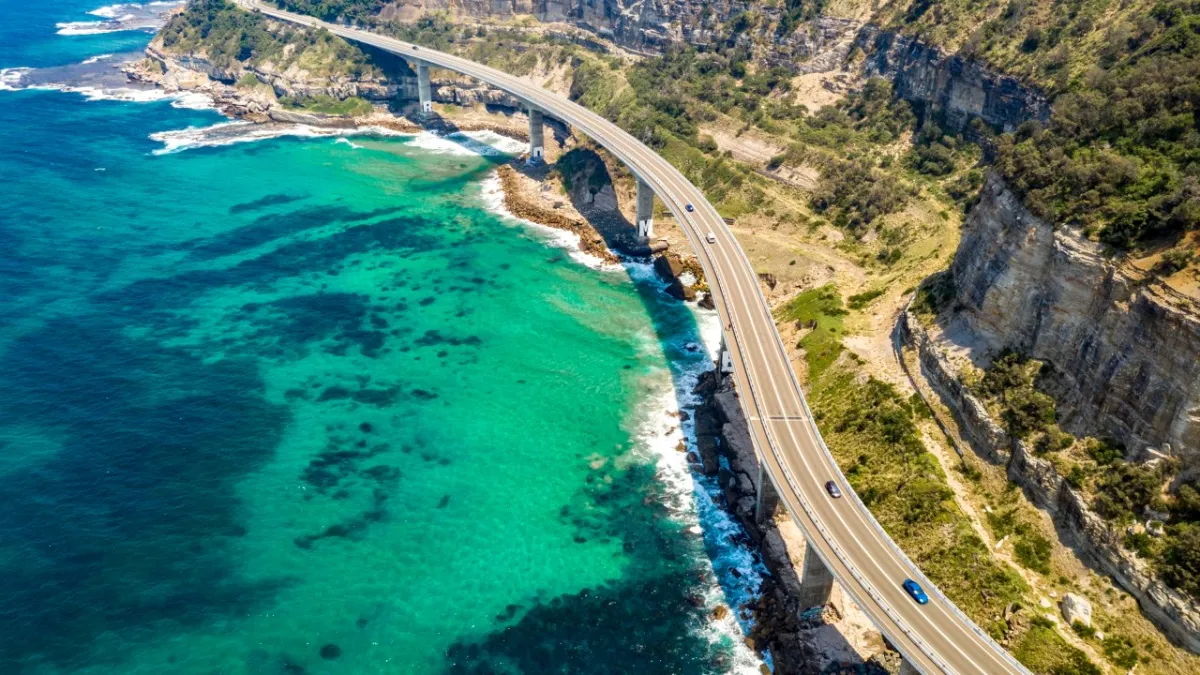
Each bend on this section reveals a new breathtaking vista — turquoise water, red cliffs, and sandy beaches framed by coastal bushland. Pull over at every lookout; they are all worth it. The section between Aireys Inlet and Lorne is arguably the most dramatic stretch of road on the entire Great Ocean Road, with the road carved into cliffsides hundreds of metres above the crashing ocean below.
Lorne is the Great Ocean Road's premier seaside village. Walk to Erskine Falls in the hinterland (20-minute drive from town, then a short walk through lush fern gullies to a 30-metre waterfall cascading into a rock pool). Browse the galleries on the main street, grab excellent coffee at any of the cafes, and enjoy fish and chips on the foreshore while watching the sun set over the ocean.
If you have energy, the Teddy's Lookout at the southern end of town provides sweeping views along the coast — a perfect sunset spot.
Where to camp: Lorne Foreshore Caravan Park has prime position right on the beach (book months ahead for summer — this is the most popular campsite on the entire Great Ocean Road). QDOS Arts campground is a quirky alternative with sculptural art scattered through the bush. Wye River Foreshore Camping (15 km further) is smaller and more intimate.
Day 2: Lorne to Apollo Bay & the Otways
Distance: 45 km to Apollo Bay | Drive Time: 1 hour
This stretch is the most dramatic on the entire Great Ocean Road — the road clings to sheer cliffs above the churning Southern Ocean, and every corner opens up a new spectacular view. Drive slowly (the road demands it) and stop at the numerous lookouts. The Big Hill lookout between Lorne and Apollo Bay is the most famous — the coastline curves away in both directions in a sweeping panorama.
Stop at Kennett River — this tiny settlement is one of the best places on the Great Ocean Road to see wild koalas. Walk along the Grey River Road (just off the main road) and look up into the eucalyptus trees. You will almost certainly spot koalas sleeping in the forks of the branches, and king parrots are so friendly here they will land on your hand if you hold out birdseed (available at the general store).
Apollo Bay is a laid-back fishing town with excellent seafood restaurants, a beautiful curved beach, and a working harbour where you can buy fresh fish directly from the boats. The Saturday farmers market is excellent for local produce. Use Apollo Bay as your base to explore the Otway Ranges — one of the last remaining temperate rainforests in Australia.
Otway Highlights
- Otway Fly Treetop Walk — A 600-metre elevated walkway through the rainforest canopy, 25 metres above the ground. The Zipline Tour adds an adrenaline element, flying between trees on a 2.5-hour guided circuit. On a misty morning, walking above the forest canopy feels like floating in the clouds.
- Maits Rest Rainforest Walk — An easy 30-minute boardwalk through ancient myrtle beech forest. These trees have been growing here since the time of the dinosaurs — the Otway Ranges are one of the last remnants of the Gondwana supercontinent's temperate rainforest.
- Cape Otway Lightstation — Australia's oldest surviving lighthouse (1848), with koalas so commonly spotted in the surrounding eucalyptus trees that you can practically guarantee sightings. The drive to the lighthouse through overhanging eucalyptus tunnels is atmospheric in itself.
- Triplet Falls — A beautiful triple cascade hidden deep in the Otway forest. The walk (1.8 km loop) winds through towering mountain ash trees (some of the tallest flowering plants on Earth) and lush fern gullies.
- Hopetoun Falls — A 30-metre waterfall plunging into a fern-lined amphitheatre. The walk is short (600 m return) but steep. Arrive early morning when the light filters through the forest canopy and mist rises from the falls.
Where to camp: BIG4 Apollo Bay Pisces Holiday Park has excellent facilities including a heated pool. Bimbi Park near Cape Otway offers bush camping with regular koala and kangaroo visitors — the wildlife experience alone makes it worth staying here. Johanna Beach (free camping, basic facilities) is a hidden gem for those who want a wild coastal camping experience.
Day 3: The Twelve Apostles & Port Campbell
Distance: 90 km from Apollo Bay | Drive Time: 1.5 hours
Leave the coast briefly as the road passes through the Otway Ranges, through ancient beech forest and past fern-lined creeks. The road emerges at the Shipwreck Coast — so named because over 700 ships have sunk along this treacherous coastline since European settlement.
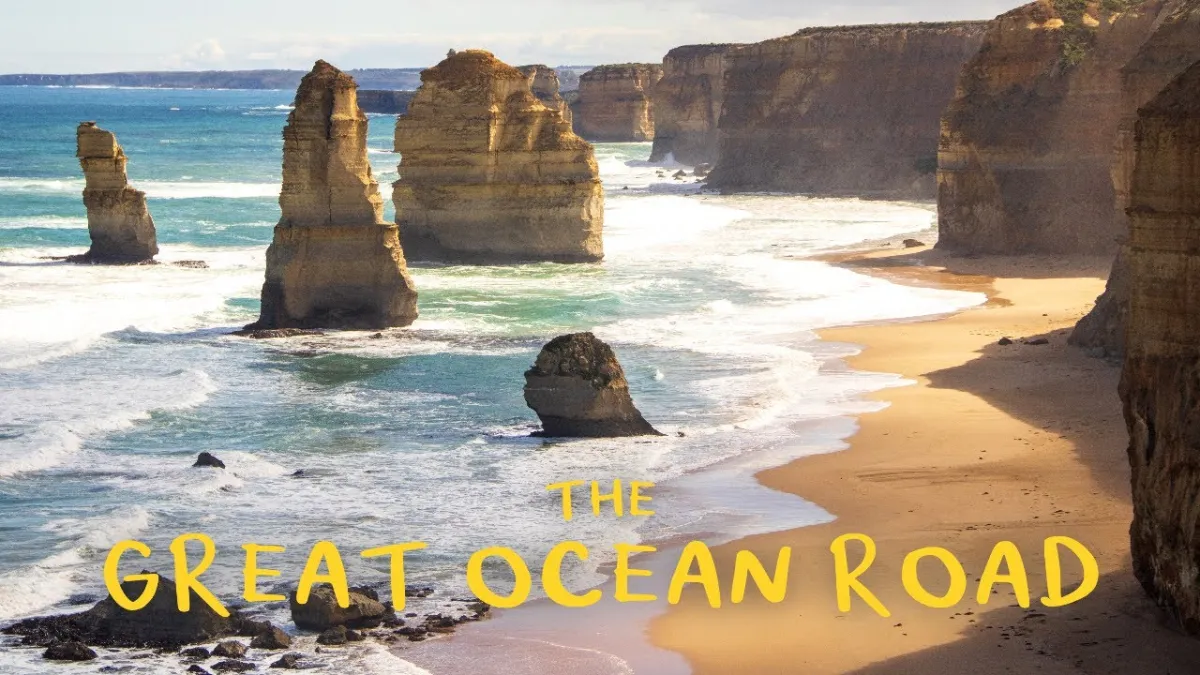
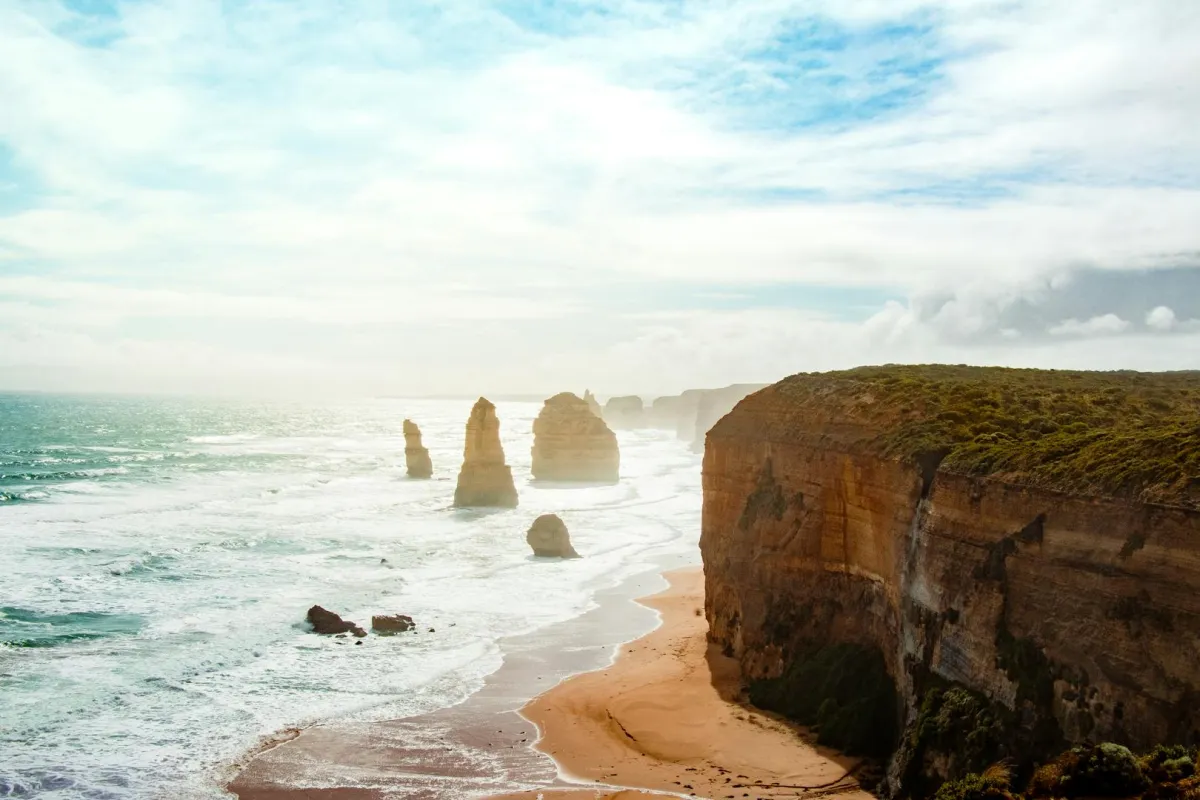
And then you see them: the Twelve Apostles. These dramatic limestone stacks, carved by millennia of Southern Ocean waves, are one of Australia's most photographed landmarks. Originally there were nine stacks (never twelve — the name was a marketing invention), and one collapsed into the sea in 2005, leaving eight. Each stack stands up to 45 metres tall, isolated from the cliffs by centuries of erosion.
Visit at sunset for the most dramatic light — the stacks glow gold, orange, and pink as the sun drops into the ocean behind them. It is genuinely one of Australia's most magical moments. A helicopter flight offers a spectacular aerial perspective (about $150 for 15 minutes) and is worth every cent — from above, you can see the scale of the coastline and the forces that created these formations.
Nearby, explore these equally impressive (and less crowded) formations:
- Loch Ard Gorge — Named after the clipper ship Loch Ard which sank offshore in 1878 with only two survivors (both teenagers). The gorge is a dramatic cleft in the cliffs with a sandy beach accessible by wooden stairs. The story of the survivors is told through interpretive signs at the lookout.
- London Arch — A natural rock bridge extending over the ocean. Its outer arch collapsed in 1990 while tourists were standing on it (they were rescued by helicopter). The remaining arch is dramatic and photogenic.
- The Grotto — A sinkhole with an ocean-level window that frames the crashing waves. At low tide, you can walk down to the rock platform.
- Gibson Steps — Carved into the cliff face, these steps lead down to a beach where you can walk at the base of the Twelve Apostles cliffs. The scale is humbling — the cliffs tower 70+ metres above you.
Where to camp: Port Campbell Holiday Park is close to the Twelve Apostles and the town's excellent fish and chip shop. Princetown Recreation Reserve is a budget option with basic facilities but a peaceful bush setting. Port Campbell itself is a tiny, charming town with a few restaurants, a general store, and a beautiful sheltered bay where penguins are sometimes spotted at dusk.
Days 4–5: Beyond the Apostles (Optional Extension)
If you have extra days, continue west beyond Port Campbell:
- Bay of Islands (15 km west) — Less famous than the Twelve Apostles but equally dramatic, with scattered limestone stacks and a more rugged, wild coastline. Far fewer tourists.
- Warrnambool (65 km west) — A substantial town with excellent facilities. Between June and September, Southern Right Whales calve in the waters of Logans Beach — visible from a free viewing platform on the cliff. Tower Hill Wildlife Reserve (15 min from town) is a volcanic crater turned nature reserve, with emus, koalas, and kangaroos easily spotted on a short walk.
- Continue to Adelaide — From Warrnambool, continue the journey to Adelaide via the Grampians for the ultimate multi-state road trip.
Getting Back to Melbourne
Most travellers return via the inland route (Princes Highway through Colac and Geelong) — it is faster (3 hours to Melbourne from Port Campbell) and avoids driving the winding coastal road twice. The inland route passes through pastoral farmland and is straightforward freeway driving. Stop at Colac for a coffee break and a walk around Lake Colac, and consider a detour to Birregurra, a charming small town with the famous Brae restaurant (one of Australia's best, though you will need to book months ahead).
Alternatively, if you have not done it already, detour to the Grampians National Park (2 hours north of Warrnambool) for hiking, Aboriginal rock art, and kangaroo spotting before heading back to Melbourne. The Pinnacle Lookout Walk in the Grampians is one of Victoria's most rewarding hikes, with panoramic views across the ancient sandstone ranges. This adds 1–2 days but is absolutely worth it if you have the time.
If you are doing a one-way trip to Adelaide, continue west from Warrnambool through the Coorong National Park — a vast coastal lagoon system that is a haven for birdlife. See our Melbourne to Adelaide road trip guide for the complete continuation.
Wildlife on the Great Ocean Road
The Great Ocean Road passes through some of Victoria's richest wildlife habitats. Here is what to watch for:
- Koalas — Cape Otway Lightstation road is one of Australia's best places to spot wild koalas. They sit in the eucalyptus trees along the road, often just metres above your head. Kennett River is another reliable spot.
- Whales — Southern right whales calve in the waters off Warrnambool (June–September), visible from the free viewing platform at Logans Beach. Humpback whales are occasionally spotted from headland lookouts along the Shipwreck Coast.
- Penguins — Little penguins come ashore at dusk at several points along the coast, including Port Campbell. Sit quietly near the harbour at sunset and you may see them waddle up the beach.
- King parrots and rosellas — Brilliantly coloured parrots are common throughout the Otway Ranges and at campgrounds along the route. They are remarkably tame at Kennett River, often landing on outstretched hands.
- Echidnas — These spiny monotremes are occasionally spotted crossing roads or foraging in the bush along the Otway section. Drive carefully and give them time to pass.
- Platypus — The freshwater creeks in the Otway Ranges are home to platypus, though they are shy and best spotted at dawn or dusk. Lake Elizabeth (accessible via a 5 km walk from Forrest) is one of Victoria's most reliable platypus-spotting locations.
Campervan Tips for the Great Ocean Road
- Vehicle restrictions: Vehicles over 7.5m may face restrictions on some bends. Check VicRoads for current conditions. Standard campervans have no issues.
- Direction: Always drive Torquay to Port Campbell (east to west) to stay on the ocean side of the road for the best views. This cannot be overstated — the experience is dramatically different on the ocean side versus the inland side.
- Pull over regularly: There are frequent pullover bays. Use them to let faster traffic pass — it is courteous and legally required if you are holding up traffic. Campervans are slower than cars on the winding sections, and locals appreciate when you let them pass.
- Weather: The Great Ocean Road can be wild in winter with storms and massive swells — dramatic to watch but drive carefully. Summer is busier but warmer. Pack layers regardless of season — the Southern Ocean wind can be cold even in summer. Rain can reduce visibility on the winding sections, so allow extra time.
- Fuel: Fill up in Torquay or Lorne. Apollo Bay has fuel but at a premium. Port Campbell has limited fuel. Do not rely on being able to fill up between stops. A full tank in Torquay will easily get you to Port Campbell with plenty to spare.
- Photography tips: The Twelve Apostles are best photographed at sunrise or sunset — the golden light transforms the limestone from grey to gold. Gibson Steps gives you a ground-level perspective that is very different from the main lookout. For the best Otway waterfall photos, visit after recent rain and arrive early morning when mist rises from the forest floor.
- Campsite booking: Lorne Foreshore Caravan Park is the most popular campsite on the entire route and books out months ahead for summer. Have backup options ready. Many of the smaller campgrounds (Wye River, Johanna Beach) are first-come-first-served.
📍 Choosing a brand? Our Melbourne campervan hire guide compares all 25+ brands, pricing tiers, and depot locations. Picking up from the airport? See our Melbourne Airport pickup guide.
Planning your trip?
Compare campervan & motorhome hire prices across Australia: