Why take the coastal route instead of the Hume?
The Hume Highway gets you from Sydney to Melbourne in about nine hours. It is efficient, well-lit and almost entirely forgettable. The coastal route — down the Princes Highway through the NSW South Coast and into East Gippsland — takes roughly 1,200 kilometres and rewards every extra kilometre with white-sand beaches, oyster farms, national park walks and far fewer trucks. If you have ten days and a campervan, this is the obvious choice.
That said, the two routes suit different travellers. If you want a quick comparison of both options before committing, the Sydney to Melbourne Road Trip: Coastal vs Inland Routes guide breaks down the trade-offs in detail. This guide assumes you have already decided: coastal, slow, properly done.
Before you leave Sydney
Most operators pick up from depots in Alexandria, Mascot or the inner west — not from the CBD. Apollo, Britz, Maui, Jucy, Travellers Autobarn, Camperman, Mighty, Cheapa Campa, Star RV and Lets Go all have Sydney operations, and depot locations vary. Before you book, read the Campervan Hire Sydney: Depots, Costs and Leaving the City guide so you are not surprised by a 45-minute Uber to pick up your vehicle.
If you want to compare what each operator charges for this specific one-way trip, head to the CamperCompare Sydney campervan hire page and filter by drop-off location. One-way fees vary significantly — some operators charge $0 repositioning, others add $200–$400 depending on the season. Summer (December–February) is peak; you will pay more and need to book further ahead. Autumn is arguably the best time: mild temperatures, emptier campgrounds and lower hire rates.
One-way hire also comes with its own quirks around insurance, kilometre allowances and drop-off timing. The One-Way Campervan Hire: Sydney to Melbourne Guide 2026 covers all of that in one place.
The 10-day itinerary at a glance
| Day | Leg | Approx. drive | Key stop |
|---|---|---|---|
| 1 | Sydney to Jervis Bay | 180 km | Hyams Beach, Booderee NP |
| 2 | Jervis Bay rest day | 0 km | Kayaking, snorkelling, dolphins |
| 3 | Jervis Bay to Ulladulla / Murramarang | 90 km | Murramarang National Park |
| 4 | Ulladulla to Narooma | 160 km | Montague Island, Tilba Tilba |
| 5 | Narooma to Merimbula | 100 km | Bermagui, Tathra Wharf |
| 6 | Merimbula to Eden / Ben Boyd NP | 30 km | Green Cape Lighthouse, killer whale history |
| 7 | Eden to Orbost / Marlo | 200 km | Croajingolong NP, Marlo pub |
| 8 | Marlo to Wilsons Prom | 230 km | Tidal River campground |
| 9 | Wilsons Prom rest day | 0 km | Squeaky Beach, Lilly Pilly Gully walk |
| 10 | Wilsons Prom to Melbourne | 230 km | Phillip Island optional detour |
Total driving distance: approximately 1,220 km. That averages out to well under two hours of driving on most days, which is exactly the point.
Day 1–2: Sydney to Jervis Bay
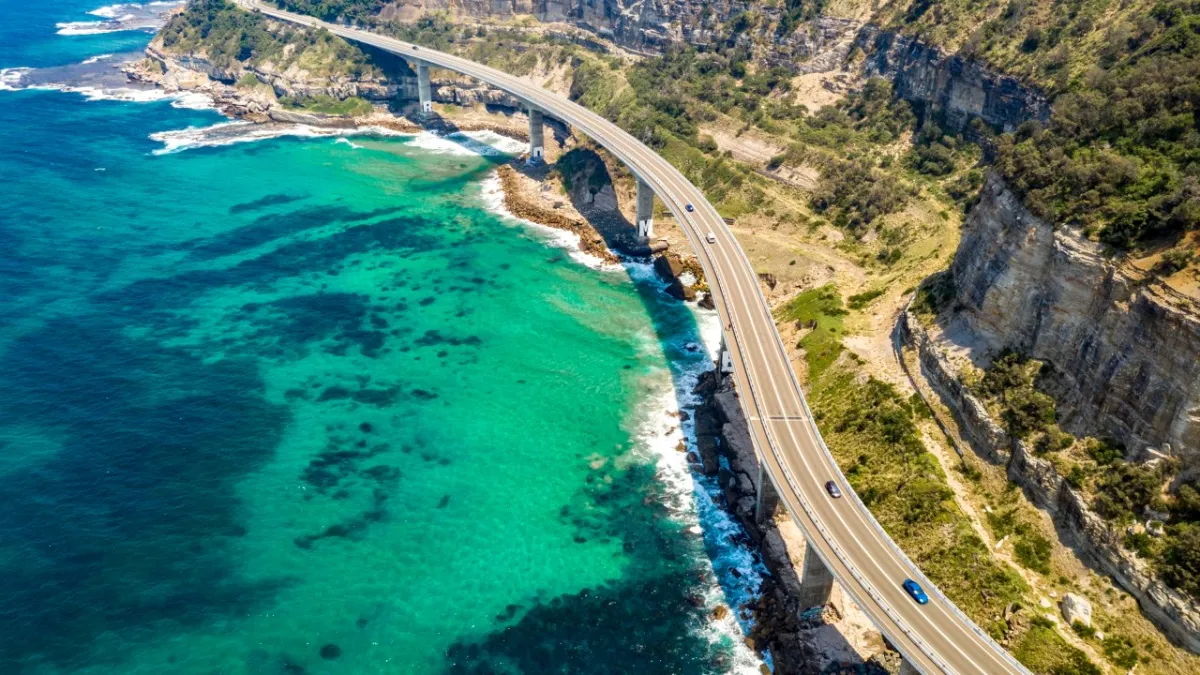
Head south on the Princes Highway through Wollongong and Nowra, then cut east to Jervis Bay. The drive takes about two and a half hours without stops, but you will stop — the Sea Cliff Bridge south of Coalcliff is worth pulling over for, and Kiama's blowhole is a reliable crowd-pleaser if you have kids on board.
Jervis Bay is the first real reason to slow down. Hyams Beach genuinely has some of the whitest sand you will see anywhere in Australia, and Booderee National Park (entry fee around $13 per vehicle per day) has excellent campgrounds at Bristol Point and Cave Beach. Book these well ahead in summer — they fill months out. Powered sites at nearby commercial parks like Huskisson Beach Tourist Resort run $50–$90 per night depending on season and van size.
Spend your second day here. Hire a kayak from one of the Huskisson outfitters (around $30–$50 for a half-day), look for dolphins in the bay, or walk the Booderee Botanic Gardens. This is not a place to rush through.
Day 3–4: Murramarang and the road to Narooma
Murramarang National Park, just north of Batemans Bay, is one of those places that rewards travellers who have not heard of it. Eastern grey kangaroos come down to Pebbly Beach at dawn and dusk — they are genuinely wild, not fed, and the sight of them on the sand with the surf behind them is one of the better things this coastline offers. Camping here is basic (no powered sites, pit toilets) and costs around $20–$30 per night through the NSW National Parks booking system.
From Batemans Bay, continue south through Moruya and into Narooma. The Princes Highway here is an easy, pleasant drive — two lanes, light traffic, good overtaking lanes. Narooma itself is worth a night for the Montague Island seal colony tours (around $120–$150 per person with local operators) and the drive through to Tilba Tilba, a tiny heritage village with a working dairy and a cheese shop that will slow you down considerably.
Day 5–6: The Sapphire Coast — Merimbula to Eden
The stretch from Bermagui to Eden is marketed as the Sapphire Coast, and for once the branding is not entirely misleading. The water really is that colour. Bermagui has a good fish co-op where you can buy fresh catch directly; Tathra Wharf is a restored 1862 cargo wharf with a decent café and calm water for a swim.
Merimbula is the largest town in this section and a practical overnight stop — powered sites at Merimbula Beach Holiday Park run roughly $55–$85 per night. Stock up on groceries here (there is a Woolworths) before heading to Eden, because supplies get thinner as you cross into Victoria.
Eden is worth more than a fuel stop. The Eden Killer Whale Museum ($15 adult entry) tells the genuinely strange story of Old Tom, a killer whale that worked cooperatively with local whalers in the early 1900s. Ben Boyd National Park, just south of town, has a campground at Bittangabee Bay that is one of the better free-range spots on this whole route — basic facilities, beautiful setting, around $20 per night through NSW National Parks.
Day 7: Crossing into Victoria — East Gippsland
The drive from Eden to Orbost crosses the border and enters East Gippsland, one of the least-visited corners of Victoria. Croajingolong National Park runs along the coast here — it is a UNESCO Biosphere Reserve and largely inaccessible by sealed road, which is why it stays quiet. Wingan Inlet and Mallacoota are worth a detour if you have the time and a suitable vehicle (some tracks require high clearance — check your hire agreement before going off sealed roads, as most standard campervans are restricted to sealed or well-maintained gravel).
Marlo, at the mouth of the Snowy River, is a good overnight stop. The Marlo Hotel does counter meals and has a beer garden overlooking the estuary. Camping at Marlo Caravan Park runs around $40–$60 per night for a powered site.
Day 8–9: Wilsons Promontory
Wilsons Promontory — the Prom — is the southernmost point of mainland Australia and the highlight of the Victorian leg. The drive from Marlo takes about three hours via Foster. Tidal River campground is the main base: it has powered and unpowered sites, a general store, and a Parks Victoria office. Powered sites run around $50–$70 per night and must be booked through Parks Victoria well in advance, particularly in school holidays.
Give yourself a full rest day here. Squeaky Beach (the sand actually squeaks underfoot — it is the quartz grain size) is a 20-minute walk from Tidal River. The Lilly Pilly Gully circuit is an easy 5.4 km loop through fern gullies and eucalypt forest. If you want a longer walk, the overnight track to Sealers Cove is one of the best in Victoria, though you will need to leave the van at Tidal River and carry a pack.
Wildlife at the Prom is abundant and largely unafraid — wombats wander through the campground at dusk, and you will almost certainly see wallabies and emus on the road in. Drive slowly after dark.
Day 10: Wilsons Prom to Melbourne
The final leg is about 230 km and takes roughly three hours direct. If you have time, the Phillip Island detour adds about 90 minutes and gives you the option of the Penguin Parade at dusk (book ahead, around $30–$35 adult). Otherwise, the South Gippsland Highway runs through Leongatha and Dandenong into Melbourne's south-eastern suburbs.
Most operators drop off at depots in Port Melbourne, Tullamarine or Dandenong. If you are flying out of Melbourne Airport, the Campervan Hire Melbourne Airport: Complete Pickup Guide 2026 has depot locations and transfer logistics. For a broader look at Melbourne-based operators and pricing, the Campervan Hire Melbourne: Compare 30+ Brands, Prices and Routes (2026) guide is a useful reference before you book.
Practical costs: what to budget
| Expense | Indicative range (10 days) | Notes |
|---|---|---|
| Campervan hire (2-berth) | $1,200–$2,800 | Varies by operator, season, one-way fee |
| Campervan hire (4-berth) | $1,800–$3,800 | Maui, Apollo, Star RV at higher end; Cheapa Campa, Mighty at lower |
| Fuel (1,220 km, ~12L/100km) | $250–$320 | Diesel vs petrol; prices vary along route |
| Campsites (10 nights) | $350–$750 | Mix of national park and commercial parks |
| Food and groceries | $400–$700 | Self-catering most nights |
| Activities and entry fees | $150–$400 | Montague Island, Penguin Parade, park fees |
| Total (2 people) | $2,350–$4,970 | Wide range reflects operator and season choice |
These are indicative figures only — actual costs depend heavily on when you travel, which operator you choose and how often you eat out. Using CamperCompare to filter operators by price and one-way fee before you book is the quickest way to find where the real savings are.
Key gotchas to know before you go
- One-way fees: Not all operators charge them, but some add $200–$400 for Sydney-to-Melbourne drops. Always check the total cost, not just the daily rate.
- Kilometre allowances: Budget operators like Cheapa Campa and Mighty often cap daily kilometres at 100–150 km. At 1,220 km over 10 days, you are averaging 122 km per day — fine on driving days, but rest days eat into your allowance. Read the fine print.
- Off-road restrictions: Virtually all standard hire campervans are restricted to sealed roads or well-maintained gravel. Tracks into Croajingolong and some Booderee access roads may void your insurance. Check before you turn off the highway.
- Campsite bookings: Tidal River and Booderee book out months ahead in summer and school holidays. Do not assume you can rock up.
- Mobile coverage: Patchy between Eden and Orbost, and inside Wilsons Prom. Download offline maps (Maps.me or Google Maps offline) before you leave Eden.
- LPG refills: If your van uses LPG for cooking, refill in Merimbula or Bairnsdale — options are limited in between.
Is this route right for you?
The Sydney to Melbourne campervan coastal route is not the fastest or cheapest way to get between the two cities. It is, however, one of the most satisfying drives in south-eastern Australia — varied, genuinely beautiful and well-suited to a campervan pace. If you are heading north instead, the Sydney to Brisbane Coastal Road Trip: The Ultimate Campervan Guide covers the other direction in similar detail. And if you are still in the planning stage back in Sydney, the Sydney Campervan Travel Guide has everything you need to know about starting your trip from the city.
Take the coastal road. The Hume will still be there next time.
Planning your trip?
Compare campervan & motorhome hire prices across Australia: