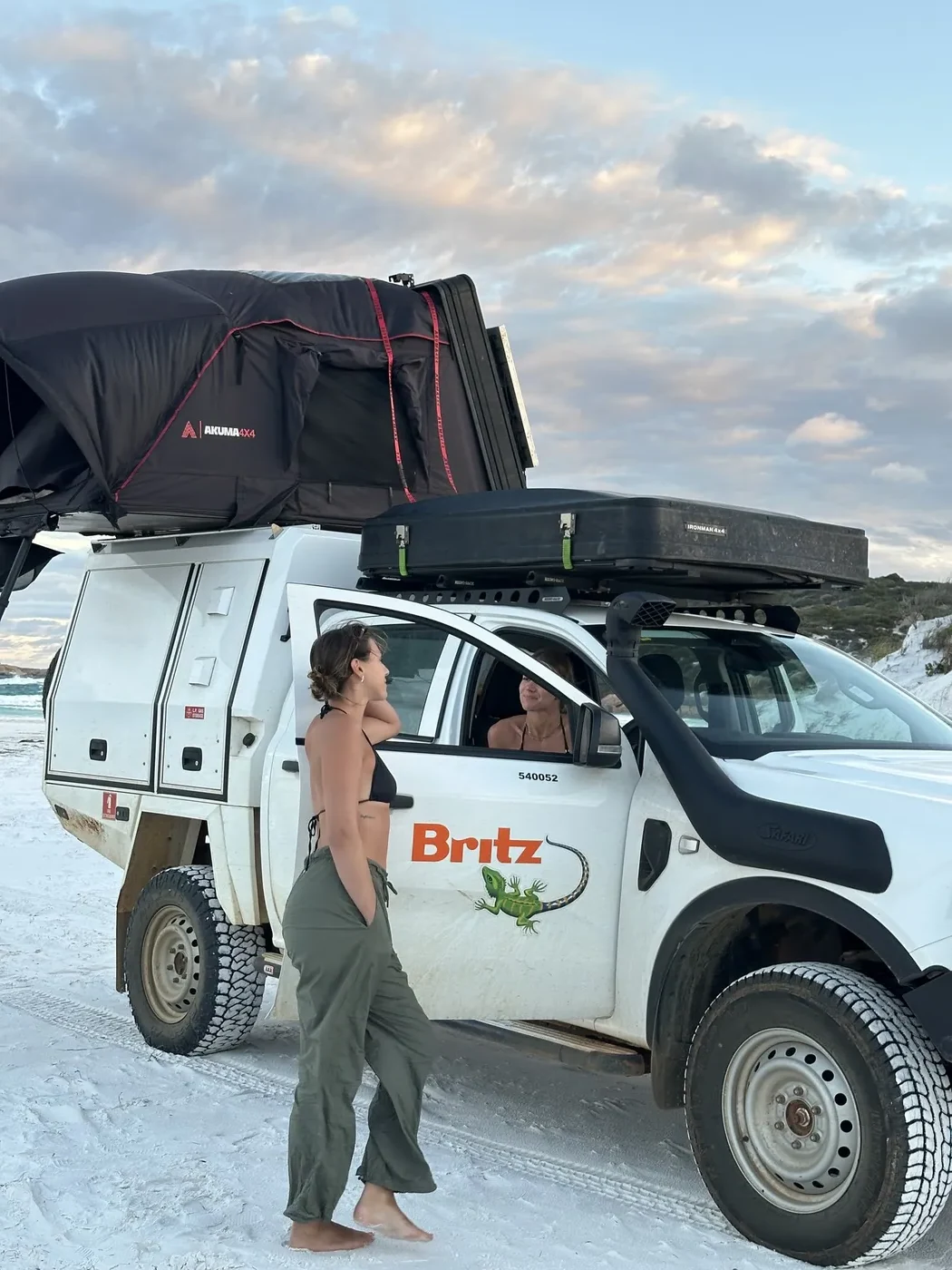
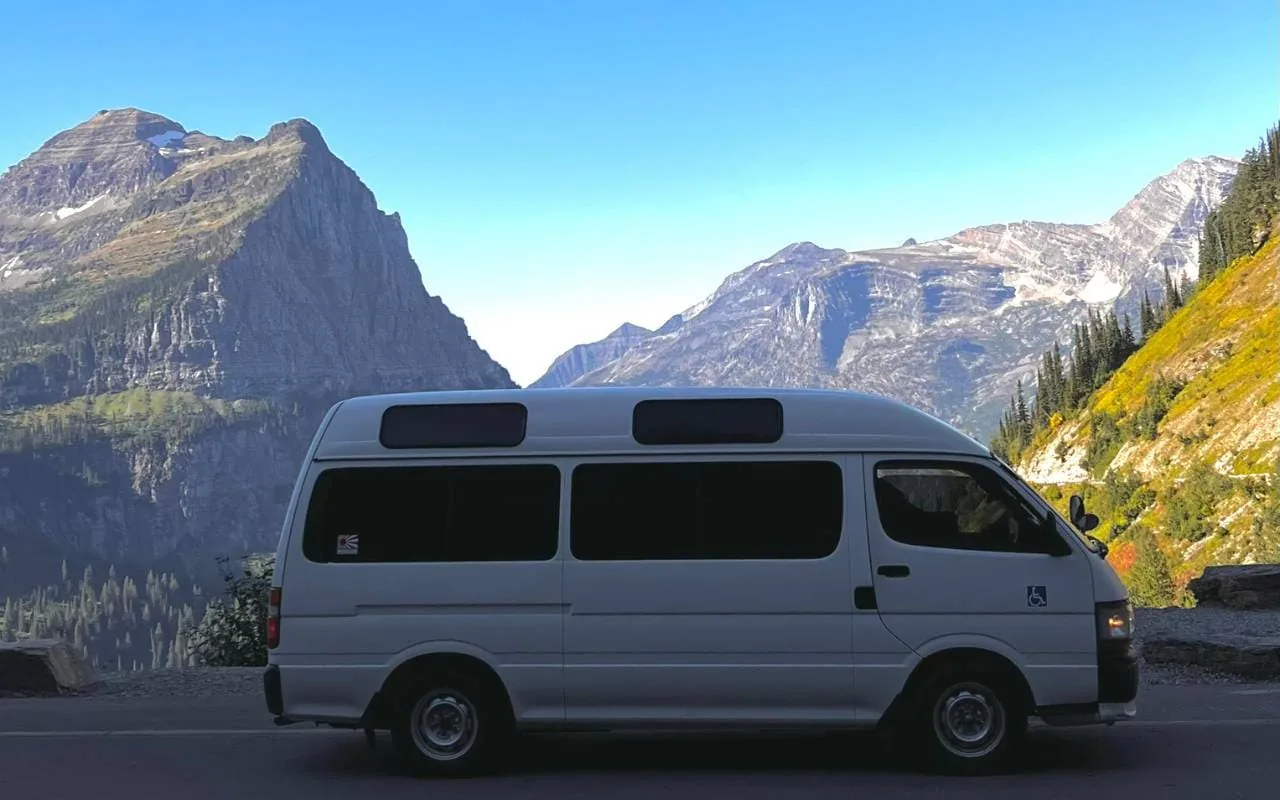
Who is a 4 berth campervan actually right for?
A 4 berth campervan is the sweet spot for most Australian road trips. It sleeps four people — typically two adults and two kids, or two couples travelling together — without being so large that you're white-knuckling it through narrow national park roads or paying a fortune in fuel. If you're a solo traveller or a couple who wants extra space, a 4 berth works too. If you're a bigger group, you'll want to look at a 6 Berth Campervan Hire in Australia: The Complete Guide instead.
The category covers a wide range of vehicles. At the budget end you'll find compact hi-top vans where the rear bed converts from a dinette — fine for two adults and two young children, less comfortable for four adults. At the premium end you get fixed-bed layouts with a separate rear bedroom, a proper kitchen, shower, and toilet. Knowing which layout suits your group before you book saves a lot of frustration on the road.
What does 4 berth campervan hire cost in Australia?
Prices vary enormously depending on the season, the operator, the pickup location, and how far in advance you book. As a rough guide, here's what you can expect to pay per day in 2025–2026:
| Tier | Typical daily rate (AUD) | What you get |
|---|---|---|
| Budget / basic | $90 – $140 | Compact hi-top, conversion beds, basic kitchen, no onboard toilet |
| Mid-range | $140 – $220 | Larger van or small motorhome, fixed or semi-fixed beds, shower/toilet |
| Premium / luxury | $220 – $380+ | Full motorhome, fixed rear bedroom, full bathroom, automatic transmission |
These are indicative ranges only — actual quotes depend on your specific dates and depot. Peak season (December to January school holidays, Easter, and school holiday periods in July) can push prices 30–50% higher than the shoulder season rates above. Booking three to six months ahead for peak periods is not overcautious; it's just sensible.
On top of the daily rate, budget for:
- One-way fees: Dropping a vehicle at a different depot to where you picked it up usually attracts a relocation fee of $150–$500 or more, though some operators run specials on popular routes.
- Insurance excess reduction: Standard excess on a 4 berth can be $3,000–$7,500. Paying $25–$45 per day to reduce it to zero or near-zero is worth considering, especially with kids on board.
- Kilometres: Most operators offer unlimited kilometres on Australian hires, but double-check — some budget operators cap daily kilometres.
- Camping fees: Powered sites at holiday parks run $40–$80 per night for a family-sized van. Free camping (where legal) cuts this to zero.
- Fuel: A 4 berth diesel van typically uses 10–14 litres per 100 km. At current diesel prices, budget roughly $0.18–$0.25 per kilometre in fuel alone.
If you're watching the budget closely, the guide to Cheapest Campervan Hire Melbourne: How to Save Big in 2026 has solid tactics that apply nationally — things like booking relocation deals, travelling shoulder season, and choosing depots outside the CBD.
The main operators and what they offer
Australia has a healthy mix of large fleet operators and smaller independents. Here's a quick rundown of who's who in the 4 berth space:
| Operator | 4 berth models (examples) | Positioning | Key depots |
|---|---|---|---|
| Apollo | Euro Camper, Euro Deluxe | Mid to premium, large fleet | Sydney, Melbourne, Brisbane, Cairns, Darwin, Perth |
| Britz | Venturer, Explorer | Mid-range, reliable, good availability | Sydney, Melbourne, Brisbane, Cairns, Darwin, Perth |
| Maui | Beach, Cascade | Premium, newer vehicles | Sydney, Melbourne, Brisbane, Cairns, Darwin, Perth |
| Jucy | Condo, Chaser | Budget-friendly, compact, popular with younger travellers | Sydney, Melbourne, Brisbane, Cairns, Darwin |
| Travellers Autobarn | Hitop, Kuga | Budget, no-frills, good for flexible travellers | Sydney, Melbourne, Brisbane, Cairns |
| Mighty | Highball, Big Six | Budget to mid, solid value | Sydney, Melbourne, Brisbane, Cairns, Darwin, Perth |
| Cheapa Campa | Hitop, Motorhome | Budget, older fleet, lowest price point | Sydney, Melbourne, Brisbane, Cairns, Darwin, Perth |
| Camperman | Stella 4, Mightystar | Budget to mid, Queensland-focused | Brisbane, Cairns |
| Star RV | Capricorn, Virgo | Premium, full motorhomes | Sydney, Melbourne, Brisbane, Cairns, Darwin, Perth |
| Lets Go | Adventurer, Tourer | Mid-range, Queensland-based | Brisbane, Cairns |
Apollo, Britz, Maui, Mighty, Cheapa Campa, and Star RV are all part of the same parent company (Apollo Tourism & Leisure), which means their depots, roadside assistance networks, and back-end systems are shared. That's not a bad thing — it means wide coverage — but it does mean you're not always comparing truly independent operators when you look at those brands side by side. You can compare live availability and pricing across all of them at once on CamperCompare.
Layouts: what "4 berth" actually means in practice
The sleeping configuration matters more than most people realise before their first campervan trip. The two most common layouts are:
Conversion (dinette) beds
The dining table and seats fold flat to create a double bed. A second bed is usually a fixed overhead bunk or a bed above the cab. This is the most common layout in budget and mid-range 4 berths. It works well for families with kids under 12, but four adults sharing a conversion van for more than a week can feel cramped. The conversion process takes five to ten minutes each night and morning, which gets old quickly on a long trip.
Fixed rear bedroom
A fixed double or queen bed in the rear, with a second bed above the cab or a fold-out in the lounge. This is the layout you'll find in mid-to-premium motorhomes from Maui, Star RV, and Apollo's upper tiers. It costs more per day but makes a genuine difference to comfort, especially for two couples or a family with teenagers.
If you're travelling with a baby or toddler, check whether the operator supplies a travel cot and whether it actually fits in the vehicle — not all do.
Best routes for a 4 berth campervan in Australia
East Coast: Brisbane to Cairns
This is Australia's most popular campervan route, and a 4 berth is the ideal size for it. The drive from Brisbane to Cairns is roughly 1,700 km via the Bruce Highway, but most people allow 10–21 days to stop at the Whitsundays, Airlie Beach, Mission Beach, and the Atherton Tablelands. One-way hires are easy to arrange on this corridor. See the full breakdown in the One-Way Campervan Hire: Brisbane to Cairns East Coast Guide.
The Red Centre: Alice Springs to Uluru and Kings Canyon
Roughly 1,000 km return from Alice Springs, this route suits a 4 berth well — the roads are sealed, the campgrounds at Uluru-Kata Tjuta National Park are excellent, and the distances are manageable. Go between May and September; summer temperatures regularly exceed 45°C and some operators restrict travel in the NT during the wet season.
Western Australia: Perth to Broome
The 2,200 km drive from Perth north to Broome via the Coral Coast, Shark Bay, and the Kimberley is one of Australia's great road trips. Allow at least three weeks. A 4 berth handles the sealed sections easily, but if you want to explore Karijini National Park's gorges or the Gibb River Road, check your hire agreement carefully — most standard 4 berths are not permitted on unsealed roads. The Campervan Hire Perth: Prices, Brands & WA Road Trip Routes (2026) guide covers this in detail.
Darwin and the Top End
Darwin is a brilliant starting point for the Kakadu and Litchfield circuit (roughly 600–800 km return), or a one-way trip south through Katherine Gorge and Tennant Creek toward Alice Springs. The dry season (May to October) is the only practical time to travel here in a campervan. The Campervan Hire Darwin: Your Top End Starting Point (2026) guide has everything you need to plan this trip.
Practical gotchas to know before you book
- Driver age restrictions: Most operators require drivers to be at least 21, and some charge a young driver surcharge for anyone under 25. Check this before you assume your 22-year-old can share the driving.
- Road restrictions: Your hire agreement will specify which road types are permitted. Gravel roads, 4WD tracks, and beach driving are almost universally excluded on standard 4 berth hires. Driving on a restricted road voids your insurance entirely.
- Generator use: Some campgrounds and free camping areas restrict generator hours. If you're relying on a generator for air conditioning, plan accordingly.
- Water and grey water: Onboard fresh water tanks are typically 60–100 litres. In remote areas, plan your refill stops. Grey water must be disposed of at dump points — not on the ground.
- Minimum hire periods: Many operators require a minimum of five to seven days, rising to ten or more days during peak season. A weekend hire in a 4 berth is often not possible or not economical.
- Pickup and drop-off times: Depots typically open 7:30am–4:30pm on weekdays and have reduced hours on weekends. A late flight arrival on a Friday can mean you don't get your vehicle until Monday morning — factor this into your itinerary.
How to get the best deal
A few things that genuinely move the needle on price:
- Book early for peak season. Christmas, January, Easter, and July school holidays book out months in advance. Waiting until six weeks out means paying top dollar for whatever's left.
- Travel shoulder season. April–May and September–October offer near-peak weather on most routes with meaningfully lower daily rates.
- Consider relocation deals. Operators regularly need vehicles moved between depots and offer heavily discounted rates (sometimes under $30 per day) for flexible travellers. These are short-window deals, usually three to five days, but they're real.
- Compare across operators. Rates for the same dates and route can vary by $50–$100 per day between operators. Using CamperCompare to pull quotes side by side takes five minutes and can save you hundreds over a two-week trip.
- Check what's included. A cheaper daily rate that doesn't include linen, camp chairs, or a kitchen kit can end up costing more once you add the extras. Always compare total trip cost, not just the headline rate.
If you're based in Brisbane and want city-specific advice, the Cheapest Campervan Hire Brisbane: How to Save Big in 2026 guide is worth a read before you book.
Is a 4 berth the right size for your trip?
For most Australian family road trips and two-couple adventures, yes — a 4 berth hits the right balance of space, fuel efficiency, and ease of driving. It fits in a standard caravan park site, parks in most town car parks, and doesn't require a special licence to drive. If your group is larger, or you want genuinely separate sleeping areas for adults, step up to a 6 berth. If you're planning a very long trip — several months or more — it's worth reading the Long-Term Campervan Hire Australia: 1 to 12 Month Guide to understand how pricing and operator policies change for extended hires.
Whatever route you're planning, take the time to compare a few operators before you commit. The difference in price, vehicle quality, and included extras between operators on the same dates can be significant — and it takes very little time to check.
Planning your trip?
Compare campervan & motorhome hire prices across Australia: