Why the USA Is One of the World's Great Campervan Destinations
The United States has more than 10,000 campgrounds, over 60 national parks, and road networks that were practically designed for slow, overland travel. Whether you want to cruise the Pacific Coast Highway, loop through the desert Southwest, or chase autumn colour through New England, a hired campervan gives you a freedom that hotels simply cannot match. The challenge is not finding a reason to go — it is sorting through the sheer number of operators and vehicle types to find the right fit for your trip and your budget.
This guide cuts through the noise. It covers the main operators available to international travellers, realistic price ranges in Australian dollars, the vehicle classes worth considering, and the practical details that catch people off guard. If you want to run side-by-side quotes quickly, CamperCompare lets you compare live availability across multiple operators in one search — useful when dates are flexible and you want to see how prices shift by a day or two.
Understanding the Operator Landscape
The USA campervan hire market is dominated by a handful of large international brands, most of which Australians will recognise from the domestic market. They operate out of major gateway cities — Los Angeles, Las Vegas, San Francisco, Denver, Miami, New York, and Seattle are the most common pickup locations. Here is a quick breakdown of who is who.
The Main Players
- Apollo: One of the largest fleets globally, with strong USA coverage. Good mid-range option with reliable vehicles and straightforward hire conditions.
- Britz: Part of the same group as Apollo, positioned slightly more premium. Popular with couples and small families wanting a bit more space.
- Maui: The premium tier of the Apollo group. Newer vehicles, more inclusions, higher price point — suits travellers who want a more polished experience.
- Jucy: Compact, budget-friendly, and popular with younger travellers and solo adventurers. Their small campervans are easy to park and surprisingly well-kitted out.
- Travellers Autobarn: A favourite among backpackers and budget-conscious travellers. Their Kuga and Hitop campervans are simple, affordable, and widely available on the west coast.
- Mighty: Mid-range operator with a solid fleet of campervans and motorhomes. Good value for money and popular for longer trips.
- Cheapa Campa: As the name suggests, this is the budget arm of the Britz/Apollo group. Older vehicles, fewer inclusions, but significantly lower daily rates.
- Star RV: Premium motorhomes aimed at travellers who want more living space and comfort. Think slide-outs, full kitchens, and proper beds.
- Camperman: A smaller operator with a loyal following. Good for travellers who want a more personal service and flexible hire terms.
- Lets Go: Another budget-to-mid option with a growing USA presence. Worth checking if you are flexible on vehicle type.
Vehicle Classes: What You Actually Need
The terminology in the USA market can be confusing. Here is a plain-English breakdown of the main categories you will encounter.
| Vehicle Type | Best For | Sleeps | Approx. Daily Rate (AUD) |
|---|---|---|---|
| Compact Campervan (e.g. Jucy Condo) | Solo travellers, couples on a budget | 2 | $90–$160 |
| Hitop Campervan | Couples, budget-conscious travellers | 2–3 | $110–$190 |
| Small Motorhome (Class C, 22–24 ft) | Couples, small families | 2–4 | $180–$320 |
| Mid-Size Motorhome (Class C, 25–28 ft) | Families, groups of 4 | 4–6 | $250–$420 |
| Large Motorhome (Class A) | Extended trips, larger groups | 6–8 | $380–$650+ |
All prices are indicative and vary significantly by season, pickup location, and how far in advance you book. Peak summer rates (June to August) and the Christmas–New Year period can push prices 40–60% above the low-season baseline. Always factor in the cost of campsite fees — expect to pay AUD $35–$90 per night at a powered site in a national park or private campground.
One-Way Hires: The Freedom Move
One of the best things about hiring a campervan in the USA is the ability to do a one-way trip — pick up in Los Angeles and drop off in New York, for example, or start in Miami and finish in Denver. Most major operators offer one-way hires, though they charge a relocation fee that varies by route and season. Some routes are in high demand in one direction (west to east in summer, for instance), which means operators occasionally offer heavily discounted or even free relocations to rebalance their fleets. It is worth asking about relocation deals when you compare, particularly if your dates are flexible.
Popular one-way routes include LA to Las Vegas, San Francisco to Seattle, Miami to New Orleans, and the classic coast-to-coast run. If you are planning a point-to-point trip, check out our Route 66 RV Road Trip guide — it covers the full Chicago to LA itinerary with realistic timing and campsite suggestions.
The Best Regions to Hire a Campervan in the USA
West Coast and the Southwest
This is the most popular region for international travellers, and for good reason. Los Angeles and Las Vegas are the two busiest pickup hubs. From LA you can head north along the Pacific Coast Highway — our California Coast campervan road trip guide covers the PCH from San Francisco to LA in detail — or head east into the desert. Las Vegas puts you within a day's drive of Zion, Bryce Canyon, the Grand Canyon, and Arches. For a structured loop through the national parks, the Utah Mighty Five RV road trip is one of the most rewarding itineraries in the country.
Florida and the Southeast
Miami is a major pickup hub with good operator coverage. Florida suits travellers who want warm weather year-round, easy driving, and a mix of beach, wetlands, and quirky roadside culture. The Florida RV road trip guide covers the Keys, Gulf Coast, and Everglades — a solid two-week loop that works well in a mid-size motorhome.
Texas and the South
Texas is underrated as a campervan destination. The Hill Country west of Austin is genuinely beautiful in spring, and the food alone justifies the trip. See our Texas Hill Country RV road trip guide for a practical itinerary. Operator coverage in Texas is thinner than on the coasts, so book early and check pickup city options carefully.
New England in Autumn
If you can travel in late September or October, New England is extraordinary. The foliage is real, the campgrounds are well-maintained, and the roads are genuinely pleasant to drive. Boston is the main pickup hub. Our New England fall foliage RV road trip guide has everything you need to plan the timing and route.
Practical Gotchas to Know Before You Book
Mileage (Kilometre) Caps
Most USA operators quote a daily kilometre or mileage allowance — typically 100 to 200 miles (160 to 320 kilometres) per day. If you are planning a long-distance trip, check whether unlimited mileage is available or factor in the per-mile overage charge, which typically runs at USD $0.25–$0.45 per mile over the cap. On a 3,000-mile trip, this adds up fast.
Generator Hours
Larger motorhomes include a generator for running air conditioning and appliances when you are not plugged into a powered site. Most operators include a set number of free generator hours per day (usually 3–4 hours) and charge for additional use. In summer in the Southwest, you will use more than you think.
Insurance and Liability
Standard hire packages include basic liability cover, but the excess (called a deductible in the USA) can be AUD $3,000–$7,500 or more. Operators offer excess reduction products at AUD $25–$55 per day. Check whether your travel insurance or credit card covers the gap before paying for the operator's product — some do, many do not.
Driver Age and Licence
Most operators require drivers to be at least 21 years old, with some requiring 25 for larger vehicles. An Australian driver's licence is accepted, though some operators ask for an International Driving Permit as well. Carry both to avoid any issues at pickup.
Campsite Bookings
National park campgrounds in the USA book out months in advance, particularly in summer. Yosemite, Yellowstone, Zion, and the Grand Canyon are the worst offenders. Use recreation.gov to secure your sites before you leave Australia. Private campgrounds (KOA and similar) are easier to book on shorter notice but cost more.
How to Compare Operators Without Losing Your Mind
The easiest approach is to use CamperCompare to pull quotes from multiple operators at once, then compare the total cost including any mandatory fees — not just the headline daily rate. Pay attention to what is included: some operators bundle kitchen kits, linen, and camp chairs; others charge for each item separately. A vehicle that looks AUD $30 per day cheaper can end up costing more once you add the extras.
Also check the pickup and drop-off hours carefully. Some operators have limited depot hours, particularly on weekends, which can affect your travel plans if you are arriving on a Saturday evening flight.
Special Events Worth Planning Around
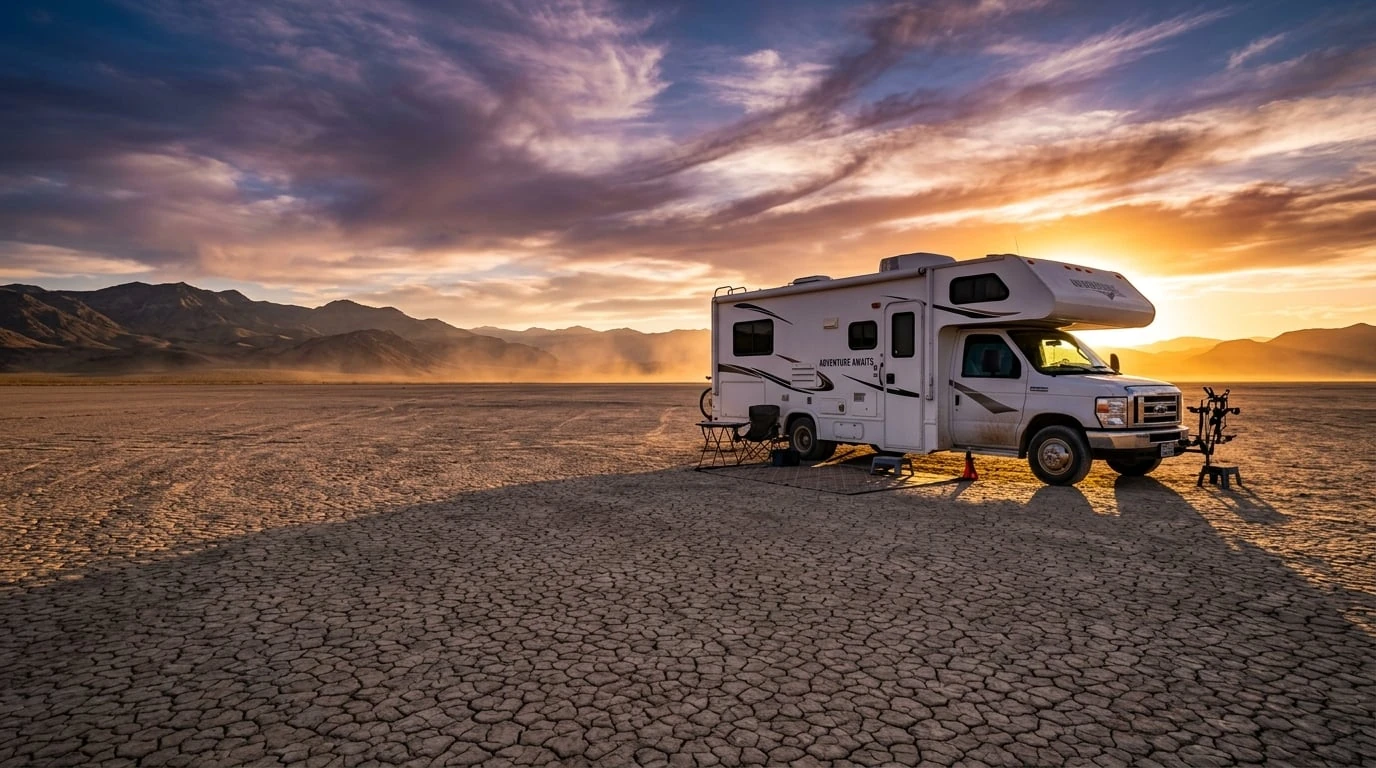
If you are considering something a bit different, hiring an RV for Burning Man in Nevada's Black Rock Desert is a genuine option — though it requires specific preparation. Our Burning Man RV rental guide covers everything from dust protection to generator requirements and which operators will actually allow their vehicles on the playa.
Quick Tips for Getting the Best Deal
- Book at least 3–4 months ahead for summer travel. Last-minute availability exists but prices are higher and vehicle choice is limited.
- Shoulder season (April–May and September–October) offers better rates and more pleasant driving conditions in most regions.
- Longer hire periods (14 days or more) often attract lower daily rates. If you are on the fence about trip length, it can be worth extending.
- One-way relocation deals can cut costs dramatically — ask operators directly or check their websites for current specials.
- Fuel is a real cost. A Class C motorhome averages 8–12 miles per gallon (roughly 20–30 litres per 100 kilometres). Budget accordingly.
- Check the vehicle's tyre condition at pickup and photograph everything before you drive away. Disputes about pre-existing damage are the most common complaint in the industry.
Planning your trip?
Browse all road trip guides