So You Want to Do the Big Lap
The full circuit of Australia — roughly 15,000 to 20,000 kilometres depending on your detours — is one of the great road trips on earth. It takes most people six to twelve months to do it properly, and the majority of grey nomads who pull it off say the same thing afterwards: they wish they'd done it sooner.
The question most people get stuck on isn't whether to go. It's whether to buy a rig or hire one, and if hiring, how to make the numbers work for a trip this long. This guide answers both, with realistic figures, operator names, and the seasonal logic that separates a comfortable lap from a miserable one.
Buy or Hire? The Honest Comparison
Buying sounds cheaper over twelve months, and sometimes it is — but the maths is trickier than it looks. A decent second-hand motorhome capable of a full lap will cost $60,000 to $120,000 to buy and, if you're lucky, $45,000 to $90,000 to sell afterwards. Factor in registration, insurance, tyres, servicing, and the inevitable mechanical drama somewhere west of Camooweal, and the gap between buying and hiring narrows considerably.
Hiring removes the ownership headache entirely. Breakdowns are the operator's problem. You hand the vehicle back at the end. The trade-off is that long-term hire rates, even with negotiated discounts, add up — and you have less flexibility to modify the vehicle to your taste. For many grey nomads, especially those doing a single lap rather than a permanent lifestyle, hiring makes more sense than they initially expect. See our detailed breakdown in the Long-Term Campervan Hire Australia: 1 to 12 Month Guide for a full cost comparison.
Choosing the Right Motorhome Size
Not all motorhomes are built for a lap. Here's how the main categories stack up for a long trip:
| Category | Typical Length | Sleeps | Best For | Indicative Daily Hire Rate |
|---|---|---|---|---|
| Compact campervan | 5–6 m | 2 | Budget travellers, solo or couple | $80–$130/day |
| Mid-size motorhome | 6–7 m | 2–3 | Couples wanting a fixed bed and shower | $130–$180/day |
| Large motorhome | 7–8 m | 4–6 | Couples or families wanting space | $170–$250/day |
| Premium motorhome | 7–8 m | 2–4 | Comfort-focused travellers | $220–$320/day |
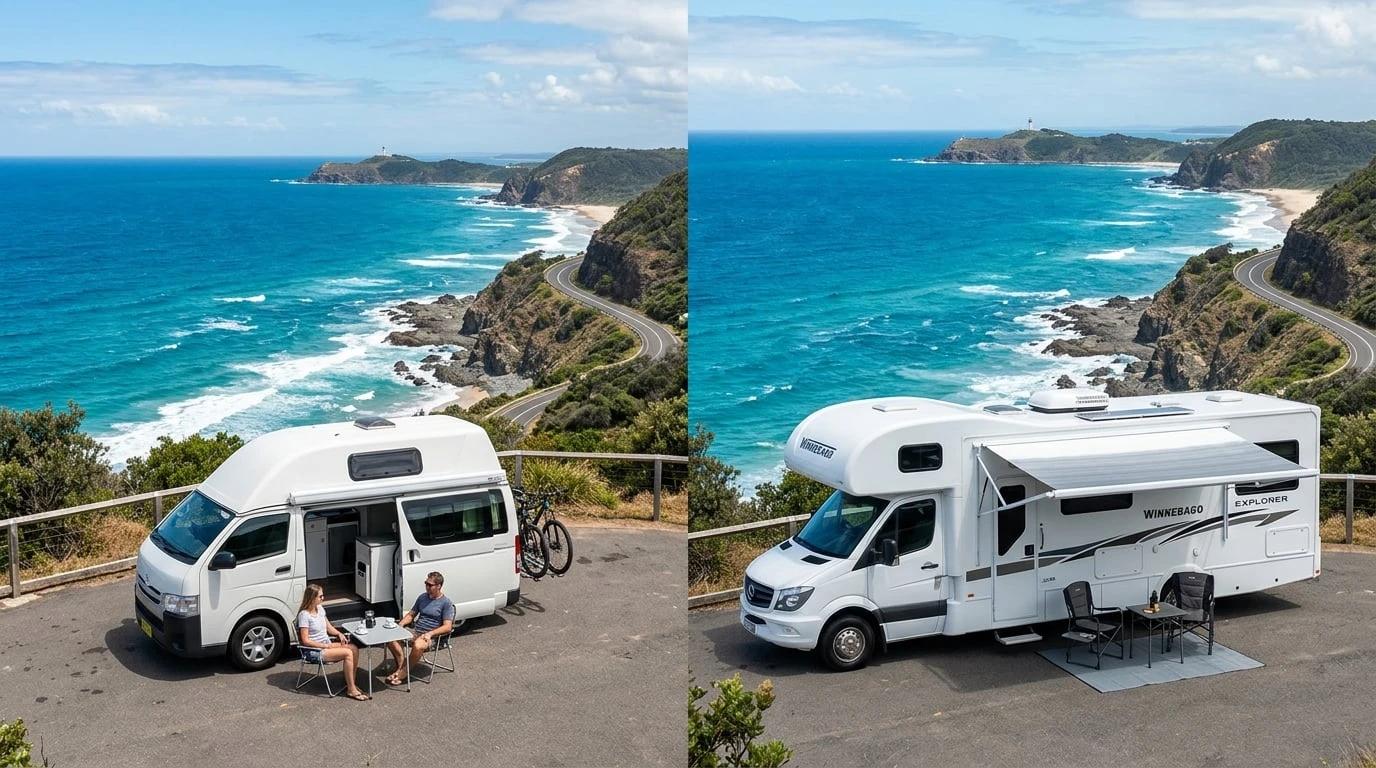
For a lap, most couples settle on a mid-size or large motorhome. You'll be living in this vehicle for months, so the fixed bed, separate shower, and decent kitchen aren't luxuries — they're sanity. If you're unsure whether a campervan or a full motorhome suits your style, the guide on Campervan vs Motorhome in Australia walks through the practical differences in detail.
One gotcha: larger motorhomes (over 7.5 m) can be restricted at some national park campgrounds and on certain outback tracks. Check clearances and length limits before you commit to a vehicle, particularly if you're planning to include the Gibb River Road, Cape York, or the Oodnadatta Track.
The Seasonal Routing Logic
The Big Lap isn't just a distance challenge — it's a timing puzzle. Get the seasons wrong and you'll be sweating through Darwin in October or shivering through the Nullarbor in July. The standard grey nomad approach follows a simple rule: north in winter, south in summer.
The Classic Clockwise Route (Most Popular)
Most people start on the east coast in autumn (March–May), head north through Queensland, cross into the Northern Territory for the dry season (May–September), loop through Western Australia's Kimberley and Pilbara, then drop south to Perth and across the Nullarbor in spring (September–November), before finishing through South Australia and Victoria in early summer.
- March–May: Depart Sydney, Brisbane, or Melbourne. Drive north through NSW and Queensland — Coffs Harbour, Airlie Beach, Townsville, Cairns.
- May–August: Cross into the NT. Darwin, Kakadu, Katherine Gorge, Alice Springs, Uluru. This is the sweet spot for the Top End — dry, warm, manageable.
- August–October: West into the Kimberley (Kununurra, El Questro, Broome). Then south through the Pilbara — Karijini, Exmouth, Shark Bay.
- October–November: Perth, Margaret River, Albany, then the Nullarbor crossing. Aim to cross before December heat sets in.
- November–February: South Australia (Eyre Peninsula, Flinders Ranges, Barossa), then Victoria and back to your start point.
Anticlockwise: When It Makes Sense
Going anticlockwise — west first, then north — works if you're starting from Perth or Adelaide, or if you want to hit the Kimberley in April before the last of the wet season clears. It's less common but perfectly viable. The key is still avoiding the Top End in the wet (November–March) and the southern deserts in peak summer.
Realistic Budget for a 12-Month Lap
Let's be straight: a full lap by hired motorhome is not a cheap holiday. But it's often more affordable than people assume when you factor in that it replaces your rent or mortgage costs for the duration.
| Expense Category | Indicative Annual Cost (couple) | Notes |
|---|---|---|
| Motorhome hire | $35,000–$70,000 | Varies hugely by vehicle size and negotiated rate |
| Fuel | $12,000–$18,000 | Based on 18,000 km at 15–20 L/100 km, ~$2.10/L average |
| Campsite fees | $5,000–$12,000 | Mix of free camps, national parks, and powered sites |
| Food and groceries | $12,000–$18,000 | Cooking in the van saves significantly vs eating out |
| Activities and entry fees | $3,000–$8,000 | National park passes, tours, boat trips |
| Miscellaneous | $3,000–$6,000 | Medical, laundry, data, unexpected costs |
| Total estimate | $70,000–$132,000 | Wide range reflects vehicle choice and travel style |
The single biggest lever is the motorhome hire cost. Negotiating a long-term rate, choosing a mid-size over a premium vehicle, or timing your booking around off-peak periods can save you $10,000 to $20,000 over a full year. The EOFY Campervan Sale 2026 is one of the best windows to lock in a discounted long-term rate — operators regularly offer meaningful reductions on extended bookings during this period.
Long-Hire Arrangements: What to Know
Most operators don't advertise long-term rates on their websites — you need to call or email and ask directly. The magic number is usually 28 days, after which most operators will negotiate. For six to twelve months, you're in genuinely custom-quote territory.
Operators Worth Talking To
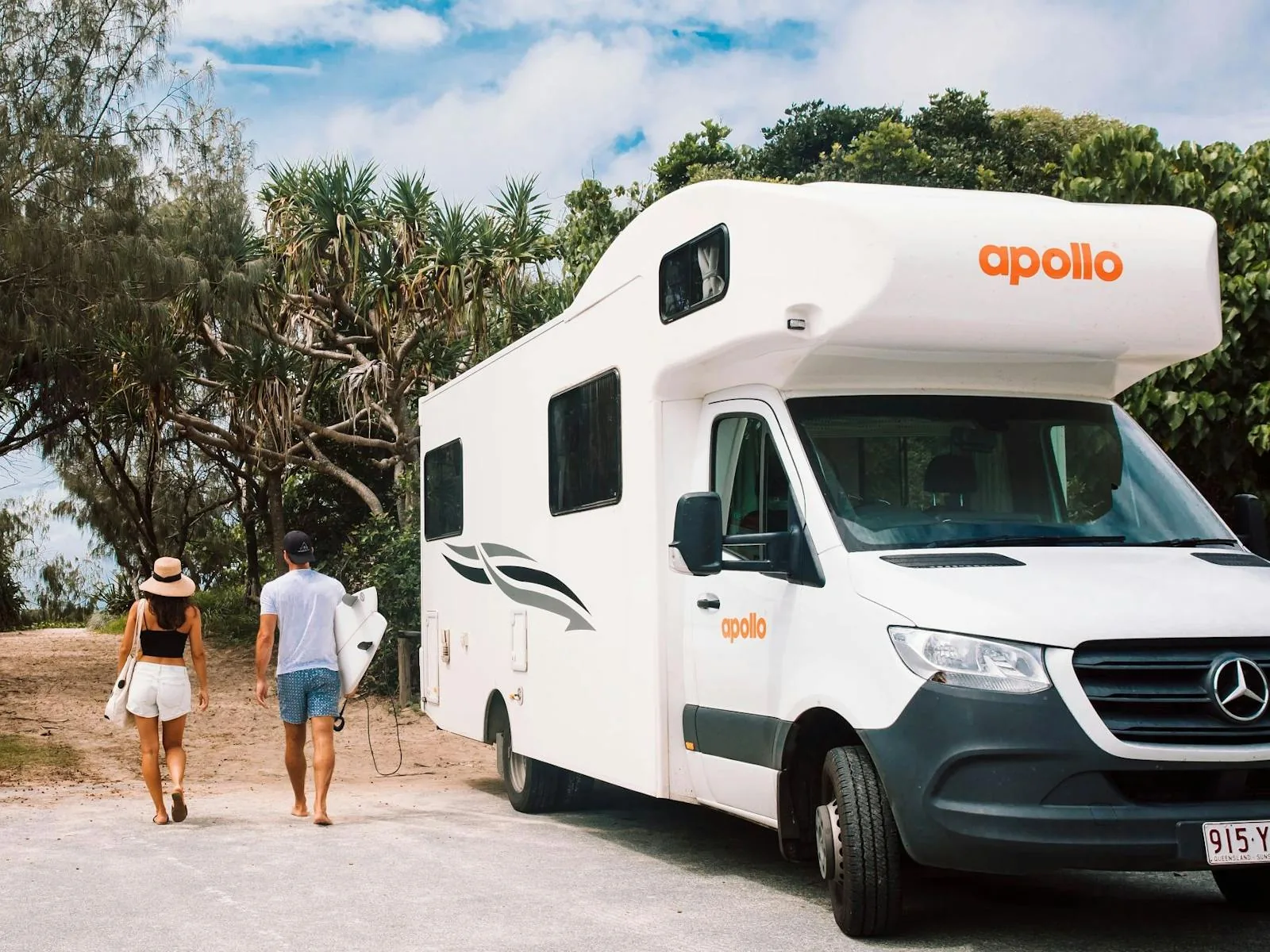
The major players for long-term motorhome hire in Australia include Apollo, Britz, Maui, Star RV, Mighty, and Cheapa Campa. Apollo and Britz sit in the mid-range and are often the most flexible on long-term pricing. Maui and Star RV are premium — excellent vehicles, but the daily rates reflect it. Mighty and Cheapa Campa are the budget arms of the Apollo group and worth considering if you're prioritising cost over fit-and-finish.
Travellers Autobarn, Camperman, and Lets Go are smaller operators that can sometimes offer more personalised long-term arrangements. Jucy skews younger and smaller — their vehicles are generally better suited to shorter trips than a full lap. For a head-to-head on the premium end, the Maui vs Apollo motorhome comparison is worth reading before you commit.
You can compare current availability and indicative rates across operators at CamperCompare — it's a useful starting point before you pick up the phone to negotiate a long-term deal.
Key Contract Points for Long Hires
- Kilometre allowances: Most standard hires include 100–200 km/day. A lap will cover 15,000–20,000 km, so confirm your total allowance and the excess rate (typically $0.25–$0.45/km over the limit).
- One-way fees: If you want to start in Sydney and finish in Perth, expect a relocation fee. Starting and finishing in the same city avoids this entirely.
- Roadside assistance: Confirm it's included and covers remote areas. Some policies exclude unsealed roads — critical if you're planning the Gibb River Road or similar.
- Insurance excess reduction: Standard excess can be $5,000–$7,500. Reducing it to $0–$2,000 adds $25–$60/day but is worth serious consideration for a long trip.
- Vehicle swaps: Ask whether the operator will swap your vehicle if there's a major mechanical issue. Most will, but get it in writing.
For a thorough breakdown of what to look for in a long-term hire contract, see our guide to the best campervan companies for long-term hire in Australia.
Practical Gotchas Nobody Warns You About
Grey water and black water: On a long trip, you'll become intimately familiar with dump stations. Download the WikiCamps or Campermate app before you leave — both show dump station locations across Australia.
Remote fuel prices: Diesel in outback roadhouses can be $2.80–$3.50/litre. Budget accordingly and never pass a servo in remote WA or the NT without topping up.
Mail and banking: Set up digital banking before you go. Australia Post's mail redirection service works, but it's imperfect over twelve months. A PO box at a town you'll pass through regularly is a better solution.
Health insurance and Medicare: You're still in Australia, so Medicare applies — but check that your private health cover doesn't have a "principal place of residence" clause that could cause issues.
Connectivity: Telstra has the best outback coverage by a significant margin. A Telstra SIM or a Starlink subscription (if the operator permits it) will keep you connected through the gaps.
Is Hiring Right for Your Lap?
If you're doing a single lap and don't want the hassle of buying, selling, and maintaining a vehicle, hiring is a genuinely sensible option — particularly if you negotiate a strong long-term rate. The total cost will be higher than a well-managed owner-driver setup, but the simplicity and the breakdown coverage have real value when you're 400 kilometres from the nearest town.
Use CamperCompare to get a sense of what different operators are charging for your dates, then call the ones that look promising and ask directly about extended hire pricing. Most operators have more flexibility than their websites suggest.
The Big Lap is absolutely worth doing. Get the vehicle right, get the timing right, and the rest tends to take care of itself.
Planning your trip?
Compare campervan & motorhome hire prices across Australia: