What Does "Luxury" Actually Mean in a Campervan?
The word gets thrown around a lot. A van with a fold-out bed and a two-burner stove is not luxury — it's a campervan. Genuine luxury campervan hire in Australia means something more specific: a vehicle where you're not compromising on sleep, cooking, bathroom access, or climate control. Think fixed queen or king beds, full ensuite bathrooms with a separate shower, residential-style kitchens with a microwave and full-size fridge, ducted air conditioning, and enough solar and battery capacity to free-camp comfortably without running a generator all night.
That's the benchmark. Some operators use "luxury" loosely, so this guide will help you cut through the marketing and understand exactly what you're paying for.
The Operators Worth Knowing
Australia's campervan hire market has a clear tier structure. At the budget end you've got Cheapa Campa, Mighty, and Jucy. Mid-range covers Britz, Travellers Autobarn, and Camperman. At the premium end, the names that consistently deliver a higher-spec product are Maui, Star RV, and Apollo's top-tier range. Lets Go Motorhomes also offers some well-appointed vehicles, particularly in Queensland.
Here's a quick breakdown of what the premium operators typically offer at their top tier:
| Operator | Top-Tier Vehicle | Fixed Bed | Ensuite | A/C | Approx. Daily Rate (peak) |
|---|---|---|---|---|---|
| Maui | Maui Motorhome (various) | Yes | Yes | Yes | $350–$550/day |
| Star RV | Star Uranus / Star Saturn | Yes | Yes | Yes | $320–$520/day |
| Apollo | Apollo Euro Tourer | Yes | Yes | Yes | $300–$500/day |
| Lets Go | Lets Go Luxury | Yes | Yes | Yes | $280–$460/day |
| Britz | Britz Frontier | Yes | Yes | Yes | $260–$440/day |
Rates above are indicative and vary significantly by season, pickup location, and how far in advance you book. Always compare live availability — tools like CamperCompare let you see multiple operators side by side so you're not jumping between a dozen websites.
What You're Actually Paying For
At $350–$550 per day, you'd want to know the money is going somewhere real. Here's what separates a genuine premium vehicle from a mid-range one dressed up with a higher price tag.
The Bed Situation
This is the single biggest quality-of-life factor. Budget and mid-range campervans often have a bed that converts from a dinette or lounge — fine for a week, exhausting for three. Luxury motorhomes have a fixed, permanent bed, usually a queen (1.5m wide) or island king (accessible from both sides). You don't make it up each night. You just get in. For couples doing a long trip, this alone justifies the price difference.
Bathroom and Shower
A proper ensuite in a luxury motorhome means a separate shower cubicle, a flushing cassette or full toilet, and a vanity with a mirror. Some Maui and Star RV vehicles have a wet bath (toilet and shower in one room) while others have a split layout. Ask specifically before you book — "ensuite" can mean different things to different operators.
Kitchen and Appliances
Expect a three-burner gas hob, a microwave, a 150–190 litre compressor fridge, and enough bench space to actually cook a meal. Some vehicles include a Nespresso machine or a proper coffee setup. Outdoor kitchens (a slide-out bench and burner at the rear) are available on some Apollo and Star RV models — genuinely useful when you're parked up somewhere beautiful and don't want to cook inside.
Power and Off-Grid Capability
Luxury doesn't mean you're tethered to a powered site. Most premium motorhomes carry 200–300Ah of lithium or AGM battery storage, 200W or more of rooftop solar, and a 2000W inverter. That's enough to run the fridge, charge devices, and use the microwave without hookup — for one or two nights at least. If you're planning extended free-camping, ask the operator specifically about solar capacity and whether the vehicle has a generator.
Where to Take a Luxury Motorhome in Australia
The honest answer: almost anywhere with sealed roads. Luxury motorhomes are typically 6–8 metres long and weigh 4,500–6,000kg, which means they're not suited to rough 4WD tracks or tight national park campgrounds. But Australia's best road trips are largely sealed, and that's where these vehicles shine.
The East Coast
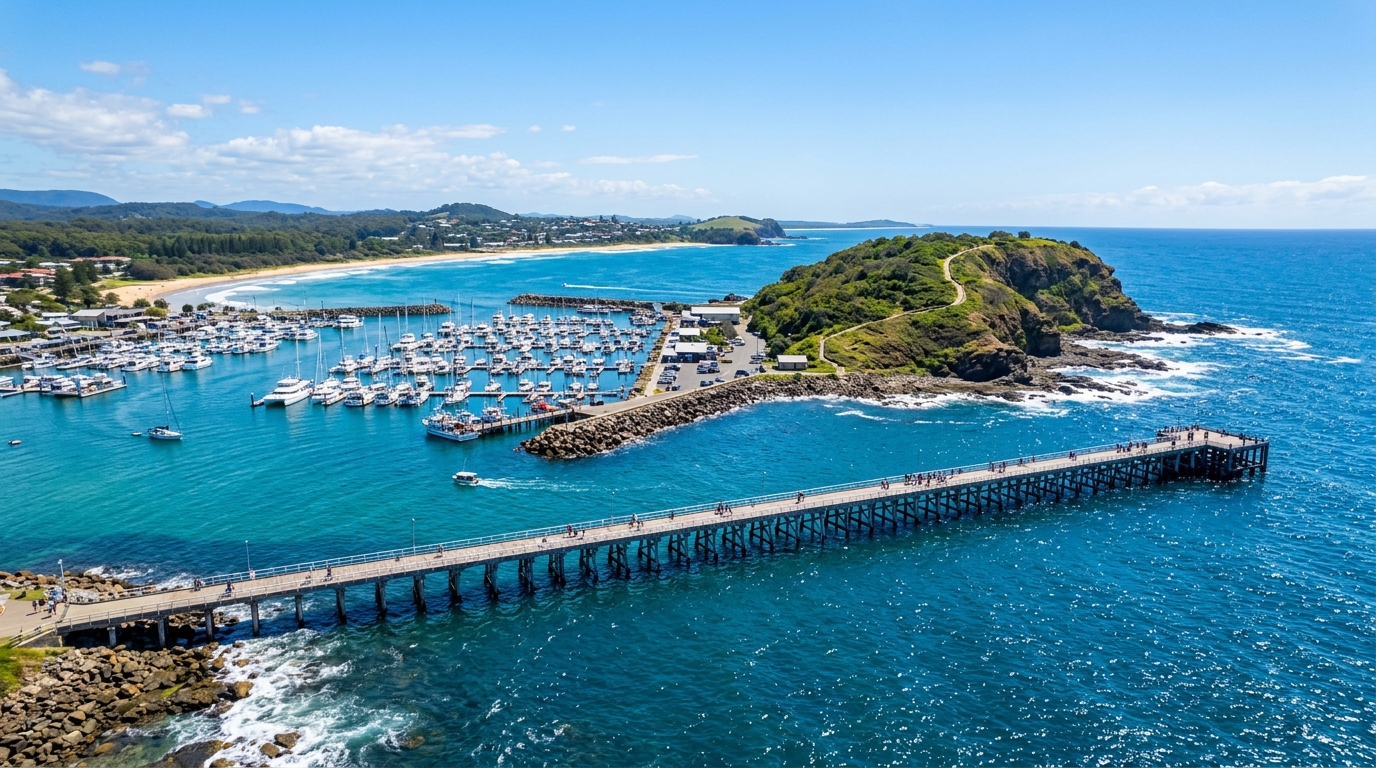
Sydney to Cairns (or the reverse) is the classic. It's roughly 2,800 kilometres of highway with excellent caravan parks, free-camp spots, and coastal scenery the whole way. If you're doing the full run, check out our guide to one-way campervan hire from Cairns to Sydney — it covers the logistics of one-way fees, which operators allow it, and the best stops along the way. The stretch through the mid-north coast is particularly good; if you're picking up or dropping off around that area, our Coffs Harbour campervan hire guide has useful local detail.
Western Australia
The Perth to Broome run (about 2,200km) is one of the great Australian road trips. The Coral Coast, Monkey Mia, Karijini, and the Kimberley are all accessible in a luxury motorhome, though some sections near Karijini require care on corrugated dirt roads — check your hire agreement for road restrictions. If you're flying into Perth, our Perth Airport campervan hire guide covers pickup logistics, depot locations, and what to expect on day one.
The Top End and Red Centre
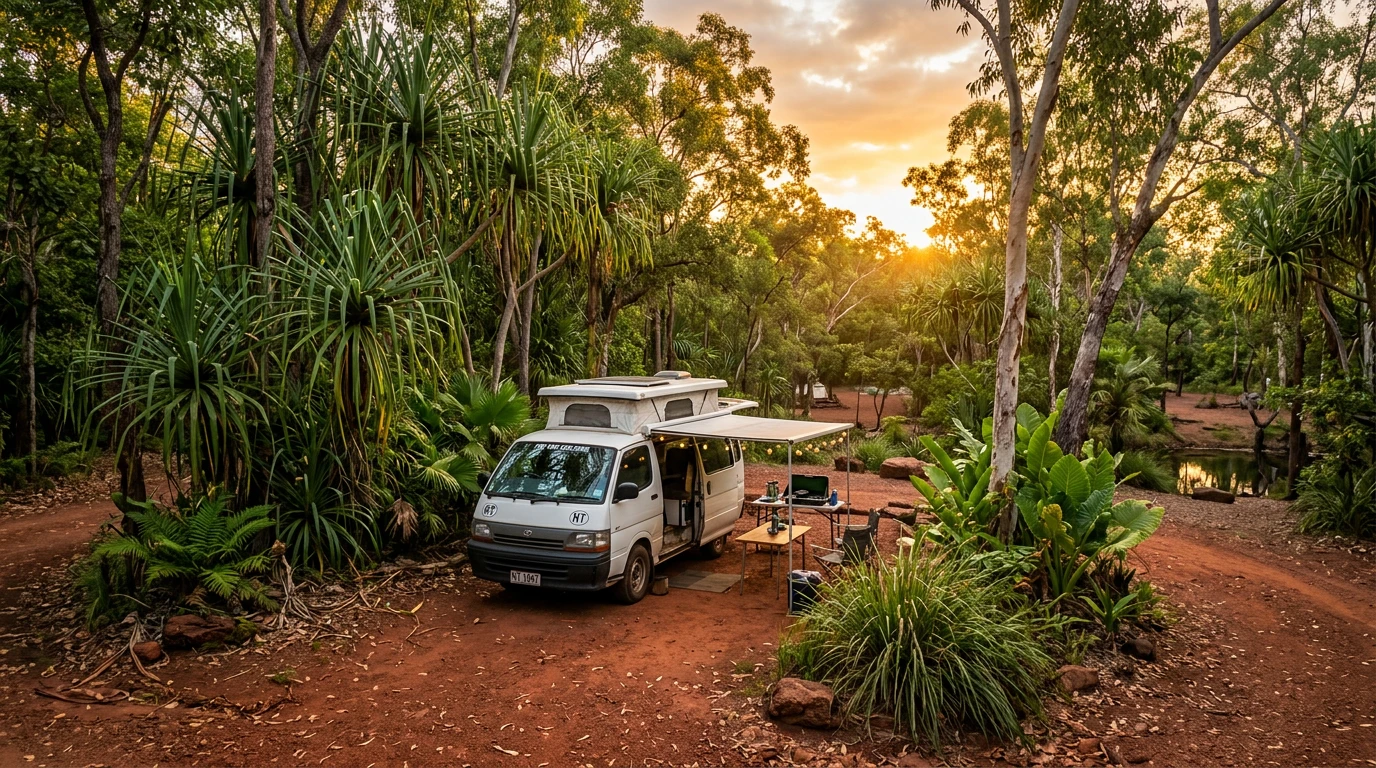
Darwin is a brilliant starting point for a luxury motorhome trip through Kakadu, Katherine Gorge, and down through the Red Centre to Alice Springs. The roads are sealed and the scenery is extraordinary. Our Darwin campervan hire guide covers the best operators, seasonal timing (avoid the wet season — October to April is brutal), and what to pack for remote travel.
South Australia and the Great Ocean Road
Adelaide is underrated as a motorhome base. The Flinders Ranges, the Eyre Peninsula, and the Barossa Valley are all within easy reach. If you're considering a one-way trip, the Melbourne to Adelaide route via the Great Ocean Road is spectacular — our Melbourne to Adelaide one-way guide breaks down the route, timing, and one-way surcharges to expect.
Timing and Booking: When to Go, When to Book
Peak season for luxury campervan hire varies by region. In Queensland and the Northern Territory, the dry season (May to September) is peak — expect higher rates and limited availability if you leave it late. In Victoria, South Australia, and Western Australia's south-west, summer (December to February) is busiest.
For a luxury vehicle in peak season, booking three to six months ahead is not excessive. The premium fleet is smaller than the budget fleet, and the best vehicles go first. If you're flexible on dates, shoulder season (April–May or September–October) often delivers better rates and fewer crowds at popular spots.
One-way hires in the luxury category attract a relocation surcharge — typically $200–$600 depending on the route and operator. Factor this into your budget from the start.
The Costs Beyond the Daily Rate
The daily rate is just the beginning. Here's what else you'll be paying:
- Security bond: $2,500–$5,000, held on your credit card. Reduced to $0–$500 if you take the operator's premium insurance package.
- Insurance reduction options: Typically $35–$65 per day for a low or zero excess package. Worth it for peace of mind on a long trip.
- Kilometres: Most luxury hires include unlimited kilometres, but confirm this — some operators cap at 100–150km/day with a per-kilometre charge beyond that.
- Generator hire: If the vehicle has a generator and you want to use it, some operators charge a daily fee ($10–$20/day) or charge by the hour.
- Bedding and linen: Often included in luxury vehicles, but not always. Check before you assume.
- Camping fees: Caravan parks with powered sites run $45–$90/night in popular areas. Free-camping is possible but requires planning.
- Fuel: A 6-metre diesel motorhome uses roughly 14–18 litres per 100km. At current diesel prices, budget $0.20–$0.28 per kilometre in fuel alone.
Practical Gotchas to Watch For
Height restrictions: Luxury motorhomes are typically 3.2–3.6 metres tall. Multi-storey car parks, some drive-throughs, and certain national park access roads are off-limits. Get used to checking before you pull in.
Driving licence requirements: In Australia, a standard car licence covers motorhomes up to 4,500kg GVM. Heavier vehicles (some larger luxury models) may require a light rigid licence. Check the vehicle's GVM before you book.
Dump points: Your cassette toilet or black water tank needs emptying every few days. Most caravan parks have dump points; free-camp spots often don't. Plan accordingly.
Pet policies: Most luxury operators don't allow pets in their premium fleet. If you're travelling with a dog or cat, you'll need to look at operators with specific pet-friendly policies — our pet-friendly campervan hire guide covers which operators allow it and what conditions apply.
Is Luxury Campervan Hire Worth It?
That depends entirely on how you travel. If you're doing a two-week trip with a partner, value a good night's sleep, and want to cook proper meals rather than living on camp stove pasta, the premium is genuinely worth it. Split between two people, $400/day becomes $200 each — comparable to a mid-range hotel room, but with the freedom to wake up wherever you parked the night before.
If you're on a tight budget or spending most of your time outdoors and just need somewhere to sleep, a mid-range vehicle will serve you fine. You can use CamperCompare to see the full range of options across operators and find the right fit for your actual trip — not just the most expensive one.
The best luxury campervan hire experience comes down to matching the vehicle to the route, booking early, and being honest with yourself about what you'll actually use. A vehicle with an outdoor kitchen is brilliant on the Gibb River Road. It's less useful if you're spending every night in a caravan park with a camp kitchen next door.
Planning your trip?
Compare campervan & motorhome hire prices across Australia: