The Drive North: Sydney to Byron Bay
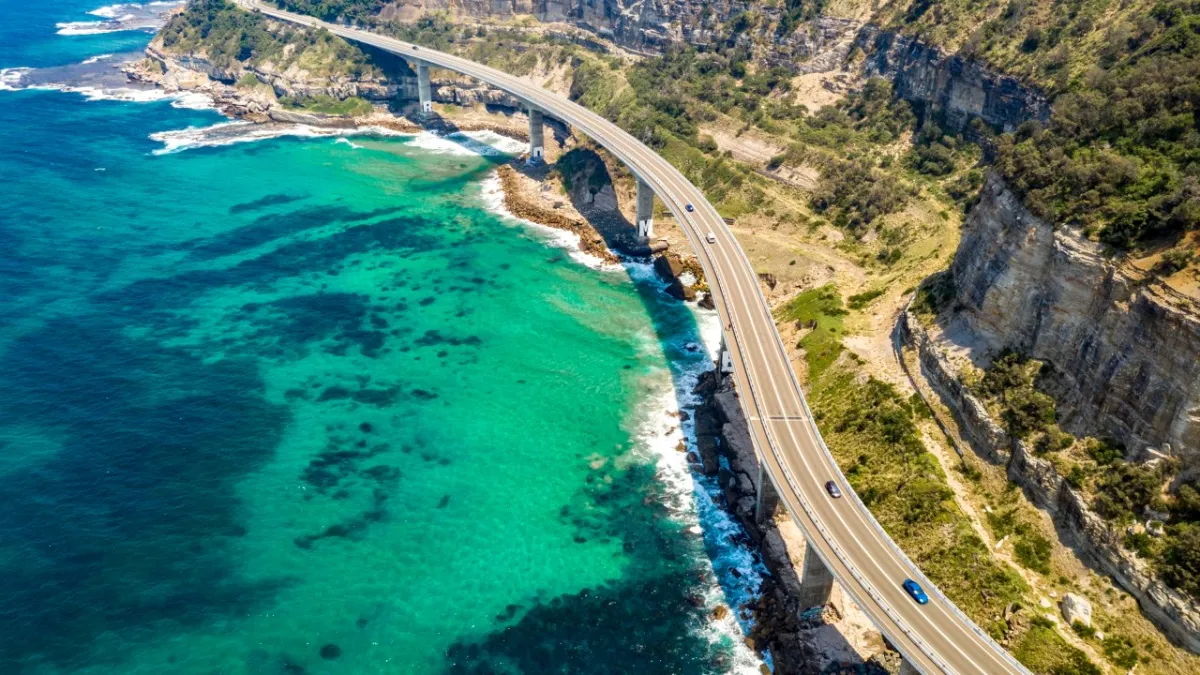
The Sydney to Byron Bay road trip is one of Australia's great coastal drives. Heading north along the Pacific Highway, you will pass through surf towns, rainforest hinterlands, and some of the most beautiful beaches on the NSW coast. At 770 km, it is a manageable drive that rewards those who take their time — the kind of trip where every detour leads to something unexpected and wonderful. The NSW North Coast has a distinct character that sets it apart from the more famous Gold Coast further north — it is more laid-back, more authentic, and far less developed.
The Pacific Highway has been transformed in recent years from a dangerous two-lane road into a modern dual carriageway for most of its length. This makes it easy and safe driving for any campervan, while the old highway sections that branch off toward coastal towns provide the scenic charm. The trick is knowing when to leave the fast highway and take the slower coastal detours — this guide shows you exactly where.
This route takes you through three distinct climate zones. The area around Port Stephens and Newcastle feels distinctly temperate, with crisp mornings and eucalyptus-scented air. By Coffs Harbour, the vegetation becomes noticeably subtropical — banana plantations appear, and the rainforest grows denser and more tropical. By the time you reach Byron Bay, you are firmly in the subtropics, with warm, humid air, palm trees, and a distinctly tropical energy.
Planning Your Trip
Best Time to Drive
This route is enjoyable year-round thanks to the NSW North Coast's mild subtropical climate. Summer (December–February) is peak season with warm weather and busy beaches — book campsites weeks in advance, especially at Byron Bay. Water temperatures are perfect for swimming, and the long daylight hours give you maximum time to explore. Autumn (March–May) is the sweet spot: warm enough for swimming, significantly fewer crowds, and stunning golden light. The whales begin their northbound migration in May, so late autumn combines great weather with early whale sightings.
Winter (June–August) brings whale watching season and cooler temperatures (still 15–20°C during the day) — perfect for hiking in the hinterland without overheating. Campervan rental rates drop dramatically in winter, making this the most affordable time to do the trip. Spring (September–November) sees wildflowers, warmer water temperatures building, and jacaranda trees blooming purple across the hinterland towns. The whale migration is in full swing heading south, and the north coast begins to buzz with energy as summer approaches.
Budget Overview for Two People
| Expense | Budget | Mid-Range |
|---|---|---|
| Campervan (5 days) | $250–$350 | $400–$650 |
| Fuel | $120–$160 | $120–$160 |
| Campsites (5 nights) | $75–$175 | $175–$250 |
| Food | $150–$200 | $200–$300 |
| Activities | $50–$100 | $150–$400 |
| Total | $645–$985 | $1,045–$1,760 |
Days 1–2: Sydney to Port Stephens
Distance: 200 km | Drive Time: 2.5 hours
Leave Sydney via the M1 motorway heading north. If you have time, detour through the Central Coast — stop at Pearl Beach for a swim in one of Sydney's best-kept secret beaches, or explore the Bouddi National Park coastal walk. Otherwise, the direct highway gets you to Port Stephens in about 2.5 hours.
Your first stop is Port Stephens, a stunning natural harbour almost twice the size of Sydney Harbour, famous for its resident bottlenose dolphins. Take a dolphin-watching cruise from Nelson Bay — sightings are virtually guaranteed year-round, and the operators are experienced at finding pods without disturbing them. Between May and November, you may also spot humpback whales migrating along the coast.
The Stockton Sand Dunes are the longest moving sand dunes in the Southern Hemisphere, stretching 32 km along the coast and reaching heights of 30 metres. Join a quad bike tour or sandboard down the massive slopes — it is an exhilarating experience and surprisingly accessible for all fitness levels. Alternatively, take a camel ride along the dunes at sunset for a more serene perspective.
For beachgoers, Shoal Bay is calm and family-friendly, while Zenith Beach (at the foot of Tomaree Head) is more dramatic and less crowded. The walk up Tomaree Head is steep but short (2.2 km return) and rewards with panoramic 360-degree views across the harbour, the Broughton Islands, and out to sea. Time your ascent for sunrise or sunset for the best light.
For a less touristy experience, drive to Fingal Bay where you can walk across the sand spit to Fingal Island at low tide (check conditions — only safe at low tide). The snorkelling around the rocky headlands is excellent, with plenty of tropical-looking fish and the occasional turtle.
For food, the d'Albora Marina at Nelson Bay has several excellent seafood restaurants overlooking the harbour. Try the freshly caught prawns — Port Stephens prawns are famous across NSW. The Murray's Brewery in Bob's Farm (between Nelson Bay and the highway) offers excellent craft beer tastings in a relaxed farmstead setting.
Where to camp: Halifax Holiday Park in Nelson Bay has waterfront sites with marina views. Shoal Bay Holiday Park is steps from the beach with excellent facilities. For budget camping, Jimmys Beach Caravan Park at Hawks Nest (20 min further north) offers peaceful riverside sites from $30/night. Samurai Beach Bungalows near Anna Bay puts you within walking distance of the sand dunes and a beautiful uncrowded beach.
Day 3: Port Macquarie
Distance: 220 km from Port Stephens | Drive Time: 2.5 hours
Continue north with an essential stop at Port Macquarie. The town's main attraction is the Koala Hospital — the world's only facility dedicated solely to the care and rehabilitation of koalas. The free guided tours (daily at 3 PM) explain the extraordinary work they do, and you can "adopt" a koala patient to support their work. If koalas are your thing, the Billabong Zoo also has excellent encounters.
Port Macquarie has stunning beaches. Flynns Beach is sheltered and perfect for swimming, while Lighthouse Beach (3 km of empty sand backed by nature reserve) is better for long walks. The Coastal Walk from Town Beach to Lighthouse Beach (9 km) passes through headlands with whale-watching platforms and Sea Acres Rainforest Centre — a boardwalk through remnant coastal rainforest where you walk beneath a canopy of ancient trees and giant ferns. Keep an eye out for brush turkeys and water dragons along the trail.
The Hastings River is another highlight. Rent a kayak or paddleboard and explore the calm river waters, where dolphins sometimes venture upstream. The river foreshore has an excellent walking and cycling path, and on Saturday mornings the Riverside Markets along the Hastings River offer local produce, homemade preserves, and handmade goods.
Between Port Stephens and Port Macquarie, the highway passes through the Manning Valley. If you have time, detour to Crowdy Bay National Park for secluded beach camping and the chance to spot kangaroos on Diamond Head Beach at sunrise — a magical experience with far fewer tourists than Pebbly Beach further south.
Where to camp: Sundowner Breakwall Tourist Park has beachfront sites with direct beach access. Port Macquarie Breakwall Holiday Park is more central. BIG4 Bonny Hills offers a quieter alternative 20 minutes south of town with excellent facilities and a short walk to a patrolled beach.
Days 3–4: Coffs Harbour & Bellingen
Distance: 150 km from Port Macquarie | Drive Time: 2 hours
Continue north to Coffs Harbour. Walk out to Muttonbird Island for coastal views and, between September and April, watch wedge-tailed shearwater birds (muttonbirds) returning to their nesting burrows at dusk — they arrive in their thousands, swooping in from the ocean in a spectacular aerial display.
The Solitary Islands Marine Park just offshore is where tropical and temperate ocean currents meet, creating extraordinary marine biodiversity. Diving and snorkelling here reveals an unusual mix of tropical fish, grey nurse sharks, and temperate species — all in the same dive. If you are a diver, this is one of the most underrated dive sites on the Australian coast.
The real gem of this area is Bellingen, a 30-minute drive into the hinterland along a winding road through dairy country and rolling green hills. This creative mountain town has exceptional cafes (the Old Butter Factory is converted into a craft and food hub), monthly community markets (third Saturday — one of the best regional markets in NSW), and access to the stunning Dorrigo National Park — a World Heritage rainforest with a canopy skywalk suspended above the tree canopy and several waterfall walks. The Wonga Walk (6.6 km loop through ancient Antarctic beech forest) is one of the best short rainforest walks in Australia. The Crystal Shower Falls walk is shorter (1.2 km return) and takes you behind a waterfall where you can stand in a cave and watch the water cascade in front of you — spectacular after rain.
Bellingen itself rewards an extended stay. The main street is lined with independent bookshops, vintage stores, and organic grocers. The Bellingen Brewing Co serves excellent craft beer in a converted warehouse, and No.2 Oak Street is consistently rated one of the best restaurants in regional NSW. The town has a strong artistic and alternative community that gives it a creative energy reminiscent of a smaller, quieter Byron Bay from decades ago.
For something unique, visit the Bellingen Flying Foxes colony on Bellingen Island — tens of thousands of grey-headed flying foxes roost in the trees and take flight at dusk in a mesmerising display.
Where to camp: Park Beach Holiday Park in Coffs has ocean-side powered sites. In Bellingen, camp by the river at Bellingen Riverside Camping for a peaceful bush experience. Promised Land Retreat (20 min from Bellingen) offers secluded rainforest camping.
Day 5: Yamba
Distance: 130 km from Coffs | Drive Time: 1.5 hours
Stop at Yamba — this fishing village at the mouth of the Clarence River has repeatedly been voted one of Australia's best small towns, and it lives up to the reputation. The pace is slow, the locals are friendly, and the surf is outstanding.
The surf at Angourie (5 km south of Yamba) is world-class — a powerful right-hand point break that draws serious surfers from across Australia. For beginners, Main Beach at Yamba has gentler waves and is patrolled during summer. The Blue Pools at Angourie are magical — crystal-clear freshwater pools in a volcanic rock formation, perfect for a refreshing dip between surf sessions.
Yamba's Pacific Hotel has one of the best pub meals on the NSW coast, with ocean views from the outdoor deck. The fish and chips from any of the local shops are excellent, and the Sunday morning Yamba Farmers Market is a highlight.
Walk the Yamba to Angourie Coastal Walk (4 km one way) for headland views, hidden rock pools, and whale watching (in season). If time allows, take a river cruise on the Clarence to see the surrounding wetlands and birdlife.
Where to camp: Blue Dolphin Holiday Resort in Yamba has river-view powered sites. Calypso Yamba Holiday Park is closer to Main Beach.
Day 6: Byron Bay
Distance: 140 km from Yamba | Drive Time: 1.5 hours
Arrive at Byron Bay and you will understand why this place has a magnetic pull on travellers from around the world. The town combines stunning natural beauty — crescent beaches backed by green hinterland, dolphins surfing the waves, and Australia's most easterly point — with a creative, bohemian culture of markets, live music, yoga retreats, and excellent food.
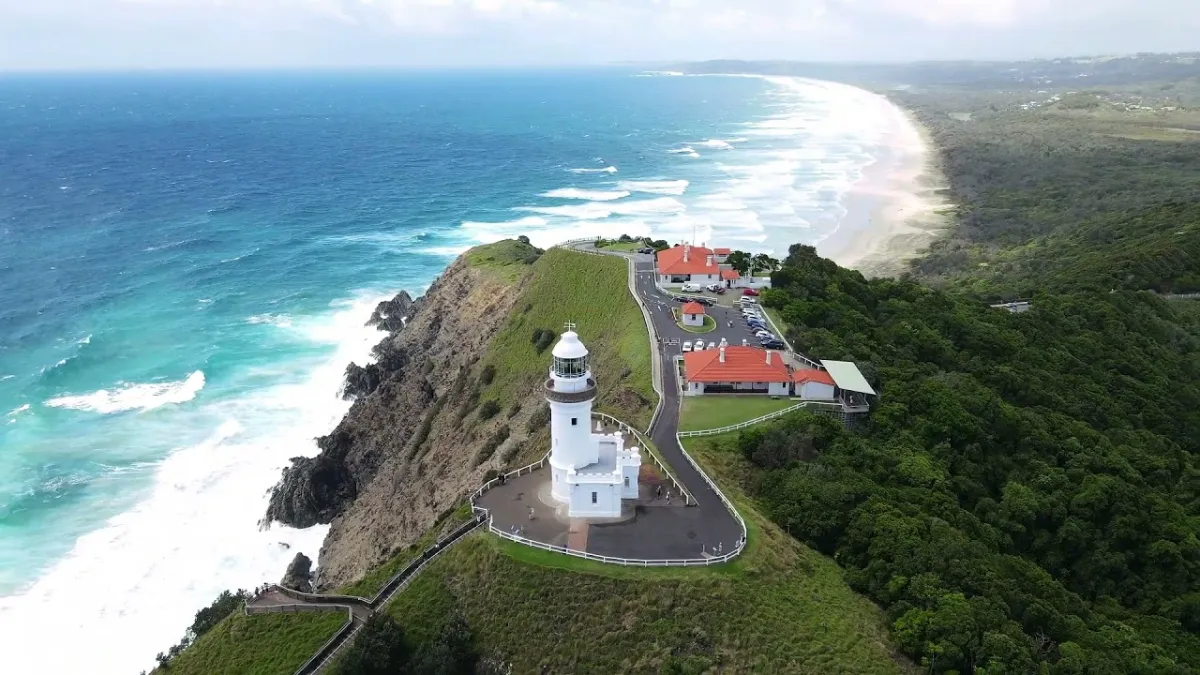
Walk to the Cape Byron Lighthouse at dawn for whale watching (June–November — humpback whales are regularly spotted from the headland) and dolphins playing in the surf below. The Cape Byron Walking Track (3.7 km loop) is one of Australia's most scenic short walks, taking you through rainforest, along cliff edges, and past The Pass — one of Byron's best surf breaks.
Explore the Saturday Farmers Market at the Butler Street Reserve — it is one of the best markets in Australia, with local organic produce, artisan food stalls, and live music. The Artisan Market (first Sunday of the month) at the Railway Park showcases local makers and designers.
For the beach, Wategos Beach is a sheltered crescent at the base of the lighthouse — perfect for swimming and often visited by dolphins. Main Beach has surf and is walking distance from town. Tallows Beach stretches for 6 km south and is usually empty — walk south for ten minutes and you may have the entire beach to yourself.
For the adventurous: Skydive Byron Bay offers tandem jumps with views of Cape Byron, the lighthouse, and the hinterland — it is regularly rated Australia's most scenic skydive. Sea kayaking from Main Beach offers close encounters with dolphins, turtles, and (in season) whales.
Where to camp: First Sun Holiday Park has the most prime position on Main Beach, Byron Bay — book months in advance for summer. Suffolk Beachfront Holiday Park (10 min south) offers more space and a quieter atmosphere. Lennox Head Reflections Holiday Park (15 min south) is a quieter, more affordable alternative with its own beautiful beach.
Beyond Byron Bay
From Byron Bay, you have excellent onward options:
- Gold Coast (90 km north) — surf beaches, theme parks, Burleigh Heads and the Hinterland
- Brisbane (170 km north) — Queensland's capital, gateway to the East Coast run to Cairns
- Nimbin (70 km inland) — Australia's most famous alternative community, with its Aquarius Festival heritage and quirky main street
- Mount Warning / Wollumbin (50 km south-west) — the first place in Australia to catch the morning sun; a challenging 8.8 km return walk to the summit (check access — currently restricted due to cultural significance)
Wildlife Along the Route
The NSW North Coast is rich in wildlife, and a campervan trip gives you the perfect pace to appreciate it. Here is what to look for:
- Dolphins — Port Stephens has one of Australia's largest resident dolphin populations. Byron Bay's Main Beach also has regular dolphin sightings, often surfing the waves alongside humans
- Whales — Humpback whales migrate north (May–July) and south (September–November) along this entire coastline. The headland lookouts at Port Stephens, Port Macquarie, Coffs Harbour, and Cape Byron are all excellent whale-watching spots
- Koalas — Port Macquarie's Koala Hospital is the premier koala experience, but you can also spot wild koalas in the eucalyptus forests around Coffs Harbour and in Boambee State Forest
- Kangaroos — Eastern grey kangaroos are common at dusk in rural areas along the route. Crowdy Bay National Park's Diamond Head Beach has a population that grazes on the beach at dawn
- Sea turtles — Green and loggerhead turtles are occasionally spotted while snorkelling in the Solitary Islands Marine Park near Coffs Harbour
- Flying foxes — Bellingen's colony of grey-headed flying foxes is one of the largest in Australia. Watching them take flight at dusk is unforgettable
Driving Tips
- The Pacific Highway is now mostly dual carriageway — easy driving for any campervan. Speed limits are generally 110 km/h on the highway, dropping to 50–60 km/h through towns.
- Tolls apply near Sydney (M1 motorway) — check your hire company's toll arrangements before departure. Once past the Hawkesbury River, the rest of the route is toll-free.
- Byron Bay campsite spots sell out fast in summer — book weeks ahead for December–January. Schoolies Week (late November) is also extremely busy.
- The old Pacific Highway sections (where they still exist) are more scenic than the new highway — worth taking if you are not in a hurry. The section through Urunga and Nambucca Heads is particularly scenic.
- Mobile reception is patchy through the hinterland areas around Bellingen and Dorrigo — download offline maps before leaving Coffs Harbour.
- Fuel is cheapest at major towns (Newcastle, Port Macquarie, Coffs Harbour). Avoid filling up at small coastal villages where prices are typically 15–25 cents per litre higher.
- The road between Coffs Harbour and Grafton passes through heavy truck traffic. Be patient and use overtaking lanes when available.
📍 Read our Sydney campervan hire guide for brand comparisons and pricing, our Sydney Airport pickup guide, or our Brisbane guide if you are picking up there instead.
Planning your trip?
Compare campervan & motorhome hire prices across Australia: