Why hire a 4WD camper instead of a regular motorhome?
A standard two-wheel-drive motorhome is a brilliant way to travel Australia's sealed highways. But the moment you want to drive the Gibb River Road, push into Cape York, or reach a remote gorge in the Pilbara, you need something with proper ground clearance, a low-range gearbox, and tyres that can handle corrugated dirt. That's where 4WD camper hire comes in.
The trade-off is real: 4WD campers are smaller, bumpier, and more expensive per day than a conventional motorhome. You're typically sleeping in a rooftop tent or a compact pop-top rather than a full walk-around bed. But what you gain is access to places that most travellers never reach — and in Australia, those places are often the best ones.
What types of 4WD camper are available to hire?
The Australian hire market offers a few distinct configurations. Understanding the differences before you book saves a lot of frustration.
Rooftop tent 4WDs
These are typically Toyota LandCruiser 70 or 79 Series, or Mitsubishi Pajero-based vehicles, fitted with a rooftop tent and a basic slide-out kitchen in the tray or rear cargo area. Setup takes about five minutes. They're the most capable off-road option and handle the roughest tracks, but you're cooking outside and sleeping above the vehicle — fine in the dry season, less fun in a downpour.
Pop-top 4WD campers
Vehicles like the Toyota LandCruiser 200 Series or Nissan Patrol fitted with a fibreglass pop-top camper body offer a bit more comfort: a proper bed inside, a small kitchen, and sometimes a basic bathroom. They're heavier than a rooftop tent rig, which affects fuel economy and occasionally limits which tracks you can legally use, but they're far more liveable for trips longer than a week.
4WD camper trailers (drive-away)
Some operators hire a 4WD vehicle paired with an off-road camper trailer. This gives you the most living space but adds complexity — reversing, unhitching at camp, and navigating narrow tracks all require more skill. Not ideal for first-time off-roaders.
Which operators offer 4WD camper hire in Australia?
The major campervan brands — Apollo, Britz, Maui, Jucy, Travellers Autobarn, Camperman, Mighty, Cheapa Campa, Star RV, and Lets Go — mostly focus on two-wheel-drive motorhomes for sealed-road travel. For genuine 4WD camper hire, you'll generally be looking at specialist operators or the 4WD-specific arms of the larger brands.
Britz and Apollo both offer 4WD camper options in their fleets — worth comparing them directly if you're weighing up the big brands. Our Apollo vs Britz comparison guide breaks down how they stack up on price, inclusions, and customer experience.
Specialist operators worth researching include Outback Camper Hire, Camperman Australia (which has some 4WD-capable units), and various regional operators in Darwin, Broome, and Cairns who cater specifically to the off-road market. Checking CamperCompare lets you filter by vehicle type and pickup location so you can see what's actually available for your dates without ringing around.
How much does 4WD camper hire cost in Australia?
Prices vary significantly by season, operator, vehicle type, and hire duration. The figures below are indicative ranges based on typical market rates — always get a live quote for your specific dates.
| Vehicle Type | Low Season (approx.) | Peak Season (approx.) | Typical Bond |
|---|---|---|---|
| Rooftop tent 4WD (2-berth) | $150–$220/day | $250–$380/day | $3,000–$5,000 |
| Pop-top 4WD camper (2–3 berth) | $180–$260/day | $280–$420/day | $3,500–$6,000 |
| 4WD camper trailer combo | $200–$300/day | $320–$500/day | $4,000–$7,500 |
On top of the daily rate, budget for fuel (4WD campers typically use 14–20 litres per 100km depending on load and terrain), a comprehensive insurance reduction package (usually $30–$60/day extra to bring your excess down), and any one-way fees if you're not returning to the same city.
If budget is a priority, it's worth reading our guide on how to get the best campervan deal in Australia — many of the negotiation tactics apply equally to 4WD hire.
Where can you actually take a hired 4WD camper?
This is where the fine print matters. Every operator has a list of approved and prohibited tracks, and breaching those conditions voids your insurance entirely. Read the rental agreement carefully before you sign.
Western Australia: The Kimberley and Pilbara
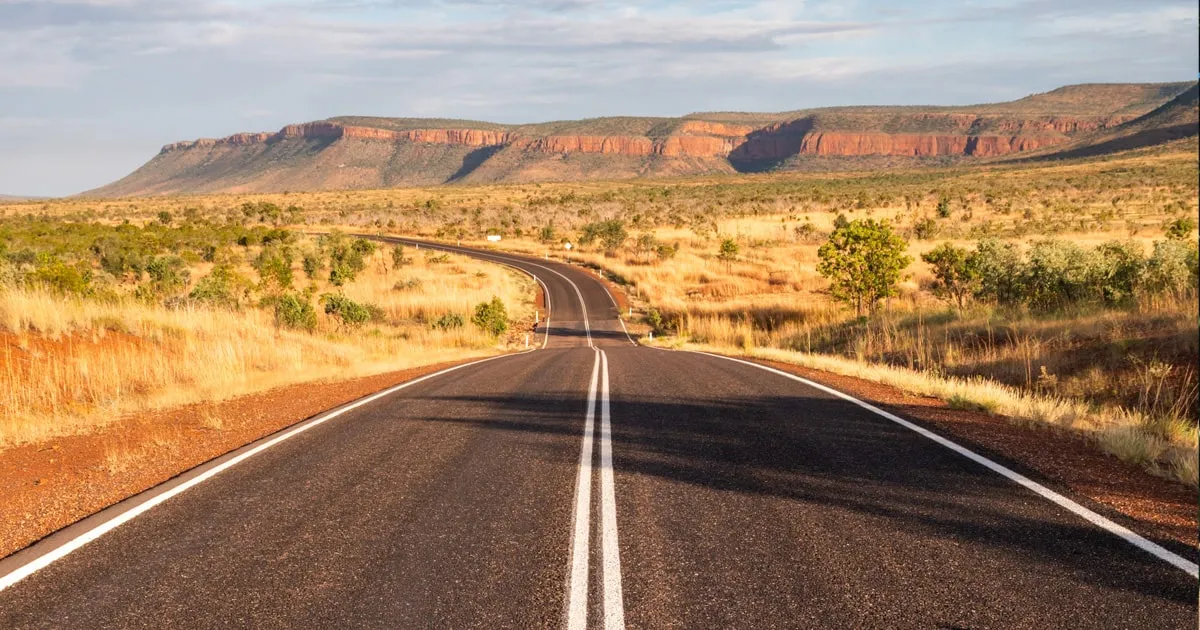
The Gibb River Road (660km of mostly unsealed road between Derby and Kununurra) is the classic 4WD camper route. You'll pass through Windjana Gorge, Manning Gorge, and El Questro Station. Allow at least 10 days to do it properly. The dry season runs May to September — outside those months, many tracks close due to flooding. If you're flying into Perth first, our Perth Airport campervan pickup guide covers the logistics of collecting a vehicle there before heading north. For broader WA route planning, the Perth campervan hire guide has useful context on distances and road conditions.
Northern Territory: Red Centre and Top End
Darwin is the natural base for Top End 4WD trips. Kakadu National Park, Litchfield, and the Arnhem Land border tracks all reward a proper 4WD. Further south, the Red Centre — Uluru, Kings Canyon, and the West MacDonnell Ranges — has some unsealed sections that benefit from 4WD clearance, though many routes are accessible in a 2WD during dry conditions. Hire from Darwin or Alice Springs to avoid long sealed-road transfers.
Queensland: Cape York Peninsula
Cape York is one of Australia's most demanding 4WD routes. The Telegraph Road from Cairns to the tip covers roughly 1,000km each way, with river crossings, deep sand, and sections that are genuinely technical. Most operators require you to hire for a minimum of 14–21 days for Cape York trips, and some won't permit it at all — check before booking. Cairns is the logical pickup point.
South Australia and the Outback
The Flinders Ranges, Oodnadatta Track, and Birdsville Track are all achievable in a well-equipped 4WD camper. These routes are drier and less technically demanding than Cape York or the Kimberley, making them a reasonable choice for travellers who are newer to off-road driving.
What to check before you hire
A few things catch people out repeatedly. Go through this list before you commit to a booking.
- Track approvals: Ask the operator for a written list of approved unsealed roads. "4WD capable" on the website does not automatically mean the Gibb River Road is covered.
- Tyre inclusions: Tyre damage is often excluded from standard insurance packages on 4WD hires. Confirm whether sidewall damage and punctures are covered, and whether a full-size spare (not a space-saver) is included.
- Minimum hire period: Many operators require 7–14 days minimum for 4WD campers, especially in peak season.
- One-way fees: Dropping a vehicle in a different city (say, Darwin to Broome) can add $500–$2,000 to your total. Sometimes operators run relocation specials that cut this significantly.
- Driver licence requirements: A standard Australian or international driver's licence covers most hires, but some operators require a minimum age of 25 for 4WD vehicles.
- Satellite communicator: Many operators include a SPOT or Garmin inReach device, or offer one as an add-on. In remote areas, this is not optional — it's essential.
4WD camper hire vs hiring a 4WD and booking accommodation
It's a fair question. Hiring a bare 4WD and staying in station homesteads or national park huts along the way can work out cheaper in some cases, and you're not carrying the weight of a camper. But in remote areas, accommodation is often booked out months in advance, and the flexibility of having your bed with you is genuinely valuable. If you're travelling as a family of four, a 4-berth campervan on sealed roads might actually suit you better than a cramped 4WD camper — worth thinking through before you default to the 4WD option.
Tips for first-time 4WD camper hirers
- Do a tyre pressure check before every unsealed section. Dropping to 28–32 PSI on corrugated dirt makes a significant difference to comfort and tyre life. Carry a portable compressor to reinflate before returning to sealed roads.
- Carry more water than you think you need. Ten litres per person per day is the standard recommendation for remote travel in hot conditions.
- Tell someone your itinerary. Leave a detailed plan with a contact at home, including expected check-in times. If you're overdue, they can alert authorities.
- Drive to the conditions, not the speed limit. On corrugated dirt, 60–80km/h is often faster than the conditions safely allow. Slow down, especially in the afternoon when fatigue sets in.
- Book campsites in advance for peak season. National park campsites in Kakadu, the Kimberley, and Cape York fill up fast between June and August. Don't assume you'll find a spot on arrival.
Comparing operators: where to start
Because 4WD camper hire is a more specialised market than standard motorhome hire, availability varies a lot by pickup location and season. Using CamperCompare to search across multiple operators at once saves time and makes it easier to spot price differences for the same travel dates. If you're starting your trip from the east coast, our Brisbane to Cairns one-way guide is also worth a read for context on east coast logistics, even if you're ultimately heading west or north.
The 4WD camper hire market rewards people who do their homework. Read the terms, confirm the track approvals in writing, and don't let a great daily rate distract you from what's actually included. Get that right, and you'll have access to parts of Australia that most visitors never see.
Planning your trip?
Compare campervan & motorhome hire prices across Australia: