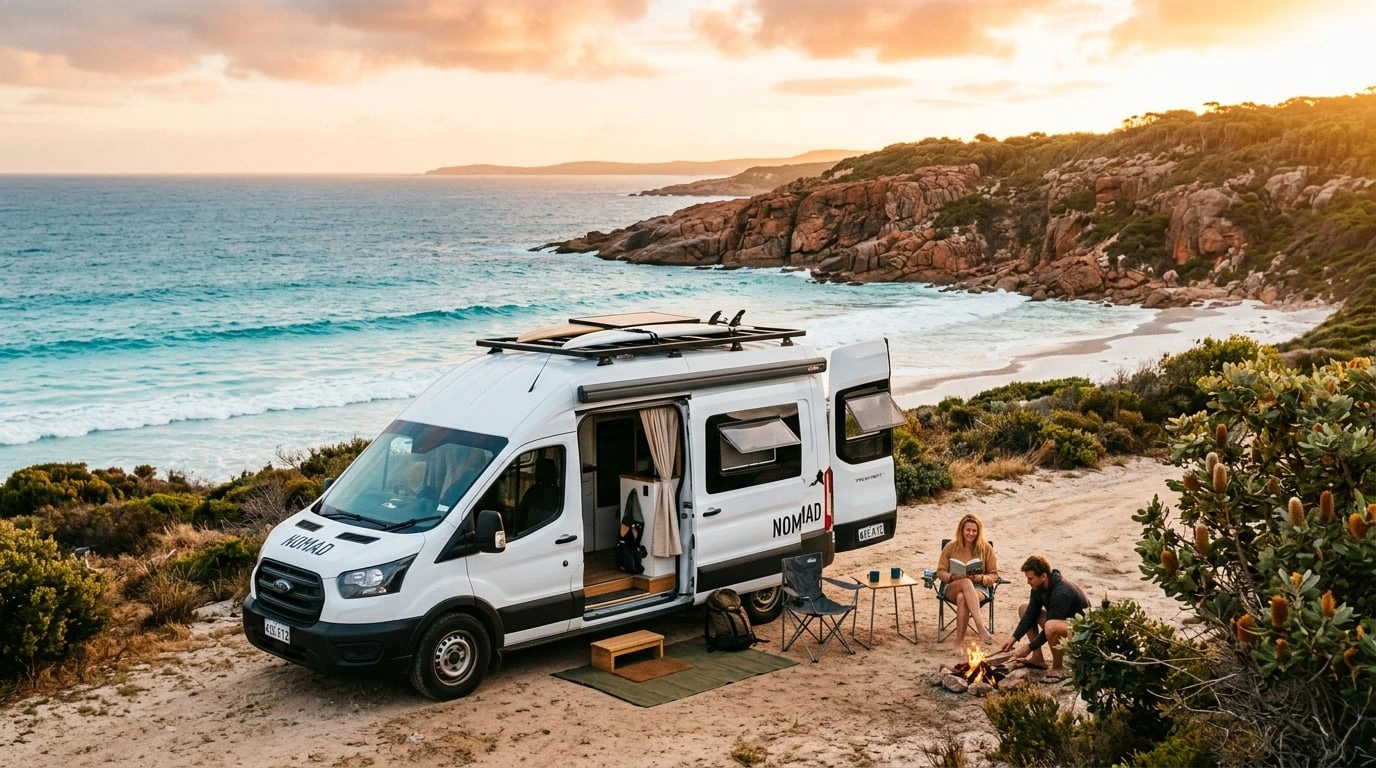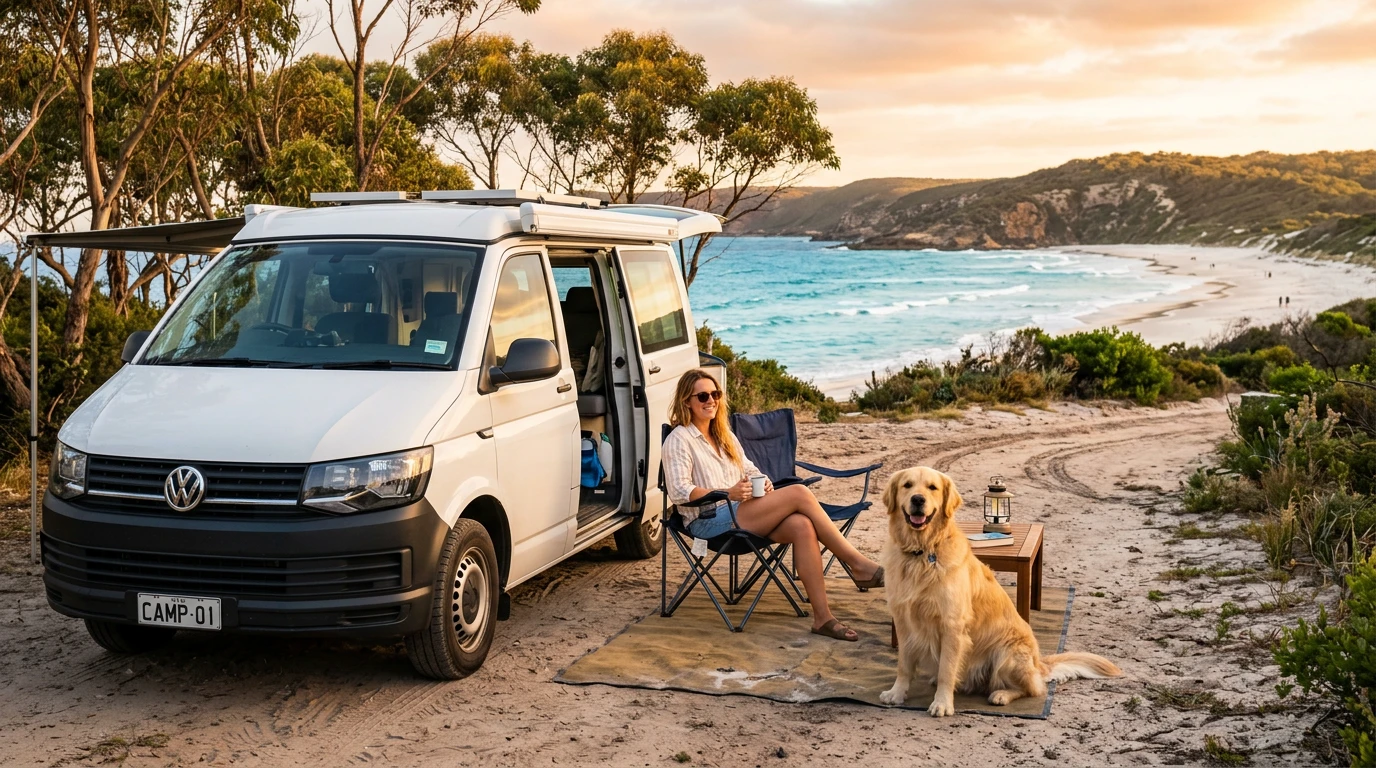

Van Life on a Working Holiday Visa: What You Actually Need to Know
A campervan is one of the most practical ways to do a working holiday in Australia. You sleep where you park, you follow the seasonal work, and you are not locked into a lease in a city you might leave in three weeks. But campervan hire working holiday visa Australia searches often turn up generic results that do not address the real questions: how long can you hire, what does it actually cost per week, can you share the vehicle to split costs, and how do you line up work along the way?
This guide answers all of that, with real numbers and operator names — not vague promises.
Can You Hire a Campervan on a Working Holiday Visa?
Yes, with a few conditions. Most major operators — Apollo, Britz, Maui, Jucy, Travellers Autobarn, Camperman, Mighty, Cheapa Campa, Star RV, Lets Go — will hire to 417 and 462 visa holders. What they care about is your driving licence, your age, and your credit card. You do not need a permanent address in Australia; a hostel address or a friend's address is generally accepted at the time of booking.
Key requirements to have ready:
- Valid driving licence — your home country licence is accepted in most states for the duration of your visa, but carry an International Driving Permit if your licence is not in English.
- Credit card in the primary driver's name — debit cards are often refused for the bond. The bond typically runs from $1,500 to $5,000 AUD depending on the operator and vehicle class.
- Minimum age — most operators require the main driver to be at least 21. Some accept 18 to 20 year olds with a young driver surcharge of roughly $25–$35 per day. See the Campervan Hire Under 21: The Young Driver Guide (2026) for full details.
- Passport and visa evidence — operators will check your visa is valid for the hire period.
How Long Can You Hire, and What Does It Cost?
Most operators offer hire periods from three days up to six months, and some will go to twelve months on request. For working holiday travellers, the sweet spot is usually four to twelve weeks — long enough to do a proper circuit or follow the harvest trail, short enough that you are not paying for weeks you do not need.
Daily rates drop significantly the longer you hire. As a rough guide (rates vary by season, vehicle class, and availability — always check current pricing):
| Hire Duration | Typical Daily Rate (Budget 2-berth) | Typical Daily Rate (Mid-range 2-berth) |
|---|---|---|
| 7–13 days | $80–$110 AUD | $110–$160 AUD |
| 14–27 days | $65–$90 AUD | $90–$130 AUD |
| 28–59 days | $50–$75 AUD | $75–$110 AUD |
| 60–90 days | $40–$65 AUD | $60–$95 AUD |
| 90+ days | $35–$55 AUD | $50–$80 AUD |
These are indicative ranges only. For a full breakdown of what drives the price up or down, the How Much Does Campervan Hire Cost in Australia? (2026 Price Guide) is worth reading before you book. Budget operators like Cheapa Campa, Camperman, and Mighty tend to sit at the lower end; Maui and Star RV sit at the higher end. Jucy and Travellers Autobarn land somewhere in the middle and are popular with backpackers for good reason — their vehicles are compact, fuel-efficient, and the depots are well located.
Relocation Deals: The Cheapest Way to Move Between Cities
Relocation deals — sometimes called "relocations" or "deadhead hires" — are the single best hack for budget travellers. When an operator has too many vehicles in one city and not enough in another, they offer the van at a heavily discounted rate (sometimes as low as $1–$5 per day) in exchange for you driving it to the destination depot within a set timeframe, usually three to five days.
Common relocation routes include Sydney to Melbourne, Melbourne to Adelaide, Adelaide to Perth, Cairns to Sydney, and Darwin to Adelaide. The Darwin to Adelaide run is particularly popular in April and May as operators reposition vehicles after the Northern Territory dry season rush.
Where to find them:
- imoova.com and transfercar.com.au — the two main aggregator sites for Australian relocation deals. Check daily; good deals go within hours.
- Operator websites directly — Apollo, Britz, and Maui all list relocations on their own sites.
- Hostel noticeboards in major cities — still a thing, especially in Cairns, Darwin, and Perth.
The catch: you are on a fixed route and a fixed timeline. You usually get a free fuel allowance (enough to cover the route if you drive reasonably), but you cannot detour significantly. If you want flexibility, a standard long-hire deal is better value in the long run. For more strategies on keeping costs down, read How to Get the Cheapest Campervan Hire in Australia and NZ (2026).
Sharing the Van: Splitting Costs With Another Traveller
Most operators allow a second driver to be added for a small fee — typically $3–$7 per day — or sometimes free if you book during a promotion. Adding a second driver is not the same as splitting the hire cost informally with someone who is not on the contract; if an unregistered driver has an accident, your insurance is void. Always add your travel partner to the agreement.
With two people sharing, the economics shift dramatically. A $60/day budget van becomes $30 per person per day. Add free camping most nights (more on that below) and you are looking at accommodation costs that undercut even a dorm bed in a hostel.
Finding a travel partner to share with: the Gumtree Travel section, Backpacker Facebook groups (search "Working Holiday Australia" or "Backpackers Australia"), and hostel common rooms in Sydney, Melbourne, Cairns, and Brisbane are all reliable places to connect with people heading the same direction.
Free Camping and Keeping Overnight Costs Down
Holiday park fees can add $30–$55 per night to your costs, which blows the budget fast on a long trip. The good news is that Australia has a huge amount of free or low-cost camping on public land — rest areas, national park campgrounds, state forest sites, and roadside stops. Apps like WikiCamps Australia and Campermate are essential tools for finding these spots.
The rules vary by state and by vehicle type. Some free sites require a self-contained vehicle (with an onboard toilet and grey water tank). Before you assume your hired van qualifies, check the operator's documentation — most Jucy, Travellers Autobarn, and Camperman vans are not self-contained, while larger Apollo and Britz motorhomes often are. The Free Camping vs Holiday Parks in Australia: The 2026 Cost and Legality Guide covers the rules state by state.
Following the Seasonal Work: Where to Go and When
One of the biggest advantages of van life on a working holiday is that you can move when the work moves. Here is a rough seasonal guide to the main agricultural regions:
- Queensland (Bundaberg, Bowen, Atherton Tablelands) — fruit and vegetable picking runs roughly April to November. Bundaberg is the most well-known; Bowen is less crowded and often easier to find work.
- New South Wales (Griffith, Young, Orange) — stone fruit and citrus from October to March; grapes in February and March.
- Victoria (Mildura, Shepparton, Robinvale) — citrus and stone fruit from October through March; asparagus around Koo Wee Rup from September to November.
- South Australia (Riverland, Barossa Valley, McLaren Vale) — grape harvest February to April.
- Western Australia (Carnarvon, Manjimup, Pemberton) — fruit picking from March to November depending on the crop.
- Northern Territory (Darwin region) — hospitality and tourism work peaks May to September during the dry season.
The Harvest Trail website (run by the Australian Government) lists current job vacancies by region and is the most reliable starting point. Hostels in farming towns often have direct relationships with labour hire companies and can get you placed quickly.
When planning your route around work, factor in distances honestly. Bundaberg to Cairns is around 1,100 kilometres. Mildura to Melbourne is about 550 kilometres. Perth to Broome is 2,200 kilometres of mostly unsealed or remote highway — not a quick hop. Most hire agreements include a kilometre allowance (often 100–200 km per day); excess kilometres are charged at $0.15–$0.35 per km, so plan your route before you sign.
Comparing Operators: What to Look For
Not all budget campervans are equal. Before you book, compare these factors across operators:
- Included kilometres — unlimited km deals exist but are less common on long hires. Check the daily cap.
- Roadside assistance — most operators include this, but confirm it covers remote areas.
- Insurance excess — standard excess runs from $3,000 to $7,500. Reducing it costs $20–$45 per day extra. On a 60-day hire that adds up fast; weigh it against your risk tolerance.
- One-way fees — hiring in Sydney and dropping in Cairns often attracts a one-way fee of $200–$500. Sometimes waived during relocation periods.
- Kitchen equipment — budget vans from Cheapa Campa and Mighty sometimes charge extra for a kitchen kit. Confirm what is included.
Running side-by-side comparisons across Apollo, Britz, Jucy, Travellers Autobarn, Camperman, and others is exactly what CamperCompare is built for — you can filter by hire length, pick-up city, and vehicle type to see what is available for your dates without visiting a dozen separate sites.
If you are planning a hire of a month or more, the Long-Term Campervan Hire Australia: 1 to 12 Month Guide goes deeper on negotiating rates, what to check in the contract, and which operators are most flexible on long-stay bookings.
A Few Practical Gotchas to Avoid
- Booking too far in advance in peak season — December to February in Queensland and the Top End, and June to August in southern states, are busy. Book at least four to six weeks ahead for those periods.
- Assuming your phone plan covers remote areas — Telstra has the best rural coverage in Australia by a significant margin. If you are heading to outback Queensland, the Nullarbor, or the Kimberley, a Telstra SIM is worth the extra cost.
- Underestimating fuel costs — a diesel campervan doing 10–12 litres per 100 km at $2.00–$2.20 per litre adds up. Budget roughly $0.20–$0.25 per kilometre for fuel alone.
- Not reading the excess reduction fine print — some policies exclude single-vehicle accidents, tyre damage, and underbody damage even with the excess reduction purchased. Read the Product Disclosure Statement.
- Forgetting about EOFY deals — operators often run significant discounts in June. The EOFY Campervan Sale 2026: Save Up to 40% on Winter Hire Across Australia and NZ is worth checking if your timing is flexible.
Is It Worth It Compared to Buying a Van?
Buying a second-hand van is cheaper per day if you are staying for a full year and the van does not break down. But buying comes with registration, insurance, roadworthy certificates, and the stress of selling at the end — often at a loss in a buyer's market. Hiring gives you a reliable, insured vehicle with roadside assistance, no selling hassle, and the flexibility to change vehicle size as your plans change. For most working holiday travellers on a six to twelve month visa, hiring for the travel legs and staying in hostels or share houses during work stints is the most practical combination.
If you are new to campervans entirely, start with the First-Time Campervan Hire in Australia: Everything You Need to Know before you commit to anything — it covers the basics that operators assume you already understand.
Planning your trip?
Compare campervan & motorhome hire prices across Australia: