
1. Compare Prices Across Every Brand (This is the #1 Hack)
The single biggest mistake campervan renters make is booking with the first brand they find. Prices for the exact same type of vehicle can vary by 40–60% between brands for the same dates and route.
That's not a typo. A 2-berth campervan from Brand A might cost $89/day while Brand B charges $149/day for a near-identical vehicle — same pickup location, same dates, same insurance level. We've seen even bigger gaps during peak season, where the difference between the cheapest and most expensive brand for a standard campervan can exceed $100 per day.
The reason? Each brand has different inventory levels at different depots, different pricing algorithms, and different promotional periods. A brand with excess stock in Sydney might be running a flash sale while simultaneously charging premium rates in Melbourne where stock is low. Without comparing, you'd never know.
This is why price comparison is the most important thing you can do. CamperCompare lets you search 25+ brands at once — Apollo, Britz, Maui, Jucy, Mighty, Cheapa Campa, Travellers Autobarn, Star RV, Let's Go, Hippie, and more — so you can see the cheapest option in seconds.
→ Compare campervan prices now
2. Use Our Up to 10% Discount Code
Here's something you won't find on any other comparison site: a discount code worth up to 10% that applies to any campervan hire in Australia or New Zealand.
The code is WelcomeCamper and it gives you up to 10% off*. Simply enter your email below to claim it — we'll send you the code and keep you posted on flash sales too.
Once you have your code, mention WelcomeCamper when you submit your booking enquiry through CamperCompare. Your discount (up to 10%) will be applied to your final price — it's that simple.
Why does this matter? On a typical 14-day hire at $120/day, that's $168 saved. On a 30-day hire, you're looking at $360+ in savings — enough for a week's worth of fuel and campsite fees.
The code stacks with other savings strategies listed below, so you can combine it with off-peak pricing, long-hire discounts, and relocation deals for maximum savings.
3. Travel During Shoulder Season (March–May or Sep–Nov)
Campervan hire pricing works like airline tickets — it's all about supply and demand. During peak summer holidays (December–February in Australia), prices can be 2–3x higher than the off-peak rate.
The sweet spot is shoulder season:
- March to May (autumn) — still warm, fewer crowds, prices drop sharply after Easter. The East Coast is still beautiful, the Great Ocean Road is quieter, and outback temperatures become comfortable.
- September to November (spring) — wildflowers in WA (the world's largest wildflower display), perfect temperatures in QLD, whale watching season in NSW and QLD, and the start of whale shark season at Ningaloo Reef.
Here's a real-world example of pricing differences we've seen on CamperCompare:
- Peak (January): 2-berth campervan, Sydney pickup, 14 days — $149/day average
- Shoulder (April): Same vehicle, same route — $89/day average
- Off-peak (June): Same vehicle, same route — $69/day average
That's a difference of $1,120 for 14 days just by shifting your travel dates by 2–3 months. And the weather in April is often better for road tripping than January — fewer extreme heat days, less humidity on the East Coast, and more pleasant camping.
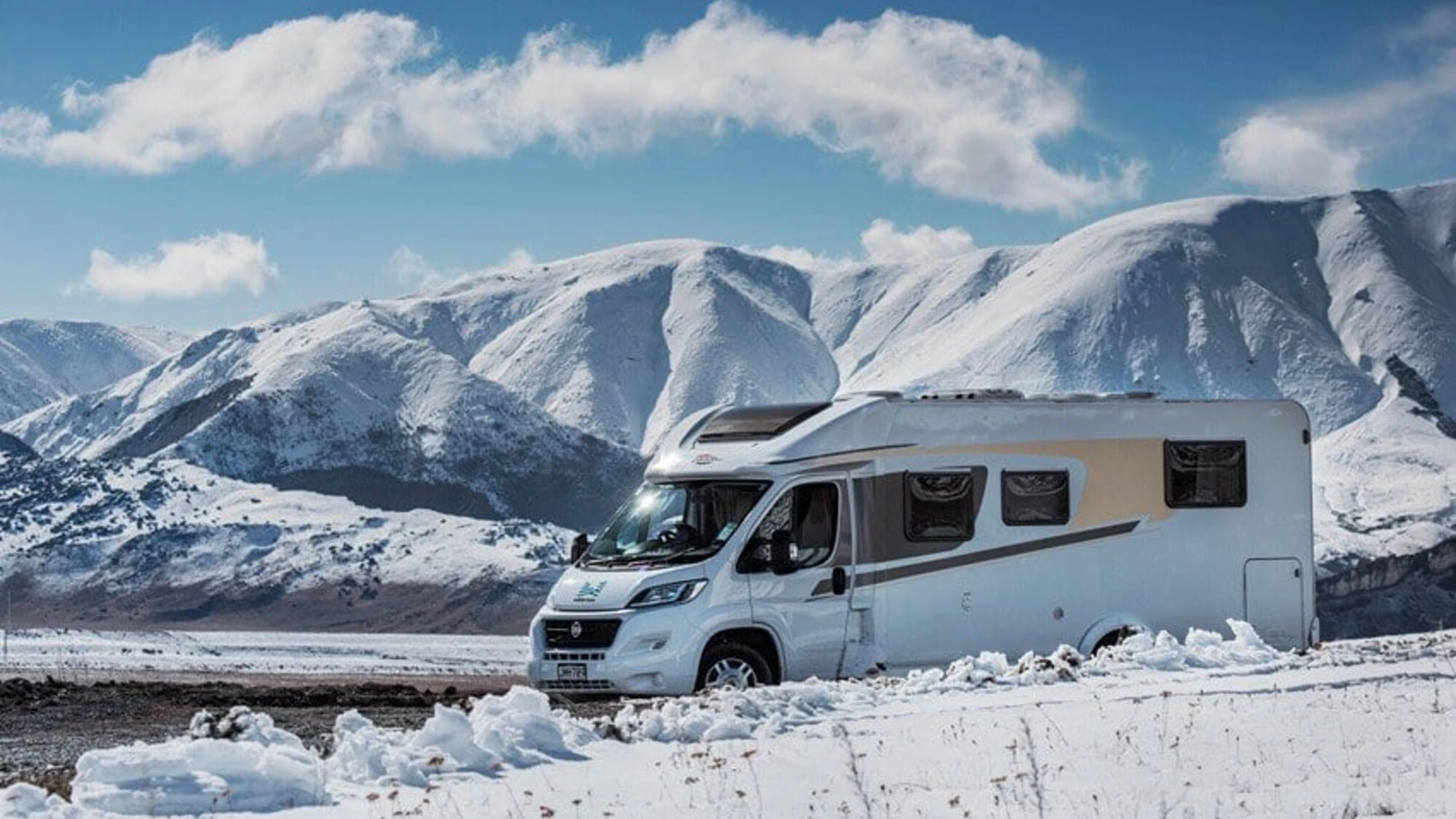
For New Zealand, the same logic applies but shifted slightly. March–April and October–November offer the best balance of weather and price. Winter (June–August) is cheapest but cold — great for South Island skiing if you don't mind the chill. Our South Island itinerary has detailed seasonal advice.
Pro tip: If you must travel in peak season, book at least 3–6 months ahead. Early-bird pricing can save 15–20% compared to last-minute bookings when availability is low and prices spike.
4. Snap Up Relocation Deals ($1/Day or Even Free)
This is the best-kept secret in campervan travel. Rental companies constantly need vehicles moved between depots — for example, lots of people drive Brisbane → Cairns but fewer drive the reverse. Someone needs to bring those vans back.
That someone could be you, for as little as $1 per day. Some relocation deals even include free fuel credits of $100–$200 to sweeten the deal.
The trade-off? You typically get:
- A fixed route (e.g., Cairns → Brisbane, Auckland → Christchurch)
- A tight timeframe (usually 3–7 days)
- Limited vehicle choice (you take what needs relocating)
Popular relocation routes and when they're most common:
- Cairns → Sydney/Brisbane — Available April–October as vehicles head south after the tropical dry season rush
- Darwin → Adelaide — Common in September–October as outback touring season ends
- Perth → Melbourne/Sydney — Available year-round (low demand for one-way Perth pickup)
- Christchurch → Auckland — Common in March–April as South Island summer season winds down
- Adelaide → Melbourne — Frequent short-distance relocations, often 2–3 day timeframes
If you're flexible on dates and destinations, relocation deals are unbeatable. Some travellers build entire multi-month trips around chaining relocation deals together — finishing one in Melbourne, picking up another Melbourne → Adelaide deal a few days later.
Relocation vehicles are not listed in our standard search results — operators release them at short notice and pull them just as fast. If your dates are flexible and you'd like us to check what's moving on your route, ask our team and we'll look into it for you. See our one-way hire guide for more relocation tips.
5. Choose the Right Vehicle Size (Don't Overpay)
It's tempting to book the biggest motorhome with a full bathroom, kitchen, and satellite TV. But ask yourself: do you actually need it?
Here's a rough pricing guide for Australia:
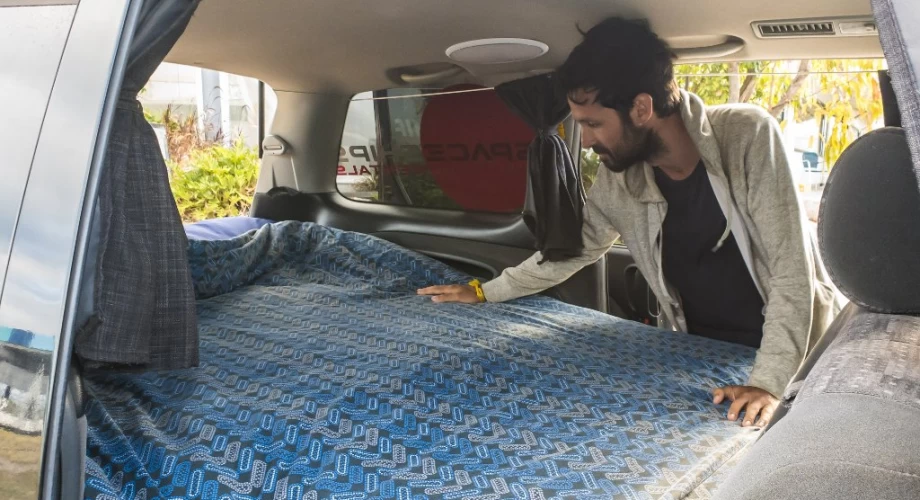
- 2-berth campervan (HiTop/pod) — $50–$100/day — Perfect for couples. Has a kitchenette with stove, fridge, and sink, plus a fold-out double bed. No bathroom. Compact enough for city parking.
- 2–3 berth with bathroom — $100–$160/day — Self-contained with onboard shower and toilet, essential for freedom camping in NZ. Slightly larger but still manageable on all roads.
- 4-berth family campervan — $120–$200/day — Room for the family with a rear double bed and convertible dinette bed. Full kitchen. Some models have bathrooms.
- 6-berth motorhome — $170–$280/day — Full kitchen, separate bathroom, multiple sleeping areas (overcab bed + rear bed + dinette). Best for families of 4–6 or groups wanting full comfort.
A couple doing the East Coast in a basic 2-berth saves roughly $50–$80/day compared to a 4-berth — that's $700–$1,120 saved on a 14-day trip. That money buys a lot of experiences.
New Zealand prices are similar in NZD — see our NZ campervan hire guide for current pricing.
Smart hack: Book a smaller van and use the savings for unique experiences — a Whitsundays sailing trip ($600), a Great Barrier Reef dive ($250), a Milford Sound cruise ($60–250), or a whale shark swim at Ningaloo ($400). Those memories last longer than a bigger vehicle.
6. Insurance: Where Most People Waste Money
Insurance is the sneakiest cost in campervan hire. The daily add-on costs seem small, but over a multi-week trip they add up to hundreds of dollars. Here's what you need to know:
- Standard insurance (included in the hire price) — Comes with a high excess, often $3,000–$7,500 depending on the brand and vehicle. If you have any incident — even a minor scrape in a car park — you pay this amount upfront. The high excess is how companies keep base hire rates low.
- Reduced excess option — Costs $20–$40/day extra but drops the excess to $500–$1,000. Over 14 days, this adds $280–$560 to your total cost.
- Full cover / zero excess option — Costs $35–$60/day extra but you pay nothing if something happens. Over 14 days, this adds $490–$840 to your total.
The smart move: Check if your travel insurance or credit card already covers rental vehicle excess. Many premium credit cards — including Amex Platinum, Citi Prestige, NAB Rewards Signature, and certain Westpac cards — include rental vehicle excess cover as a complimentary benefit. If so, you can decline the expensive daily add-on and save $400–$800 on a 2-week hire.
Important caveats:
- Credit card cover typically requires you to pay the full excess upfront and then claim it back — make sure you have the cash available.
- Some credit card policies exclude campervans over a certain weight or value — read the fine print.
- Windscreen, tyre, and undercarriage damage is often excluded from both credit card cover and basic insurance — ask about this at pickup.
- If you're driving unsealed roads (common in outback Australia), check whether your insurance covers gravel road damage. Many policies exclude it unless you pay extra.
Also compare insurance inclusions between brands on CamperCompare — some brands include more generous standard cover than others. For example, some include windscreen and tyre cover in the base price while others charge extra.
7. Book Longer, Pay Less Per Day
Almost every campervan rental company offers tiered pricing that rewards longer hires:
- 1–6 days: Full daily rate (highest per-day cost)
- 7–13 days: 5–8% discount on daily rate
- 14–20 days: 8–12% discount
- 21–30 days: 10–15% discount
- 30+ days: 15–20% discount (or negotiable — contact CamperCompare for custom long-hire quotes)
Here's where it gets interesting: if you're planning a 12-day trip, it might actually be cheaper to book 14 days. The per-day rate drops enough at the 14-day threshold that the total for 14 days costs the same or less than 12 days at the higher rate. We see this regularly on CamperCompare — always check both options.
Stack this with the WelcomeCamper discount code (up to 10%) and you're looking at a combined saving of 20–25%. On a 21-day hire, that can represent $600–$1,000 in total savings.
8. Avoid (or Negotiate) One-Way Fees
Picking up in one city and dropping off in another usually incurs a one-way fee of $100–$400 depending on the distance. For long-distance one-way hires (e.g., Sydney → Cairns or Perth → Darwin), fees can reach $600+. But there are ways around it:
- Return to the same depot — do a loop route instead of a one-way drive. The Great Ocean Road from Melbourne is a natural loop, as is a South Island loop from Christchurch.
- Book during periods when companies need vehicles moved — some brands waive one-way fees seasonally when they need vehicles repositioned. Ask CamperCompare when these periods are for your route.
- Choose popular one-way routes — high-demand routes like Sydney → Melbourne, Melbourne → Sydney, Auckland → Christchurch, and Brisbane → Sydney often have reduced or zero one-way fees because vehicles naturally flow both ways in roughly equal numbers.
- Check for one-way specials — some brands periodically offer zero one-way fees as a promotional deal, particularly in shoulder season.
9. Watch for Hidden Costs (and How to Avoid Them)
Beyond the daily hire rate, several costs can inflate your total bill if you're not prepared:
- Booking fees: Some companies charge a $50–$100 booking or administration fee. CamperCompare shows all-inclusive pricing so you can compare like-for-like.
- Late return fees: Returning your campervan even 30 minutes late can incur a full extra day's charge. Plan your return trip with plenty of buffer time.
- Cleaning fees: Most companies charge $150–$250 if the vehicle is returned dirty. Allow time on your last day to clean the kitchen, sweep the floor, and empty the fridge.
- Generator charges: Some larger motorhomes have diesel generators. Using the generator while parked costs $3–$5/hour and adds up quickly if you're running air conditioning overnight.
- Fuel policy: Most companies require you to return the vehicle with the same fuel level as pickup. Returning with a lower level incurs a fuel charge at inflated rates ($3–$4/litre). Fill up at a regular petrol station near the depot before returning.
- Additional driver fee: Some brands charge $3–$5/day per additional driver. Others include one additional driver free. Check before booking if both partners will be driving.
10. Slash Your Camping Costs Too
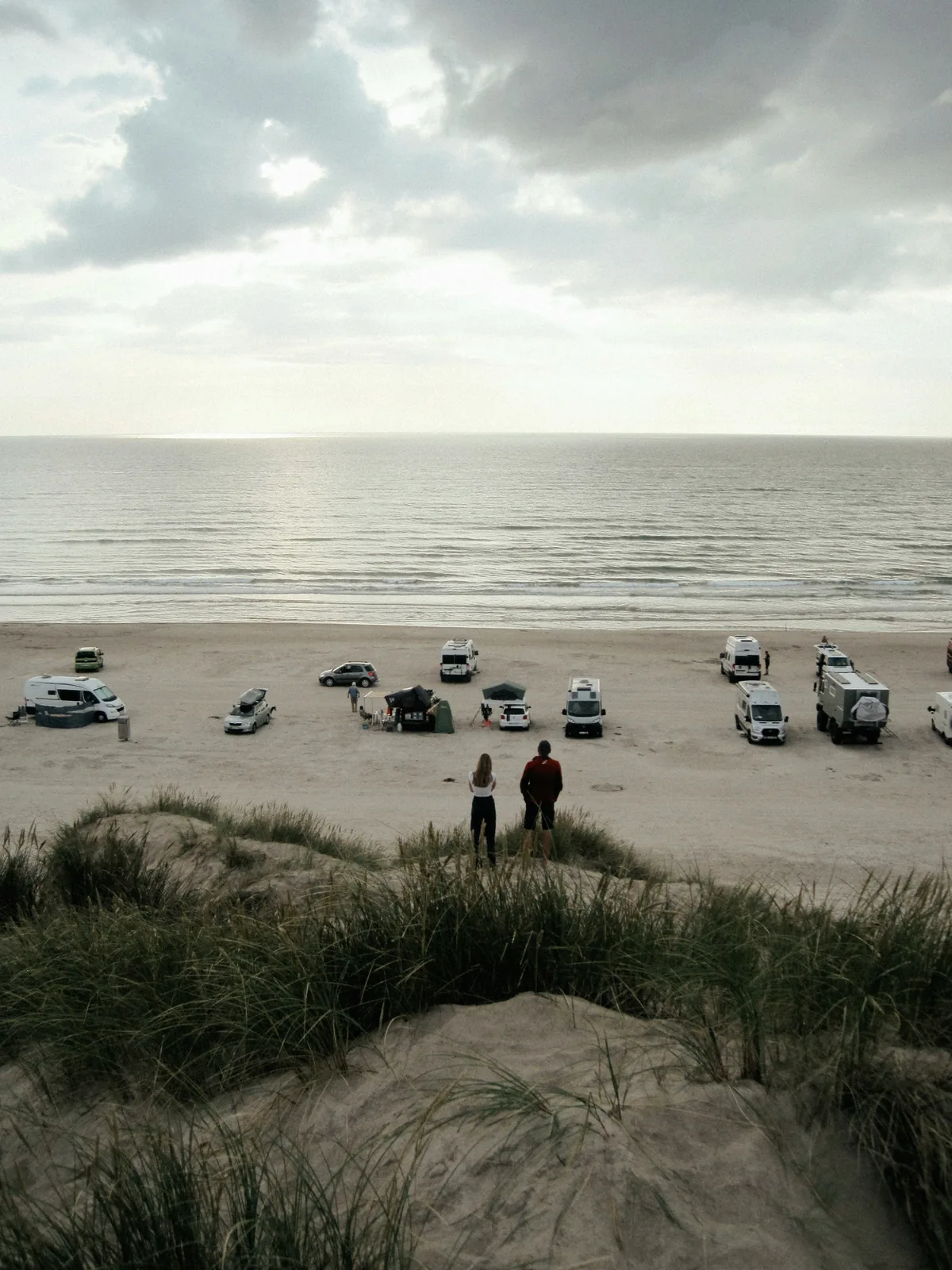
The daily hire rate is only part of your road trip budget. Accommodation (where you park each night) can add $30–$60/night at holiday parks or be completely free if you camp wisely:
- Freedom camping (NZ): Free in designated areas with a self-contained vehicle. See our freedom camping NZ guide for rules and best spots.
- Free camps (Australia): Many roadside rest areas and council reserves allow free overnight camping. The WikiCamps Australia app ($8 one-time purchase) is essential for finding legal free camping spots.
- National park campgrounds: $10–$30/night in Australia, $8–$22/night in New Zealand. Often in the most scenic locations. Book ahead for popular parks.
- Holiday parks: $35–$60/night for powered sites. Use these every 2–3 days for hot showers, laundry, and tank dumps. The Big4 and Top 10 chains offer loyalty discounts.
A strategic mix of 2 nights free camping, 1 night paid campground saves roughly $25–$40/night average compared to paying for holiday parks every night. Over 14 days, that's another $350–$560 saved.
The Ultimate Savings Cheat Sheet
Here's your action plan to get the absolute cheapest campervan hire in Australia and New Zealand:
- ✅ Compare prices on CamperCompare across 25+ brands — the same van can cost very different amounts
- Queensland (Brisbane, Cairns): Peak June–September (dry season in tropical north). Cheapest October–March (wet season in north, but southern QLD is fine year-round).
- NSW (Sydney): Peak December–February (summer holidays). Cheapest May–August.
- Victoria (Melbourne): Peak December–February and Easter. Cheapest June–August (winter, but great for the Great Ocean Road when it's less crowded).
- Western Australia (Perth): Peak April–October (the entire WA tourist season). Cheapest November–March (too hot for the north, but Perth and the southwest are pleasant).
- Northern Territory (Darwin): Peak May–September (dry season). Cheapest November–March (wet season — many roads closed, limited availability).
- Both islands: Peak December–February (NZ summer). Cheapest May–September (winter). Sweet spot: March–April (warm, dry, autumn colours) and October–November (spring, wildflowers).
- Pro tip: NZ school holidays (mid-December to late January, mid-April for two weeks, mid-July for two weeks) cause mini-peaks. Avoid these specific windows for the best rates.
- JUCY: Popular with younger travellers. Compact 2–3 berth vans at competitive prices. Known for their distinctive green and purple vehicles. Good for short trips and couples.
- Cheapa Campa: Apollo's budget sub-brand. Older vehicles at lower prices. Basic but functional — a good choice if you prioritise savings over comfort.
- Travellers Autobarn: Budget campervans and converted station wagons. The cheapest option for solo travellers and couples who don't need a full campervan.
- Hippie Campers: Apollo's other budget brand. Slightly newer fleet than Cheapa Campa. 2–3 berth options at good prices.
- Apollo: Large fleet, wide availability, modern vehicles. Often the best balance of price and quality. Our most popular brand on CamperCompare.
- Mighty: Tourism Holdings' mid-range brand. Good vehicles, competitive pricing, particularly for 4+ berth motorhomes.
- Let's Go Motorhomes: Newer fleet with good inclusions. Often competitive on longer hires.
- Britz: New or near-new vehicles with comprehensive inclusions. Higher prices but less risk of mechanical issues and better standard insurance.
- Maui: Tourism Holdings' premium brand. Top-of-the-line motorhomes with the newest fleet. You pay more but get a luxury experience.
- Wilderness (NZ only): Hand-built campervans with unique designs. Premium pricing but loyal following among experienced campervan travellers.
- Practice before you go: Spend 30 minutes in the depot car park getting comfortable with the vehicle's size, turning circle, and mirror positions before hitting the road. It's much bigger than a regular car.
- Grocery strategy: Buy groceries at major supermarkets (Coles, Woolworths in Australia; Countdown, New World in NZ) and cook most meals in your campervan. Eating out for every meal in Australia or NZ will cost $30–$50 per person per meal. Self-catering cuts your food budget by 60–70%.
- Fuel app: Use GasBuddy (Australia) or Gaspy (NZ) to find the cheapest fuel near you. Fuel prices can vary by $0.30/litre between stations in the same town.
- Check vehicle at pickup: Walk around the vehicle with the staff member and photograph every existing scratch, dent, and mark. Record these on the rental agreement. This protects you from being charged for pre-existing damage at return.
- Pack light: Campervans have limited storage. Pack soft bags (not hard suitcases) that can be squished into cupboards. You don't need much — 3–4 changes of casual clothes, swimwear, one warm layer, and rain jacket covers most trips.
- ✅ Claim the discount code (up to 10%) (WelcomeCamper) — enter your email above
- ✅ Travel in shoulder season (March–May or Sep–Nov) for 30–50% lower rates
- ✅ Book 3–6 months ahead for early bird pricing
- ✅ Check relocation deals for $1/day bargains
- ✅ Right-size your vehicle — don't overpay for space you don't need
- ✅ Check your credit card for rental excess cover before buying insurance add-ons
- ✅ Book 14+ days for long-hire discounts that stack with the promo code
- ✅ Watch for hidden costs — cleaning fees, fuel charges, late return penalties
- ✅ Mix free and paid camping to cut your nightly accommodation costs
11. Seasonal Pricing Calendar: When to Book for Each Region
Different regions peak at different times, so strategic route planning can save you even more:
Australia
New Zealand
12. Which Campervan Brand is Cheapest?
No single brand is always the cheapest — it varies by location, season, and vehicle type. However, here's a general guide to help you narrow your search:
Budget Brands (Lowest Prices)
Mid-Range Brands (Best Value)
Premium Brands (Best Vehicles)
13. First-Time Campervan Renter Tips
If this is your first campervan trip, these additional tips will save you money and hassle:
The best strategy? Compare all of them on CamperCompare for your specific dates and route. The cheapest brand in Sydney in March might be completely different from the cheapest in Christchurch in November.
Follow these 10 tips and you'll easily save $500–$2,000+ on your campervan road trip. That's money better spent on reef tours, whale watching, wine tasting, and all the incredible experiences that make Australia and New Zealand road trips unforgettable.
📍 City guides: Sydney • Melbourne • Brisbane • Cairns • Perth • Auckland • Christchurch | NZ Guide
📍 Route guides: East Coast Australia • Great Ocean Road • Sydney to Melbourne • Brisbane to Cairns • Perth to Broome • South Island NZ
Ready to find your perfect campervan? Compare prices now →
Planning your trip?
Compare campervan & motorhome hire prices across Australia: