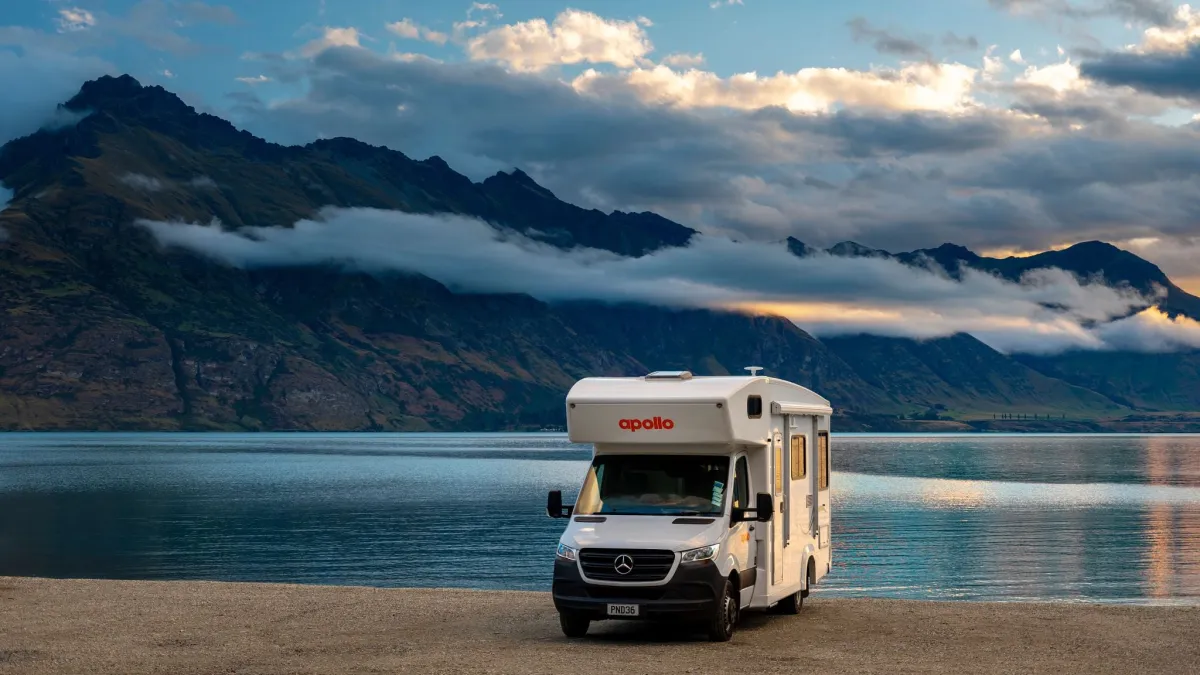

The Ultimate New Zealand Campervan Experience: Both Islands
This is the trip that every campervan traveller dreams about — the complete New Zealand, from Auckland's subtropical harbours to Queenstown's alpine lakes, with everything in between. Two islands, one ferry crossing, three weeks of the most diverse scenery on Earth.
The beauty of this route is its flexibility. Pick up your campervan in Auckland and drop off in Christchurch, or drop off in Queenstown — or reverse the entire route. One-way campervan hire between these cities is one of the most popular rental options in New Zealand, and for good reason: it means you never backtrack.
This guide covers a 21–28 day itinerary with the ideal pace for both islands. We'll cover every must-see stop, the Interislander ferry crossing, one-way hire tips, the new Green Warrant rules for freedom camping, and practical advice from years of NZ road trip experience.
One-Way Campervan Hire: How It Works
One-way campervan hire is standard in New Zealand. All major rental brands — Britz, Maui, Apollo, JUCY, Mighty, Wilderness, Happy Campers — allow you to pick up in one city and drop off in another. Here's what you need to know:
- One-way fees: Range from NZ$0 to NZ$250 depending on the season, provider, and route. Some brands waive the fee entirely for 14+ day hires or during shoulder season.
- Popular one-way routes: Auckland → Christchurch, Auckland → Queenstown, Queenstown → Auckland, Christchurch → Auckland
- Ferry is your responsibility: Most rental companies allow you to take the campervan on the Interislander or Bluebridge ferry between Wellington and Picton. The ferry fare is separate from your campervan hire — book it directly with the ferry company.
- Book early: One-way availability is limited, especially in summer (December–February). Book 3–6 months ahead for peak season.
Compare one-way campervan hire Auckland to Christchurch →
The Green Warrant: Freedom Camping Rules
Since 2023, New Zealand has introduced the Green Self-Containment Warrant (replacing the old blue warrant). To freedom camp legally, your campervan must display:
- A green warrant card on the front windscreen
- A matching green sticker on the rear window
This certifies your vehicle has a fixed toilet (no portable bucket toilets), fresh water tank, and grey/black wastewater storage. The old blue warrant is no longer valid. All major rental brands now provide Green Warrant vehicles as standard — but always confirm when booking.
For our complete freedom camping guide, see Freedom Camping in New Zealand: The Complete Guide.
The Route: 3 Weeks, Both Islands
Here's the recommended itinerary flowing north to south. Every stop is accessible in a standard 2WD campervan, and the pace allows for relaxed exploration with rest days built in.
Week 1: North Island (Auckland → Wellington)
Day 1–2: Auckland → Coromandel Peninsula (175 km)
Pick up your campervan in Auckland and escape east to the Coromandel — golden beaches, native bush, and artsy towns. Visit Cathedral Cove (45-minute walk to a stunning natural rock arch) and dig your own hot pool at Hot Water Beach at low tide (geothermal water seeps through the sand). Camp at Hahei Holiday Park or freedom camp at a certified Green Warrant site.
Day 3–4: Coromandel → Rotorua (210 km)
Enter geothermal country. Rotorua smells of sulphur and looks like another planet — boiling mud pools, erupting geysers, and steaming lakes. Must-dos: Wai-O-Tapu Thermal Wonderland (the Champagne Pool is extraordinary, NZ$40), Te Puia for Māori cultural performances and the Pōhutu Geyser, and Kerosene Creek — a free natural hot stream in the forest. The Redwoods Treewalk at night is magical.
Day 5–6: Rotorua → Lake Taupō & Tongariro (100 km)
Lake Taupō fills a volcanic super-caldera. Base here for the Tongariro Alpine Crossing (19.4 km, 7–8 hours) — widely considered one of the world's best day walks, crossing active volcanic terrain past emerald lakes, red craters, and steaming vents. Shuttle NZ$45. Book the night before at a Taupō holiday park.
Huka Falls (free, 10 minutes from Taupō) is the country's most visited natural attraction — 220,000 litres of water per second squeeze through a narrow canyon. Impressive even for waterfall sceptics.
Day 7: Lake Taupō → Wellington (370 km)
Drive south through the Whanganui region to Wellington, New Zealand's compact, creative capital. Must-dos: Te Papa Museum (free, outstanding), Cuba Street for craft coffee and vintage shops, Mount Victoria Lookout for harbour views. Wellington has New Zealand's best food scene — don't miss a proper flat white and a night out in the craft beer district.
Pro tip: Arrive in Wellington by early afternoon to explore the city, then take the morning ferry the next day. Park at the Interislander terminal or a nearby holiday park.
The Interislander Ferry: Wellington to Picton
This is one of the great ferry crossings of the world. The Interislander sails through the Marlborough Sounds — a labyrinth of drowned river valleys, forested islands, and sheltered bays. On a clear day, the scenery is extraordinary.
- Duration: 3 hours 20 minutes
- Cost: NZ$200–$400 for campervan + 2 passengers (varies by season and vehicle length)
- Alternative: Bluebridge ferries run the same route, sometimes cheaper. Crossing takes 3.5 hours.
- Booking: Book online at interislander.co.nz at least 2 weeks ahead in summer. Peak season (December–January) sells out.
- On board: Cafes, viewing decks, comfortable seating. You leave your campervan on the vehicle deck and go upstairs for the crossing.
- Biosecurity: Fresh fruit, vegetables, and honey cannot cross between islands. Finish or dispose of produce before boarding.
For Swiss & German travellers: Die Fährüberfahrt durch die Marlborough Sounds ist atemberaubend — Kamera bereithalten! Buche früh für die Hauptsaison.
Week 2: Upper South Island (Picton → West Coast)
Day 8–9: Picton → Abel Tasman & Nelson (250 km)
Arrive in Picton and drive west through the Marlborough wine region (NZ's Sauvignon Blanc capital — stop at Cloudy Bay or Brancott Estate). Continue to the Nelson/Abel Tasman region — New Zealand's sunniest area.
Abel Tasman National Park is paradise: golden sand beaches, turquoise water, and coastal bush walks. Take the water taxi (NZ$45) to Bark Bay and walk back along the Abel Tasman Coast Track. The beaches here rival anything in the tropics — except they're temperate, uncrowded, and surrounded by native bush.
Day 10–11: Nelson → West Coast Glaciers (380 km)
Drive through Buller Gorge and down the wild West Coast — pounding surf, ancient podocarp rainforest, and barely any people. The twin glaciers — Franz Josef and Fox Glacier — descend from the Southern Alps almost to sea level. Walk the Franz Josef Glacier Valley (1.5 hours) or splurge on a helicopter hike landing on the glacier (from NZ$449).
Stop at Punakaiki Pancake Rocks on the way — bizarre layered limestone formations with blowholes that erupt at high tide. Free, and the coastal walk is beautiful.
Day 12–13: Glaciers → Wānaka & Queenstown (350 km)
Cross the Haast Pass with a stop at the Blue Pools (30 minutes — impossibly clear blue river pools viewed from a swing bridge). Continue to Wānaka, a lakeside town with a relaxed vibe and the famous Roys Peak Track (5–6 hours, one of NZ's most Instagrammed views).
Drive the spectacular Crown Range Road (NZ's highest sealed road) to Queenstown.
Week 3: Lower South Island (Queenstown → Christchurch)
Day 14–15: Queenstown (Rest Days)
New Zealand's adventure capital deserves two days. Skyline Gondola & Luge (NZ$49), Fergburger (legendary burgers, always worth the queue), the Glenorchy Drive along Lake Wakatipu (Lord of the Rings filming location), and of course — Milford Sound.
Day 16–17: Milford Sound (300 km return from Queenstown)
The Milford Road from Te Anau is one of the world's great drives. Allow a full day each way with stops at Mirror Lakes, Lake Gunn, and the Homer Tunnel (watch for cheeky kea parrots!). Take a morning cruise (from NZ$69) to see Mitre Peak, waterfalls, and seal colonies. See our complete Milford Sound campervan guide.
Pro tip: Milford is actually better in the rain — hundreds of temporary waterfalls cascade from every cliff face. Go regardless of the forecast.
Day 18–19: Queenstown → Dunedin via The Catlins (450 km)
Head south to the Catlins — the South Island's wild, undeveloped southeast corner. Nugget Point Lighthouse on a dramatic headland, Curio Bay Petrified Forest (180-million-year-old fossilised trees), and Slope Point (the South Island's southernmost point with wind-sculpted trees). Barely any tourists come here, which is part of the magic.
Explore Dunedin's Scottish heritage and the Otago Peninsula — royal albatross colony, yellow-eyed penguins, and New Zealand sea lions.
Day 20–21: Dunedin → Christchurch via Oamaru & Mount Cook (500 km)
Stop at Oamaru for the blue penguin colony (NZ$35 evening viewing) and the weird Moeraki Boulders on the beach. Then head inland to Lake Tekapo — part of the Aoraki Mackenzie Dark Sky Reserve, one of the best stargazing locations on Earth. Visit the Church of the Good Shepherd and soak in Tekapo Springs hot pools (NZ$28).
Detour to Aoraki/Mount Cook and walk the Hooker Valley Track (3 hours, easy grade — one of NZ's best short walks with icebergs, swing bridges, and mountain views).
Return your campervan in Christchurch after 21 days and 3,200 km of the world's most diverse scenery.
Alternative: Drop Off in Queenstown
If you prefer to end in Queenstown instead of Christchurch, simply reverse the South Island portion. After Milford Sound, head through the Catlins and up to Dunedin and Mount Cook, then return to Queenstown via Lake Tekapo and the Lindis Pass. Compare one-way campervan hire Auckland to Queenstown →
Alternative: Start in Christchurch or Queenstown
Many travellers — especially from Europe, Switzerland and Germany — prefer to start in the South Island and work north. Pick up in Queenstown, drop off in Auckland or pick up in Christchurch, drop off in Auckland. The ferry crossing from Picton to Wellington (southbound becomes northbound) is equally spectacular. One-way fees going north are sometimes cheaper due to less demand.
Budget: What This Trip Really Costs
Here's a realistic budget for two people, 21 days:
- Campervan hire: NZ$2,100–$4,200 (NZ$100–$200/day depending on vehicle and season)
- Fuel: NZ$600–$900 (3,200 km at 12–14L/100km, ~NZ$2.50/L)
- Interislander ferry: NZ$200–$400 (campervan + 2 passengers)
- Camping: NZ$400–$800 (mix of holiday parks NZ$45–60/night and freedom camping with Green Warrant NZ$0)
- Food: NZ$500–$900 (mostly self-catering from your campervan kitchen)
- Activities: NZ$300–$800 (Tongariro Crossing shuttle, Milford cruise, Wai-O-Tapu, etc.)
- One-way fee: NZ$0–$250
Total: NZ$4,100–$7,250 for two people (NZ$2,050–$3,625 per person)
Budget tip: Shoulder season (October–November, March–April) saves 30–40% on campervan hire. A self-contained campervan with the Green Warrant costs more to hire but saves hundreds on camping fees through free freedom camping spots.
What to Pack
- Warm layers: Even in summer, South Island evenings and mountain passes can be cold (5–10°C). Bring a down jacket and thermal base layers.
- Rain gear: NZ's weather is unpredictable. A waterproof jacket and pants are essential, especially for the West Coast and Milford Sound.
- Hiking boots: The Tongariro Crossing, Hooker Valley, and many other walks require proper footwear.
- Sandfly repellent: DEET-based repellent is essential for the West Coast and Fiordland. Sandflies are tiny but their bites itch for days.
- Sunscreen & hat: NZ's UV index is extremely high due to the thin ozone layer. Burn time can be under 10 minutes in summer.
- Download CamperMate app: Essential for finding freedom camping spots, dump stations, and water fill points across both islands.
Driving Tips for International Visitors
- Drive on the left: NZ drives on the left, same as Australia and the UK. Take extra care at intersections and roundabouts, especially when tired.
- Speed limits: 100 km/h on the open road, 50 km/h in towns. Speed cameras are common.
- Single-lane bridges: Very common on the South Island. Give way signs indicate priority. Slow down and check before crossing.
- Mountain passes: The Crown Range, Lindis Pass, Arthur's Pass, and Lewis Pass are scenic but winding. Allow extra time and use low gear on descents.
- Fuel: Stations can be 100+ km apart on the West Coast. Fill up at every opportunity.
- International driving permit: Required alongside your home country licence if it's not in English.
Ready to Book?
The complete New Zealand by campervan is the trip of a lifetime. Whether you start in Auckland and finish in Christchurch, or pick up in Queenstown and drop off in Auckland — every combination works beautifully. Use our comparison tool to find the best one-way campervan hire deal from trusted NZ rental brands.
📍 Read our Auckland and Christchurch city guides for brand comparisons at each end, or our complete NZ campervan hire guide for nationwide pricing and tips.
Planning your trip?
Compare campervan & motorhome hire prices across New Zealand: