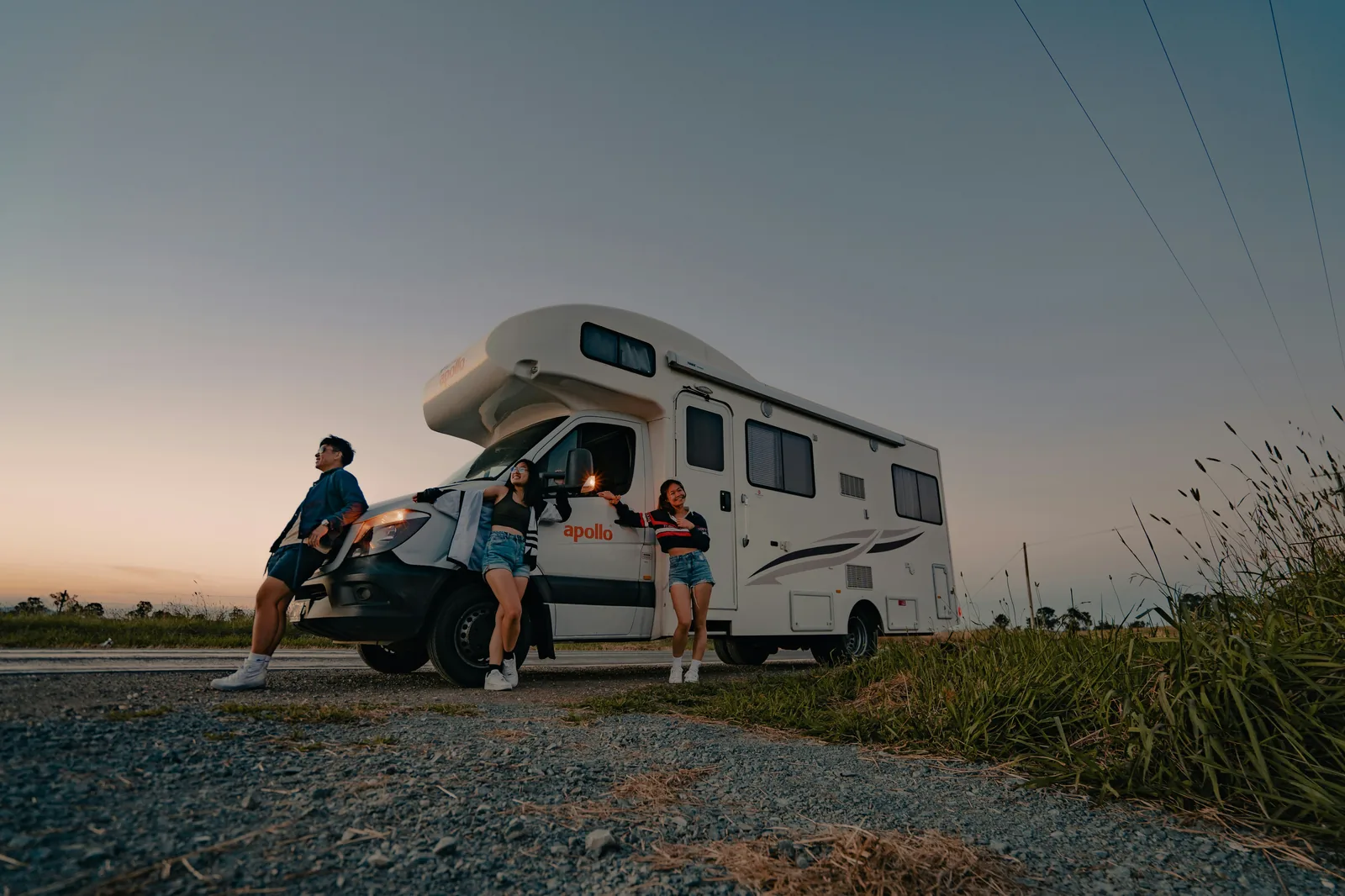
Why Motor Home Hire Makes Sense in Australia
Australia is one of the few places on earth where the distances are so vast, the landscapes so varied, and the free and low-cost camping so abundant that hiring a motor home genuinely stacks up against flying and staying in hotels. You carry your accommodation with you, you stop when something looks interesting, and you avoid the logistical headache of booking a different bed every night across a 3,000-kilometre route.
That said, motor home hire is not a simple transaction. There are vehicle classes, insurance tiers, one-way fees, generator surcharges, and kilometre caps to navigate before you even think about which road to take. This guide cuts through all of it.
Motorhome vs Campervan: Which Do You Actually Need?
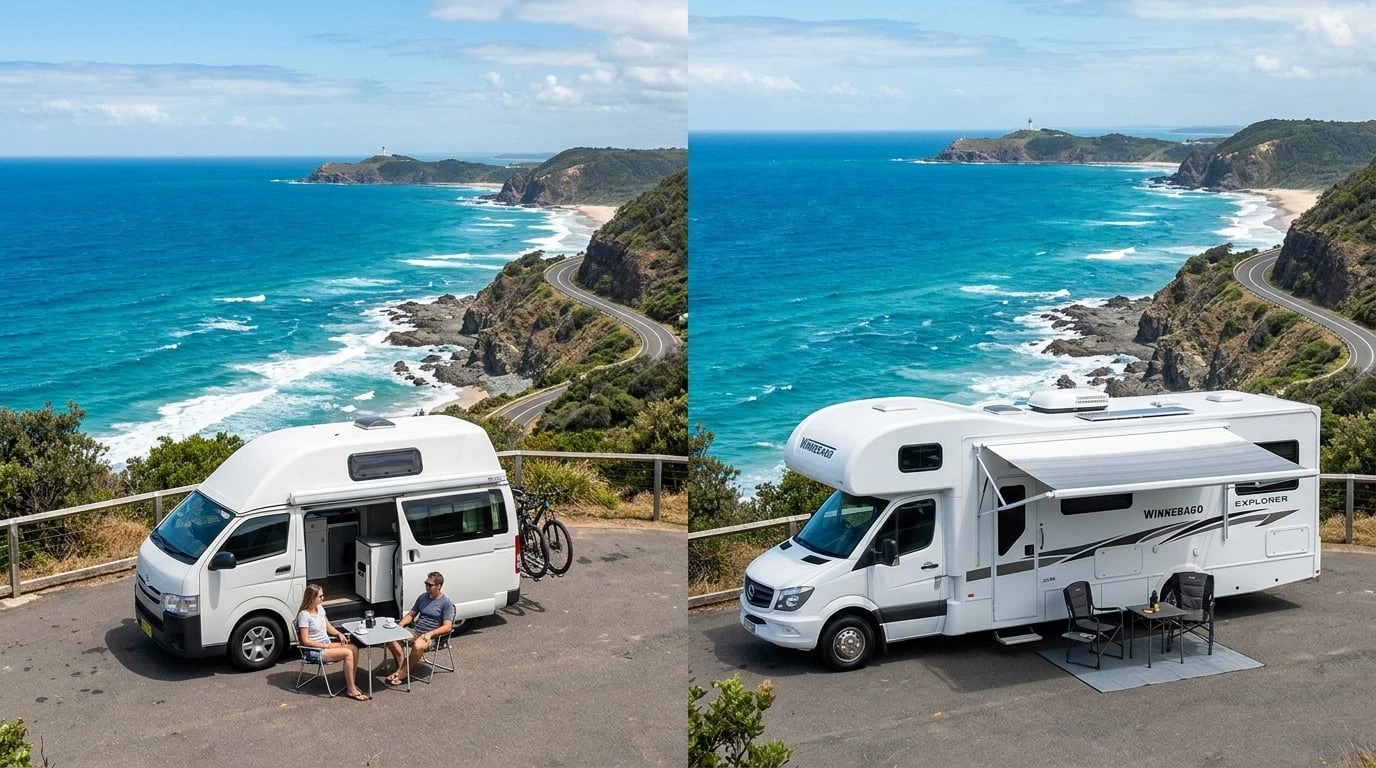
Before you start comparing operators, it's worth being clear on what a motor home actually is. In the Australian hire market, the term generally refers to a vehicle where the cab and living area are integrated — you walk from the driver's seat into the kitchen without going outside. Campervans, by contrast, are typically smaller, van-based conversions. The distinction matters because it affects cost, campsite access, fuel consumption, and comfort on long trips.
If you're still weighing up the two, the detailed breakdown in Campervan vs Motorhome in Australia: Which Should You Hire? (2026 Comparison) is a good starting point before you commit to a vehicle class.
The Main Vehicle Classes and What They Cost
Australian hire operators broadly divide their motor home fleets into three tiers. Prices below are indicative daily rates for peak season (December–January and school holidays) and shoulder season (April–May, September–October). Actual quotes vary by operator, pickup location, and lead time.
| Class | Typical berths | Peak daily rate (AUD) | Shoulder daily rate (AUD) | Fuel use (approx) |
|---|---|---|---|---|
| Budget / entry (e.g. Cheapa Campa, Mighty) | 2–3 | $180–$260 | $110–$160 | 12–15 L/100 km |
| Mid-range (e.g. Britz, Jucy, Camperman) | 2–4 | $220–$320 | $140–$200 | 13–16 L/100 km |
| Premium (e.g. Maui, Apollo, Star RV) | 2–6 | $300–$500+ | $180–$300 | 14–18 L/100 km |
| Luxury (e.g. Lets Go, Star RV top tier) | 2–6 | $450–$800+ | $280–$450 | 15–20 L/100 km |
Fuel is a significant running cost that many first-timers underestimate. A 2,000 km east coast leg from Sydney to Cairns in a mid-range motor home will cost roughly $400–$600 in diesel at current pump prices, on top of your hire rate. Budget for it properly.
If you're considering the top end of the market, Luxury Motorhome Hire in Australia: What You Get & What It Costs explains exactly what the premium buys you — and whether it's worth it for your trip style.
The Major Operators: A Plain-English Summary
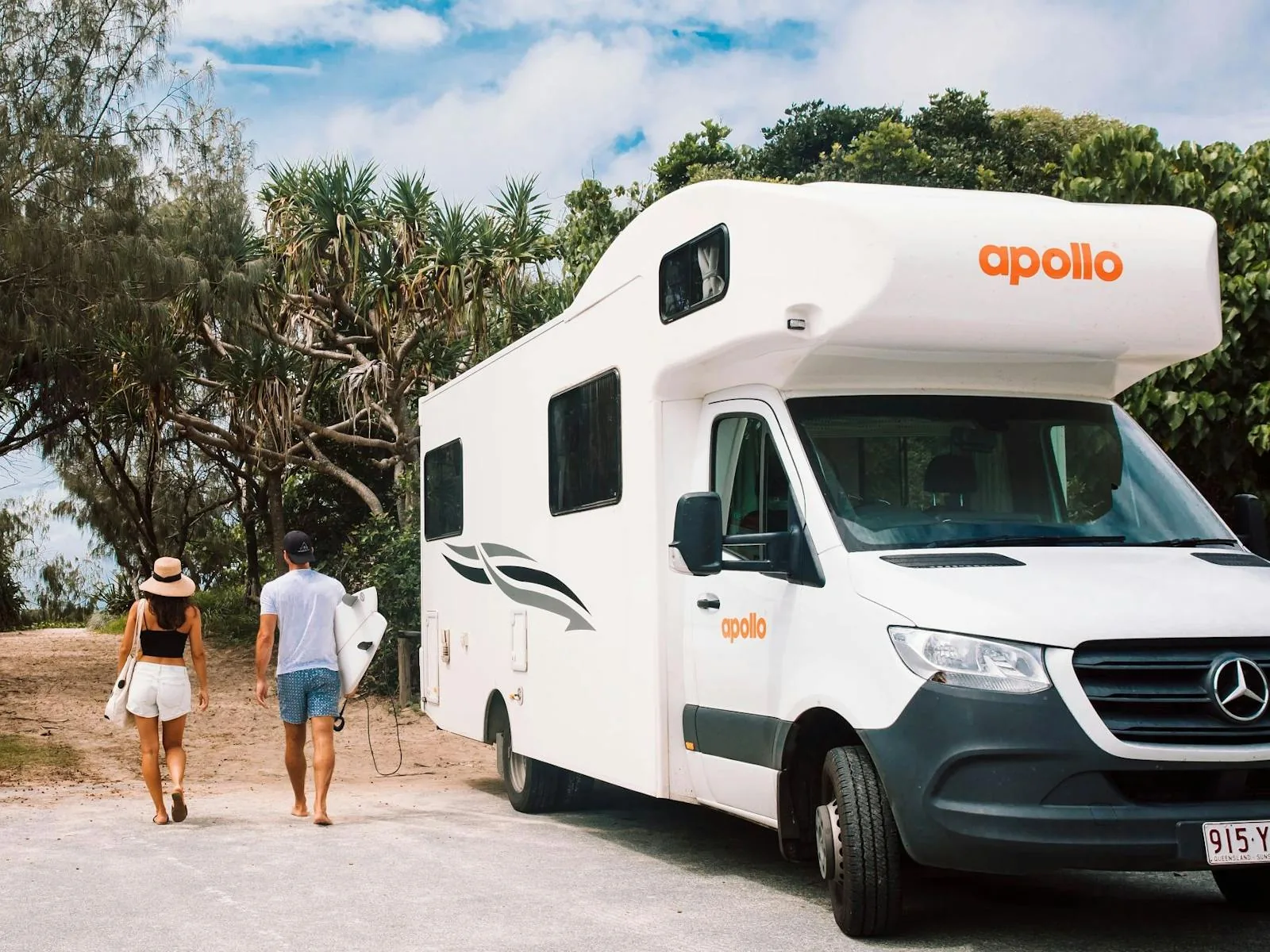
Apollo is one of the largest fleets in the country, with depots in Sydney, Melbourne, Brisbane, Cairns, Adelaide, Perth, and Darwin. Good vehicle availability, solid roadside assist, and a wide range of classes. Their budget sub-brand is Cheapa Campa, which uses older vehicles at lower rates — fine for travellers who prioritise cost over newness.
Britz sits in the mid-range and is well regarded for reliability and customer service. Their 4WD camper range is worth looking at if you're heading into the Kimberley or Cape York.
Maui is Apollo's premium brand — newer vehicles, more inclusions, and a higher price point. The Maui vs Apollo: Premium vs Value Motorhome Hire Compared (2026) guide is worth reading if you're deciding between the two.
Jucy skews younger and more budget-conscious, with a distinctive green-and-purple livery. Good for couples doing the east coast on a tighter budget.
Travellers Autobarn is popular with international visitors and offers flexible one-way options. Their Hitop campervans are iconic on the east coast backpacker circuit, though they also have larger motor home options.
Mighty is another Apollo sub-brand, positioned between Cheapa and Apollo proper. Camperman is a smaller independent operator with depots in Brisbane and Cairns — worth checking for competitive rates on Queensland routes.
Star RV and Lets Go occupy the premium and luxury end, with well-appointed vehicles suited to longer trips and older travellers who want more comfort.
One-Way Hires: The Freedom and the Fee
One of the great advantages of motor home hire in Australia is the ability to do a one-way trip — pick up in Sydney, drop off in Cairns, for example, without backtracking. Most major operators offer this, but they charge a one-way fee that can range from $150 to $600 or more depending on the route and the operator's current fleet balance.
Some routes attract relocation deals, where operators need vehicles moved and offer heavily discounted rates — sometimes as low as $1 per day — in exchange for you driving a specific route within a set timeframe. These are genuinely good value if your dates are flexible. Check operator websites directly and ask about relocation availability when you call.
Popular one-way routes include Sydney to Melbourne (roughly 900 km via the Princes Highway), Melbourne to Adelaide (730 km), Brisbane to Cairns (1,700 km), and Perth to Broome (2,200 km). That last one is a serious undertaking — read the Campervan & Motorhome Hire Broome: Depots, Costs & Kimberley Prep guide before you commit.
Insurance and the Excess Question
Every motor home hire in Australia comes with some form of third-party liability cover as standard. What varies enormously is the excess (sometimes called a liability reduction) on damage to the vehicle itself.
Standard excess figures typically sit between $3,000 and $7,500 depending on the operator and vehicle class. You can reduce this — often to zero — by paying a daily insurance reduction fee, usually $25–$55 per day. On a 21-day trip, that adds $525–$1,155 to your total cost, so it's worth calculating whether you'd rather self-insure or pay for peace of mind.
A few practical points: windscreen and tyre damage is often excluded from standard cover and from the reduction product — read the fine print. Single-vehicle accidents on unsealed roads can also be excluded if you've taken the vehicle somewhere the hire agreement prohibits. Always check the permitted road conditions before you head off the bitumen.
Hidden Costs to Watch For
- Generator hire: Not all motor homes have onboard generators. If yours doesn't and you want to free-camp without shore power, you may need to hire one separately — typically $15–$30 per day.
- Linen and kitchen kits: Budget operators often charge extra for linen packs ($30–$80 per hire) and kitchen equipment. Premium operators usually include these.
- Additional drivers: Most operators charge $3–$5 per day per extra driver, or a flat fee per hire.
- Kilometre caps: Some deals include a daily kilometre allowance (often 100–200 km/day) with excess kilometre charges of $0.24–$0.35 per km beyond that. Unlimited kilometre deals exist but cost more upfront.
- Late return fees: These can be steep — $100–$300 per hour in some cases. Build buffer time into your final day.
- Cleaning fees: Return the vehicle in a reasonable state. Operators charge $100–$300 for excessive cleaning.
Best Routes for Motor Home Hire in Australia
East Coast: Brisbane to Cairns
This is the most popular motor home route in the country for good reason. You get the Whitsundays, the Great Barrier Reef, the Daintree, and dozens of national parks along the way. Allow at least 14 days to do it properly; 21 days is better. The Bruce Highway is sealed the whole way, making it accessible for first-time motor home hirers.
The Red Centre: Alice Springs to Uluru and Beyond
Hiring out of Alice Springs and driving to Uluru (450 km on sealed road), Kings Canyon, and the MacDonnell Ranges is a classic itinerary. The roads are sealed for the main attractions, but temperatures are extreme — avoid December to February when daytime highs regularly exceed 45°C.
Western Australia: Perth to Broome
The 2,200 km drive north from Perth through Geraldton, Shark Bay, Exmouth, and the Pilbara to Broome is one of Australia's great road trips. It requires planning — fuel stops can be 200–300 km apart in places, and some sections of road to key attractions are unsealed. Check your hire agreement carefully. For detailed cost planning, Motorhome Hire Perth Prices: What to Budget in 2026 has current figures.
The Lap: Circumnavigating Australia
For the serious long-haulers — typically retirees with 3–6 months available — doing a full lap of Australia by motor home is a bucket-list trip. It's roughly 15,000–20,000 km depending on your route. The Lap of Australia by Motorhome: The Grey Nomad Hire Guide covers the logistics in detail, including how to structure a long-term hire to keep costs manageable.
Gold Coast and Hinterland
If you're after a shorter trip with easy access to national parks, beaches, and the NSW border region, hiring from the Gold Coast is a practical option. Motorhome Hire Gold Coast: Routes, Prices & Tips covers the best loops from that depot.
Practical Tips Before You Pick Up
- Book early for peak season. December–January and school holiday periods see fleet availability drop sharply. Booking 3–6 months ahead is not excessive for popular routes.
- Do the vehicle walk-around properly. Photograph every existing scratch, dent, and scuff before you drive away. Email the photos to yourself so they're timestamped. This protects you from being charged for pre-existing damage.
- Ask about the water tank and grey water capacity. On longer free-camping stretches, knowing how many days of water you're carrying matters.
- Check the height. Motor homes typically range from 2.8 m to 3.6 m in height. Low-clearance car parks, drive-throughs, and some campsite entry gates will be off-limits. Know your vehicle's height before you arrive somewhere awkward.
- Download offline maps. Mobile coverage disappears quickly outside major towns. Google Maps offline, Hema Explorer, and WikiCamps Australia are all worth having loaded before you leave the depot.
How to Compare Operators Without Losing Your Mind
The honest challenge with motor home hire in Australia is that comparing operators on price alone is misleading — a cheaper daily rate can easily be wiped out by a higher excess, extra linen fees, or a restrictive kilometre cap. The most useful approach is to build a total-cost comparison across your actual trip length, expected daily kilometres, and preferred insurance level.
CamperCompare lets you do exactly that across multiple operators in one place, which saves a lot of back-and-forth between individual operator websites. For a methodical approach to the comparison process, How to Compare Motorhome Hire in Australia (2026 Guide) walks through the framework step by step.
Once you've narrowed it down to two or three options, call the operators directly. Ask about current specials, one-way availability, and whether they have any relocations that suit your dates. Operators will often match or beat a competitor's quote if you ask plainly.
Planning your trip?
Compare campervan & motorhome hire prices across Australia: