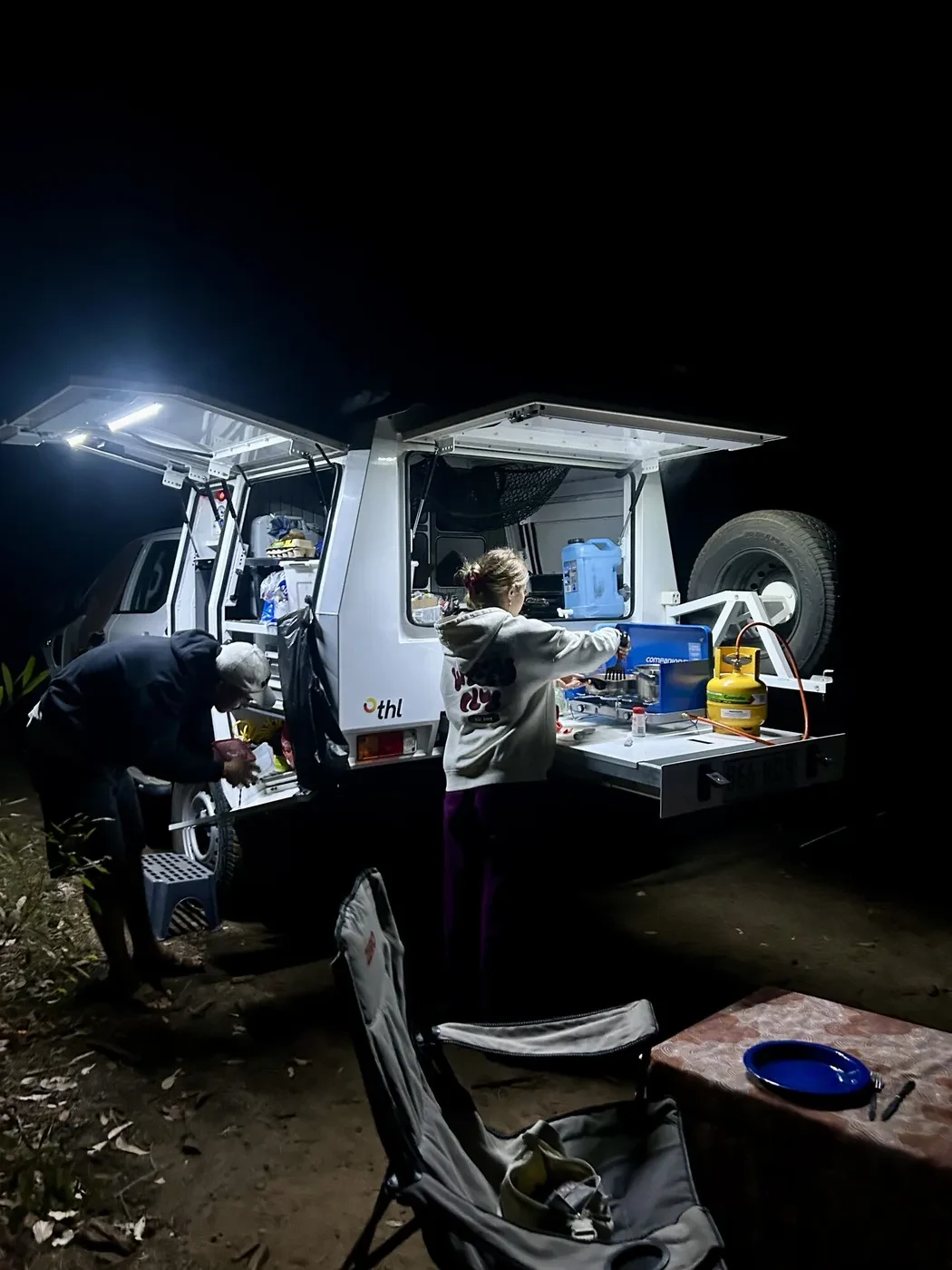
The honest picture: camping near Brisbane in a campervan
Brisbane is one of the best cities in Australia to start a campervan trip from — good hire depots, easy freeway access north and south, and a ring of genuinely good camping country within two hours of the CBD. But the city itself, and the councils immediately surrounding it, have firm rules about where you can and can't sleep in a vehicle. Get that wrong and you're looking at fines before you've even had your first camp coffee.
This guide covers the practical stuff: what self-contained means in Queensland, which council areas allow or prohibit overnight stays, the best specific spots in the Somerset and Lockyer Valley regions, what permits cost, and how to pick the right vehicle for the terrain. If you're still sorting your hire, the Campervan Hire Brisbane: Prices, Brands & East Coast Routes (2026) guide is a good place to start before you read this one.
Self-contained requirements in Queensland
Queensland doesn't have a single statewide self-contained certification scheme the way New Zealand does, but the practical reality is that most free and low-cost camping areas outside of commercial holiday parks require your vehicle to carry its own toilet and waste management. Many Queensland national park campgrounds and council-managed areas explicitly state "self-contained vehicles only" or require you to demonstrate you can manage grey water on-site.
What this means for your hire choice:
- Toilet: A cassette toilet or composting toilet built into the van is the standard. A portable camp toilet stored in the vehicle usually qualifies, but check the specific site's wording.
- Grey water: You need a grey water tank or a sealed collection system. Dumping dishwater on the ground is prohibited at virtually every Queensland campground.
- Fresh water: Most remote sites have no water supply. Carry a minimum of 10–15 litres per person per day.
Operators like Apollo, Maui, Star RV and Britz typically offer fully self-contained motorhomes in their mid-range and upper tiers. Budget operators like Jucy, Cheapa Campa and Mighty offer smaller campervans that may have a portable toilet but no grey water tank — fine for holiday parks, potentially limiting for free camps. Camperman and Travellers Autobarn sit in the middle. When you're comparing vehicles on CamperCompare's Brisbane hire page, filter by "self-contained" if you plan to use free or low-cost sites.
Brisbane City Council and surrounding council rules
Brisbane City Council prohibits sleeping in a vehicle on public streets and in council car parks overnight. This is enforced, particularly in inner suburbs and popular riverside areas. The same applies to Moreton Bay Regional Council, Logan City Council and Ipswich City Council — none of them have designated free overnight campervan areas within their urban boundaries.
The practical upshot: don't plan to free camp within the greater Brisbane metro area. Drive out. The good news is that within 60–120 kilometres you have genuinely excellent options.
If you're picking up your vehicle and need to understand depot locations and shuttle logistics before heading out, the Campervan Hire Brisbane Depots, Shuttles & Pickup Day Explained guide covers that in detail.
Somerset Region: the closest real camping country
The Somerset Region sits roughly 60–90 kilometres north-west of Brisbane CBD and is one of the most underrated camping destinations in South-East Queensland. It's close enough for a weekend, varied enough for a week.
Lake Somerset (Wivenhoe Outlook)
Lake Somerset is managed by Seqwater and offers several designated camping areas around its shores. The main areas — including Kirkleagh and White Acres — are bookable through the Seqwater recreation portal. Fees run around $8–$12 per person per night for unpowered sites, with a booking fee on top. Powered sites are available at some areas for around $25–$35 per night for two people.
The roads into most Somerset camping areas are sealed or well-maintained gravel — suitable for two-wheel-drive campervans. A 6-metre motorhome will fit comfortably at Kirkleagh. Facilities are basic: pit toilets, fire rings (subject to fire bans), no dump points at all sites so self-contained is strongly recommended.
Lake Wivenhoe
Also managed by Seqwater, Lake Wivenhoe has camping at Lumley Hill and a handful of other spots. Similar pricing to Somerset. The lake is popular with fishing and kayaking crowds on weekends — book ahead for Friday and Saturday nights, especially between April and October when the weather is ideal. Dump points are available at the main Lumley Hill area.
Kilcoy and surrounds
The town of Kilcoy (about 90 km from Brisbane) has a free 48-hour rest area on Yabba Road that is genuinely usable — basic, no facilities, but legal and flat. It's a stopover rather than a destination. The Somerset Regional Council also maintains a small number of free camping areas in the region; check their website before you go as availability and conditions change seasonally.
Lockyer Valley: flat, fertile and often overlooked
The Lockyer Valley stretches west of Ipswich along the Warrego Highway corridor — not dramatic mountain scenery, but genuinely good camping with easy access and some of the most reliable weather in South-East Queensland.
Lake Clarendon
About 75 kilometres from Brisbane, Lake Clarendon is a Seqwater-managed site with unpowered camping for around $8–$10 per person per night. It's popular with windsurfers and birdwatchers. The access road is sealed. Facilities include basic toilets. No powered sites. Self-contained strongly preferred.
Gatton Showgrounds and free rest areas
Gatton (80 km from Brisbane) has a showgrounds camping area that accepts campervans and motorhomes for around $15–$20 per night with basic facilities. It's not scenic but it's practical and has a dump point — useful if you've been free camping and need to empty tanks before heading further west.
The Lockyer Valley Regional Council maintains several free 24-hour rest areas along the Warrego Highway. These are legal overnight stops, not campgrounds — no facilities, no fires, but flat and safe. Check the council's website or the WikiCamps Australia app for current locations and any time restrictions.
Helidon Spa and surrounds
A few kilometres off the highway near Helidon, there are some informal camping spots along Lockyer Creek that locals use. These are not formally managed — no facilities, no guarantee of legality on any given visit. Stick to the council-listed rest areas if you want certainty.
National parks within reach
Queensland national park campgrounds require a booking through the Queensland National Parks booking system (parks.des.qld.gov.au). Fees are currently around $7.15 per person per night for standard campgrounds, with a small booking fee. You must book before you arrive — walk-ins are not accepted at most sites.
Within two hours of Brisbane, the standout options include D'Aguilar National Park (Mt Glorious area, about 50 km from the CBD), Lamington National Park (about 100 km south), and Main Range National Park (about 120 km south-west). For a fuller breakdown of which parks suit campervans versus tent campers, see the Best National Parks Near Brisbane for Campervan Adventures guide.
Note that some national park campgrounds have size restrictions — sites at Green Mountains (Lamington) are tight for anything over 5.5 metres. Always check the site notes in the booking system before confirming.
Comparison: camping options near Brisbane at a glance
| Location | Distance from Brisbane | Approx. cost per night | Self-contained required | Bookable in advance | Dump point |
|---|---|---|---|---|---|
| Lake Somerset (Kirkleagh) | ~80 km | $8–$12 pp unpowered | Recommended | Yes (Seqwater) | Limited |
| Lake Wivenhoe (Lumley Hill) | ~75 km | $8–$12 pp unpowered | Recommended | Yes (Seqwater) | Yes |
| Lake Clarendon | ~75 km | $8–$10 pp unpowered | Recommended | Yes (Seqwater) | No |
| Gatton Showgrounds | ~80 km | $15–$20 per site | No | Recommended | Yes |
| Kilcoy Rest Area | ~90 km | Free (48 hr limit) | Yes | No | No |
| D'Aguilar NP campgrounds | ~50 km | ~$7.15 pp | Recommended | Yes (QLD NP system) | Varies by site |
| Lockyer Valley rest areas | 70–100 km | Free (24 hr limit) | Yes | No | No |
Permits, bookings and the apps worth having
For Seqwater sites (Somerset and Wivenhoe), book through the Seqwater Recreation website. Payment is online, and you'll receive a booking confirmation to show rangers. Peak periods — school holidays, long weekends, Easter — book out weeks in advance.
For Queensland national parks, use the Queensland National Parks booking portal. Create an account, search by park name, and check site-specific notes for vehicle length limits and self-contained requirements.
The WikiCamps Australia app ($5.99 one-off) is the most practical tool for finding free and low-cost camps, rest areas and dump points across Queensland. The Campermate app is free and covers similar ground. Both are worth having before you leave Brisbane.
For a broader look at the cost and legality of free camping versus paid parks across Australia, the Free Camping vs Holiday Parks in Australia: The 2026 Cost & Legality Guide is worth reading before you finalise your itinerary.
Choosing the right vehicle for this region
Most camping spots within two hours of Brisbane are accessible in a standard two-wheel-drive campervan. You don't need a 4WD for Somerset, Wivenhoe, Clarendon or the Lockyer Valley. What you do need is a vehicle with adequate self-contained capability if you're planning to use free camps or national park sites.
For a couple doing weekend trips, a Jucy Condo or Mighty Double Up works fine for holiday parks. If you want flexibility to use free camps, step up to something with a built-in cassette toilet and grey water tank — Apollo Euro Tourer, Britz Explorer, Maui Beach, or Travellers Autobarn Hitop with toilet upgrade. For families, a Lets Go or Star RV motorhome gives you the space and facilities to be genuinely self-sufficient.
If this Brisbane-region trip is the start of something longer — say, heading north up the coast — it's worth reading the Brisbane to Cairns Campervan Road Trip: 14-Day Itinerary to see how the first few days connect to the broader route.
Practical tips before you head out
- Check fire bans before every trip. Queensland fire bans can be declared with short notice. The Queensland Fire and Emergency Services website has a live map. Campfires are prohibited during bans regardless of what the campground normally allows.
- Carry more water than you think you need. Many sites near Brisbane have no potable water. 20 litres per person for a two-night trip is a reasonable minimum.
- Don't rely on mobile data for navigation. Download offline maps (Maps.me or Google Maps offline) for the Somerset and Lockyer Valley areas before you leave the city.
- Arrive before dark. Finding your site, setting up and checking in is significantly easier in daylight. Most sites are 60–90 minutes from Brisbane — leave by 3pm on a Friday to avoid peak traffic and arrive comfortably.
- Respect the 48-hour and 24-hour limits at rest areas. Rangers do check, and overstaying is a fineable offence.
Planning your trip?
Compare campervan & motorhome hire prices across Australia: