The basics: distance, time, and what you're getting into
The drive from Alice Springs to Uluru covers roughly 450 kilometres one way, almost entirely on sealed roads. You'll head south on the Stuart Highway to Erldunda, then turn west onto the Lasseter Highway for the final 245 kilometres to the rock. In a campervan doing 100 km/h with a fuel stop, you're looking at around five to five-and-a-half hours of actual driving — longer if you stop at roadside lookouts or pull over to let road trains pass, which you will.
This is one of Australia's most iconic self-drive routes, and it genuinely rewards doing it slowly. Most people allow two to three days each way, spending two or three nights at Uluru before heading back or continuing on. If you're arriving from the south, the Adelaide to Alice Springs campervan guide covers the Explorer's Way in detail. Coming from the north? The Darwin to Alice Springs Stuart Highway guide picks up where this one begins.
Choosing your campervan in Alice Springs
Alice Springs is a genuine hire hub with depots from most of the major operators: Apollo, Britz, Maui, Jucy, Travellers Autobarn, Mighty, Cheapa Campa, and Camperman all have a presence here, though availability varies by season. Star RV and Lets Go operate through the Apollo group and can also be picked up in Alice. If you want to compare what's actually available on your dates and see which operators allow one-way hire to Darwin or Adelaide, compare campervan hire in Alice Springs on CamperCompare before you book — it saves a lot of tab-switching.
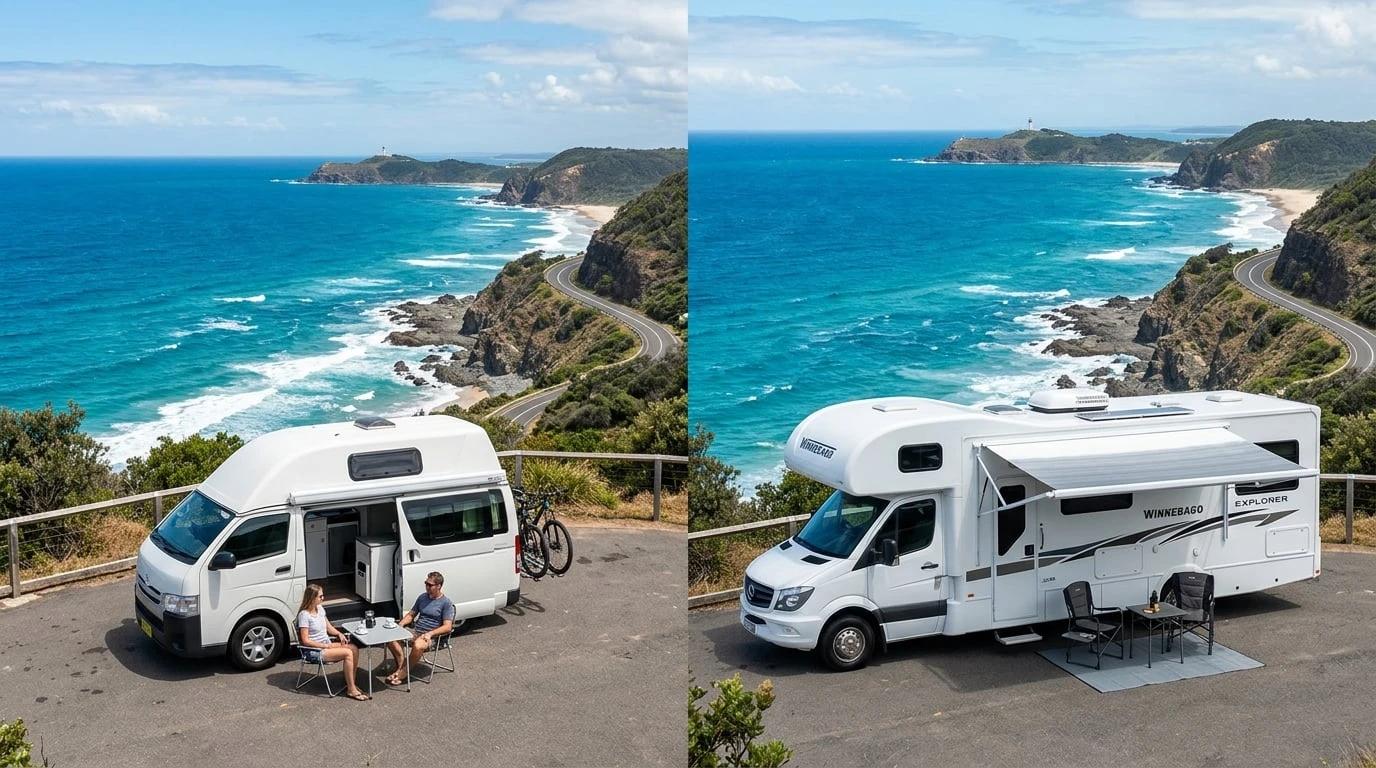
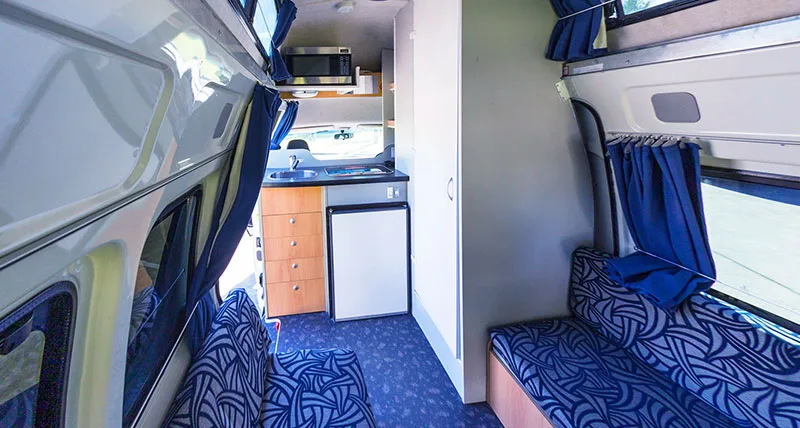
For this route, a two-berth campervan is perfectly manageable. The roads are sealed and flat, so you don't need a 4WD or a high-clearance vehicle unless you're planning side trips on dirt tracks. That said, if you want to explore Kings Canyon via the Mereenie Loop (an unsealed shortcut), you'll need a suitable vehicle and a Mereenie Loop Pass — more on that below.
If you're weighing up budget options, the Mighty vs Jucy comparison is worth a read before you commit. Both operate in Alice Springs and are solid choices for this route.
Fuel stops and road conditions
Fuel is available at Alice Springs, Erldunda (the junction of the Stuart and Lasseter Highways, about 200 km south of Alice), and Curtin Springs (about 80 km east of Uluru). There's also fuel at the Ayers Rock Resort (Yulara). Don't assume you can skip Erldunda or Curtin Springs — campervans are thirsty, and you don't want to be doing the maths on fumes in 40-degree heat.
Expect to pay a significant regional premium on fuel. As a rough guide, petrol and diesel at Erldunda and Curtin Springs typically runs $0.30–$0.60 per litre more than Alice Springs prices, and Yulara is often the most expensive of all. Fill up in Alice before you leave, top up at Erldunda, and you'll be fine.
The Lasseter Highway is in good condition and well-maintained. Watch for road trains — give them a full kilometre of space before overtaking, and never try to pass on a crest or curve. Kangaroos and camels are active at dawn and dusk; if you're not confident driving in the dark, don't. Most campervan hire agreements also restrict night driving in remote areas.
Uluru-Kata Tjuta National Park: entry fees and permits
You need a park pass to enter Uluru-Kata Tjuta National Park. As of 2024, the fee is around $38 per adult for a three-day pass, with concession rates available. Children under 16 are free. The pass is valid for three consecutive days, which is enough for most visitors. If you're staying longer, you can purchase a new pass at the gate — there's no weekly or annual option for tourists.
Pay at the park entry station on the Lasseter Highway, about 10 kilometres before Yulara. You can also pre-purchase online through Parks Australia. Keep your receipt — rangers do check.
There are no permits required to drive the main sealed roads within the park. However, if you want to take the Mereenie Loop Road between Kings Canyon and Alice Springs (a popular add-on to this trip), you need a Mereenie Loop Pass. This costs around $5–$10 and is available from the Alice Springs visitor centre, Glen Helen Resort, or Kings Canyon Resort. It's a cultural permit, not just a road permit, and it comes with a booklet about the area's significance to the Western Aranda people.
Where to sleep: camping options along the route
Your main overnight options break down like this:
| Location | Type | Approx. cost per night | Facilities |
|---|---|---|---|
| Erldunda Desert Oaks Resort | Powered and unpowered sites | $30–$45 | Showers, toilets, pool, fuel, shop |
| Curtin Springs Station | Unpowered bush camping | $20–$30 per person | Basic toilets, bar, fuel |
| Ayers Rock Campground (Yulara) | Powered and unpowered sites | $45–$75 (powered) | Full facilities, pool, camp kitchen |
| Kings Canyon Resort | Powered and unpowered sites | $40–$65 | Full facilities, restaurant, pool |
Ayers Rock Campground at Yulara is the only camping option within striking distance of Uluru itself, and it's well run. Book ahead — it fills up fast between May and September. The campground is managed by Voyages Indigenous Tourism Australia and sits about 15 kilometres from the base of Uluru. There's a shuttle bus to the cultural centre and the rock, which is handy if you'd rather not drive every time.
Curtin Springs Station is a working cattle station that's been welcoming travellers for decades. It's rough around the edges in the best possible way — cold beer, a fire pit, and a sky full of stars. If you want one night that feels genuinely remote without being genuinely remote, stop here on the way in or out.
Free camping is not permitted within the national park, and there are no bush camping options near Uluru itself. Outside the park, some travellers free camp near Erldunda or on station land with permission, but check your hire agreement — many operators prohibit free camping or require you to stay in designated sites.
What to do at Uluru: the practical version
The climbing of Uluru has been permanently closed since October 2019, in line with the wishes of the Anangu traditional owners. The base walk (10.6 km, allow three to four hours) is the main way to experience the rock up close, and it's genuinely worthwhile. Start early — before 7am in summer — to beat the heat.
Kata Tjuta (the Olgas) is 53 kilometres west of Uluru and absolutely worth the detour. The Valley of the Winds walk (7.4 km, moderate difficulty) is one of the best half-day walks in the country. The Walpa Gorge walk (2.6 km return) is shorter and easier if you're short on time or energy.
The Uluru Cultural Centre, near the base of the rock, is free to enter and gives solid context for what you're seeing. Spend an hour there before you do anything else.
Sunrise and sunset viewing areas are signposted and get crowded. Arrive 30 minutes early for a decent spot. The colours shift from orange to deep red to purple in about 20 minutes — it's worth the early alarm.
Best time to go
May to September is the sweet spot. Days are warm (20–28°C), nights are cold (sometimes below zero), and the light is extraordinary. Book your campsite well in advance for this period — Ayers Rock Campground can be booked out weeks ahead during school holidays.
October and April are shoulder months: warmer, fewer crowds, still manageable. November through March is summer in the desert. Temperatures regularly exceed 45°C, some walks close when it's above 36°C, and driving a campervan without reliable air conditioning becomes genuinely unpleasant. If you're going in summer, leave very early, rest during the middle of the day, and make sure your vehicle's cooling system is in good shape.
Practical tips before you go
- Water: Carry at least 10 litres per person beyond what's in your campervan tank. The desert is unforgiving.
- Tyres: Check tyre pressure before leaving Alice. The Lasseter Highway is sealed but long, and a blowout in summer heat is a serious situation. Know where your spare is and how to change it.
- Mobile coverage: Telstra has the best coverage on this route. Optus and Vodafone drop out well before Erldunda. A personal locator beacon (PLB) is worth hiring if you're doing any off-road detours.
- Groceries: Stock up in Alice Springs. Yulara has a supermarket (IGA) but prices are high and selection is limited. There's nothing between Alice and Yulara except fuel and snacks.
- Hire agreement: Read the fine print on your campervan hire agreement. Some operators restrict travel on unsealed roads, which affects Kings Canyon via the Mereenie Loop. If in doubt, call the operator before you book.
If this is your first time hiring a campervan in Australia, the first-time campervan hire guide covers the things most people don't think about until they're already on the road. And if you're planning a longer trip — say, continuing to Darwin or looping back through South Australia — the best campervan companies for long-term hire guide is worth a look before you commit to an operator.
Putting it all together: a simple three-day framework
- Day 1: Alice Springs to Curtin Springs (~380 km). Fuel at Erldunda. Arrive at Curtin Springs in the afternoon, cold beer, early night.
- Day 2: Curtin Springs to Yulara (~75 km). Enter the park, visit the Cultural Centre, walk part of the base walk, watch sunset. Check into Ayers Rock Campground.
- Day 3: Sunrise at Uluru, then drive to Kata Tjuta for the Valley of the Winds walk. Afternoon free. Second night at Yulara or begin the return drive.
That's the bones of it. Add Kings Canyon (via the sealed Ernest Giles Road, about 330 km from Yulara) if you have an extra day or two — it's a serious detour but the Rim Walk is spectacular.
Planning your trip?
Compare campervan & motorhome hire prices across Australia: